The Teton Range by Thomas Moran
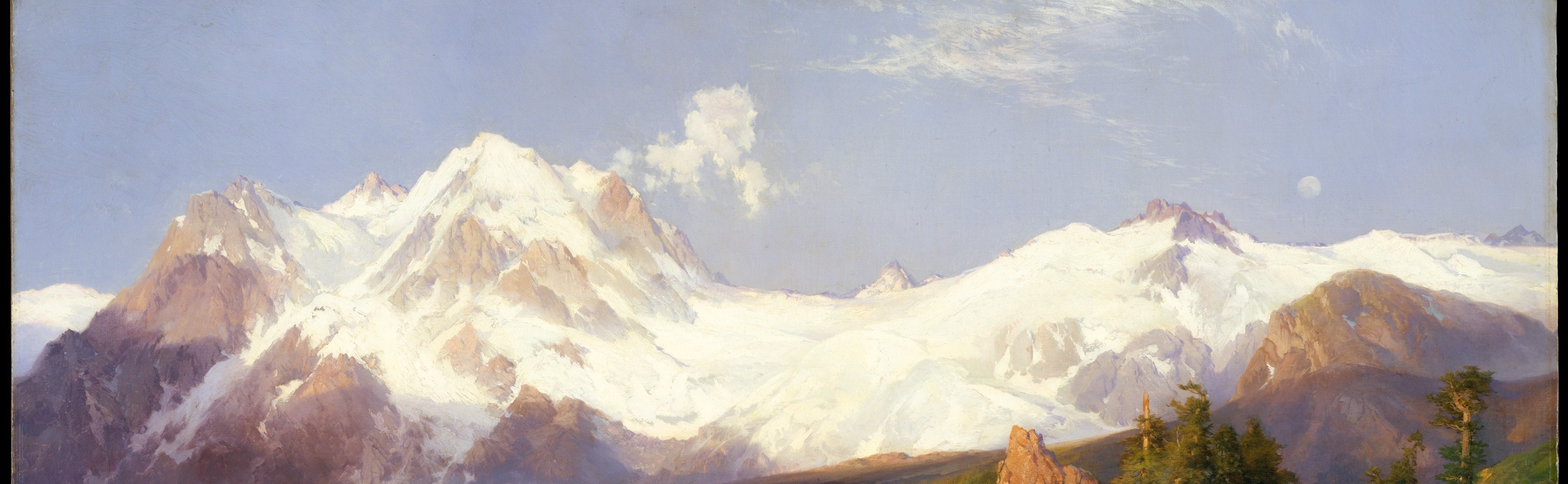
Thomas Moran's "The Teton Range" from 1897, part of The Metropolitan Museum of Art collection, is a breathtaking example of the Hudson River School. Moran, a master of landscape, dedicated much of his career to depicting the American West, capturing its raw grandeur with exceptional skill.
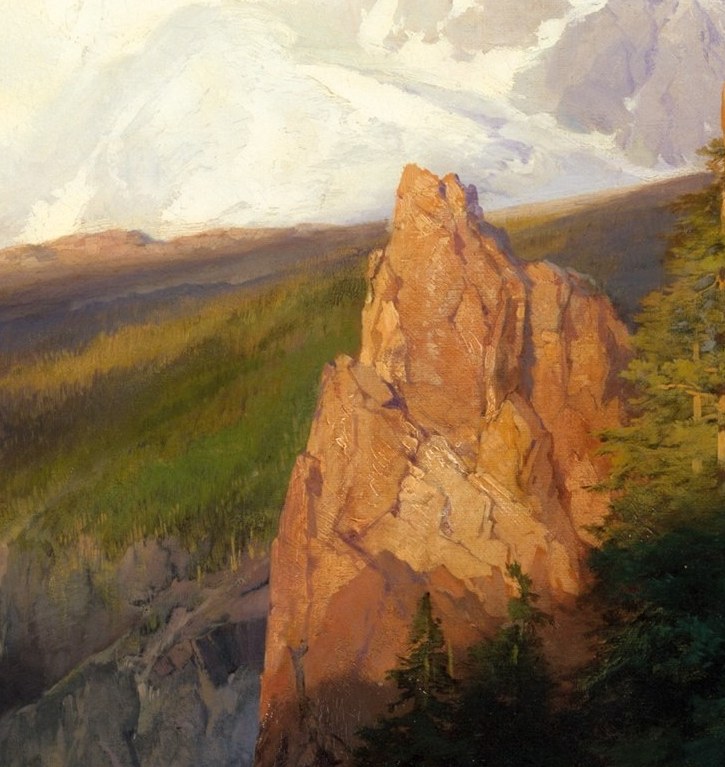
Look closely at how Moran manipulates light and shadow. The sunlit rock faces seem to glow with an inner light, contrasted by the deep, cool tones of the shadowed canyons. This interplay creates an astonishing sense of depth and scale.
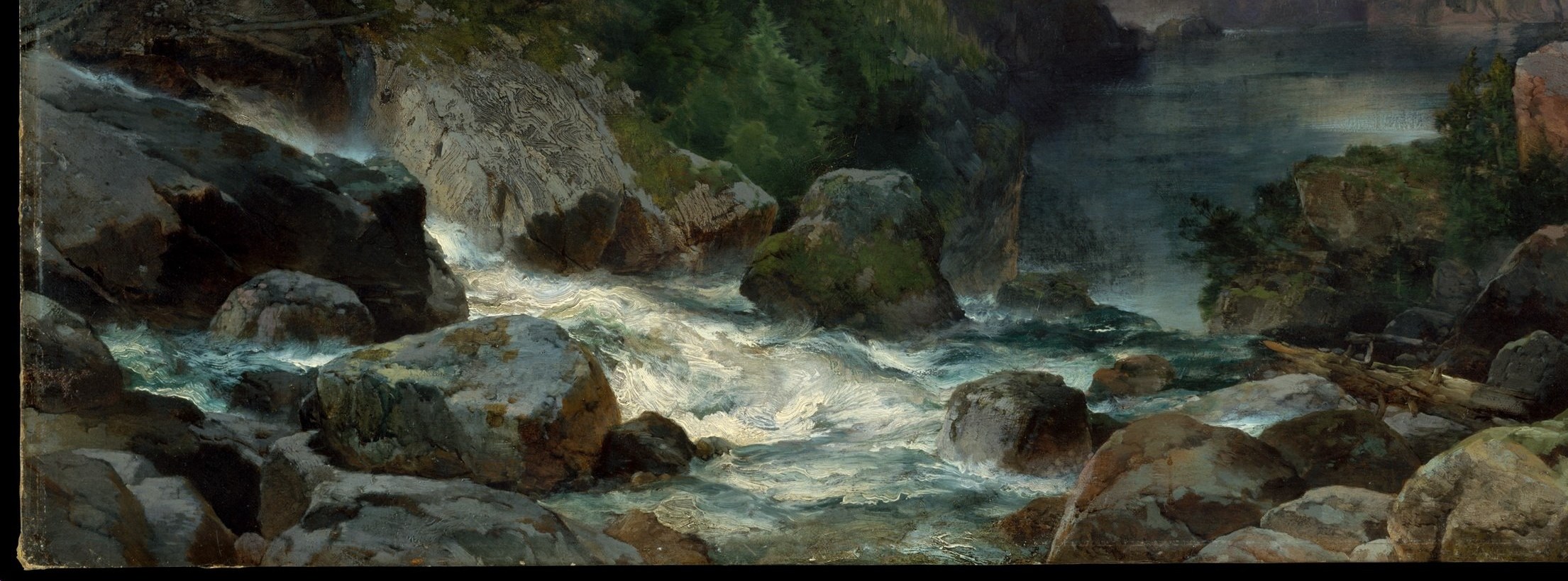
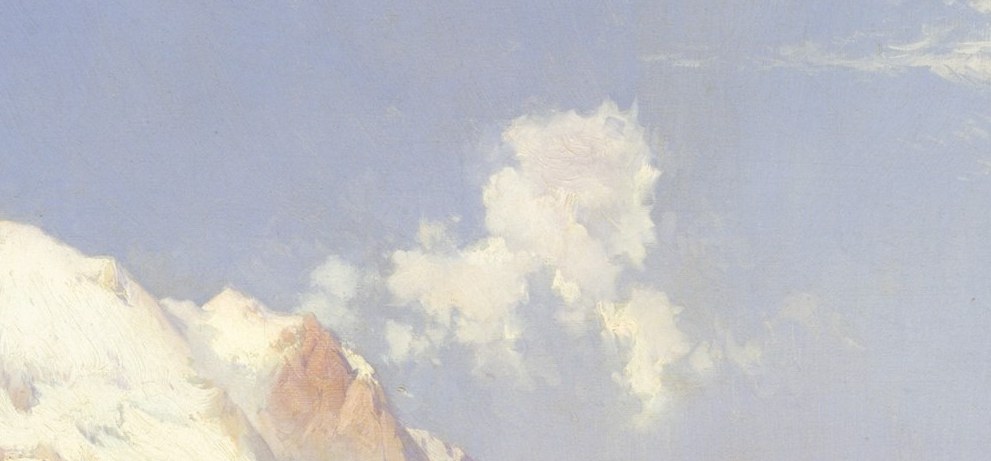
Moran's technique is evident in his varied brushwork: thick, impasto strokes define the rugged foreground rocks, while soft, almost ethereal applications render the wispy clouds. These details, along with the inclusion of a faint moon, showcase his ability to evoke the sublime power of nature.
What other hidden details do you notice in the textures of this incredible landscape?
Details
Transcript
This painter was obsessed with the American West. He captures the dramatic scale of the Teton Range. See how light hits this rock face, almost glowing. He uses thick, textured paint for the craggy rocks. But for the clouds, he uses soft, ethereal strokes. Notice the subtle moon, a tiny detail in the vast sky. This contrast creates a profound sense of depth.