Portrait of a Young Woman by http://www.wikidata.org/.well-known/genid/72d92efe8232d09226d3f1a8e935b4e5
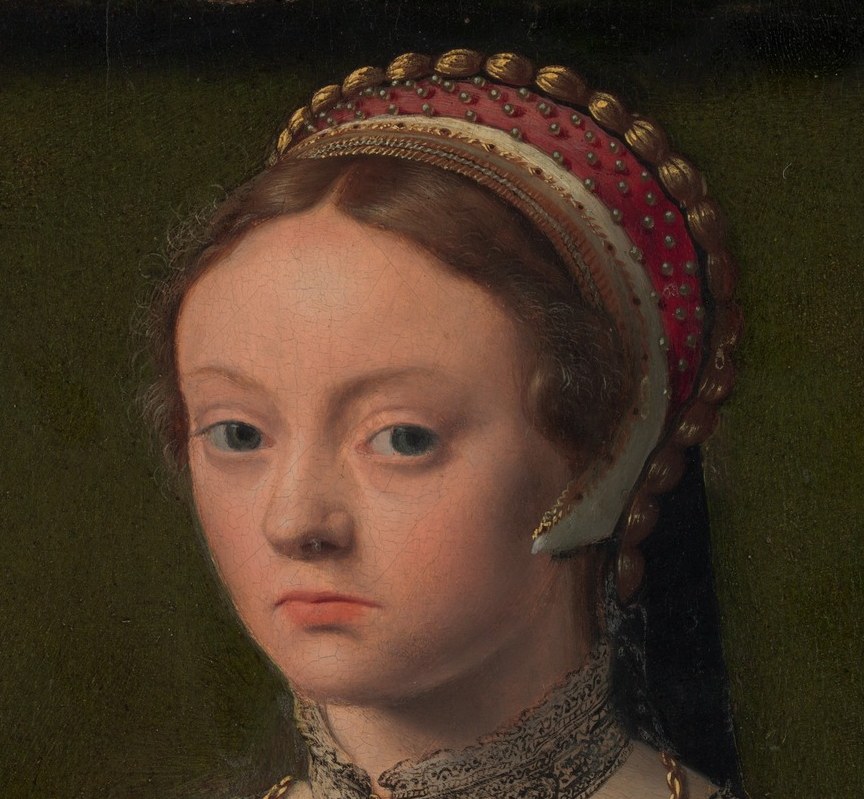
This is "Portrait of a Young Woman," painted around 1535 by an unknown master working in the northern European tradition. The painting lives in relative obscurity today, ranked outside the top three thousand most famous works, but its technique belongs among the best textile painting of the period.
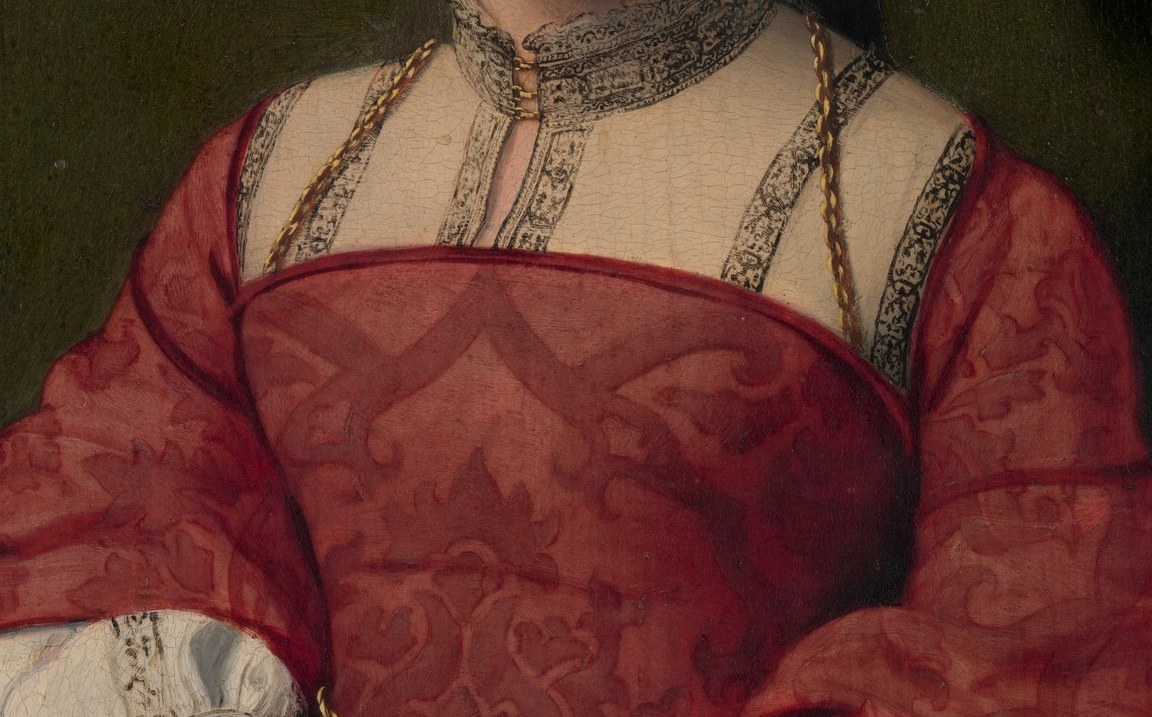
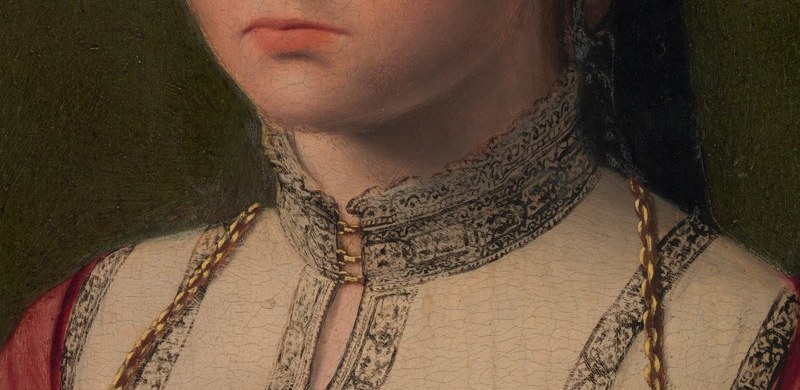
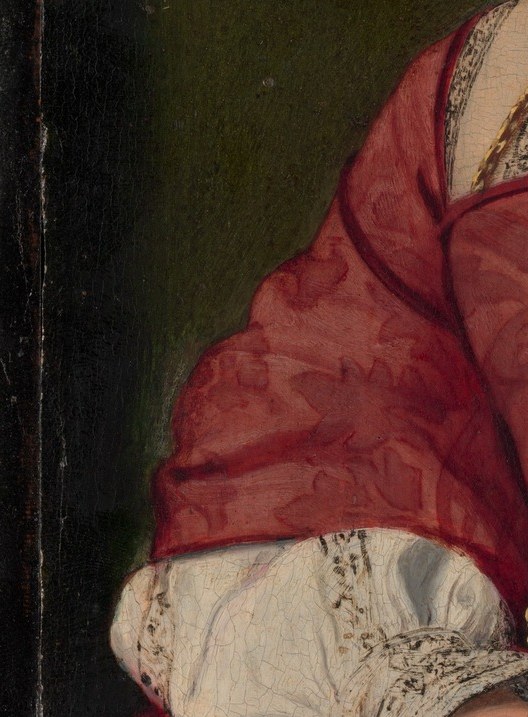
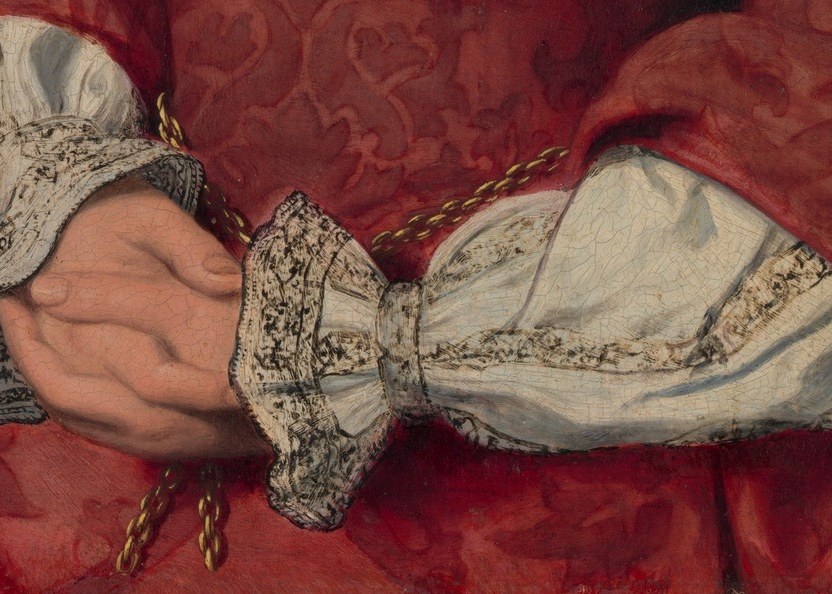
The composition is simple by design: a dark, undifferentiated background throws every ounce of attention onto the sitter. What rewards slow looking is the deliberate progression of surfaces across the canvas. Move from the deep crimson velvet bodice to the starched white linen collar, then to the gathered silk of the puffed sleeves, and finally to the handkerchief, a passage so thin and translucent the flesh beneath it reads through the paint.
That red bodice matters historically. A dye this vivid in the 1530s came from kermes insects harvested in the Mediterranean, and it cost a fortune. The young woman's family was paying not just for a portrait but for a permanent record of their material position. The flat-topped red-and-gold headdress, datable to the decade between 1530 and 1540, anchors the fashion precisely.
This painter knew exactly what he was doing when he placed velvet, linen, gathered silk, and sheer cloth side by side. Flemish and early Netherlandish painters had long treated textile virtuosity as a calling card, a way to say, silently, that nothing in the visible world was beyond their reach. Whoever painted this young woman was making that same claim.
Details
Transcript
This dark room holds almost nothing but red and white. Start with the bodice, deep crimson velvet. That red was made from kermes insects. A color worth more than gold. Now the linen collar. Crisp, white, every fold holding its own light. Three fabrics, three different surfaces. A Flemish painter's test of skill. And the handkerchief, impossibly thin, translucent against her fingers. The painter wanted you to see exactly what he could do with oil and pigment.