Profile Portrait of a Boy by North Italian 15th Century
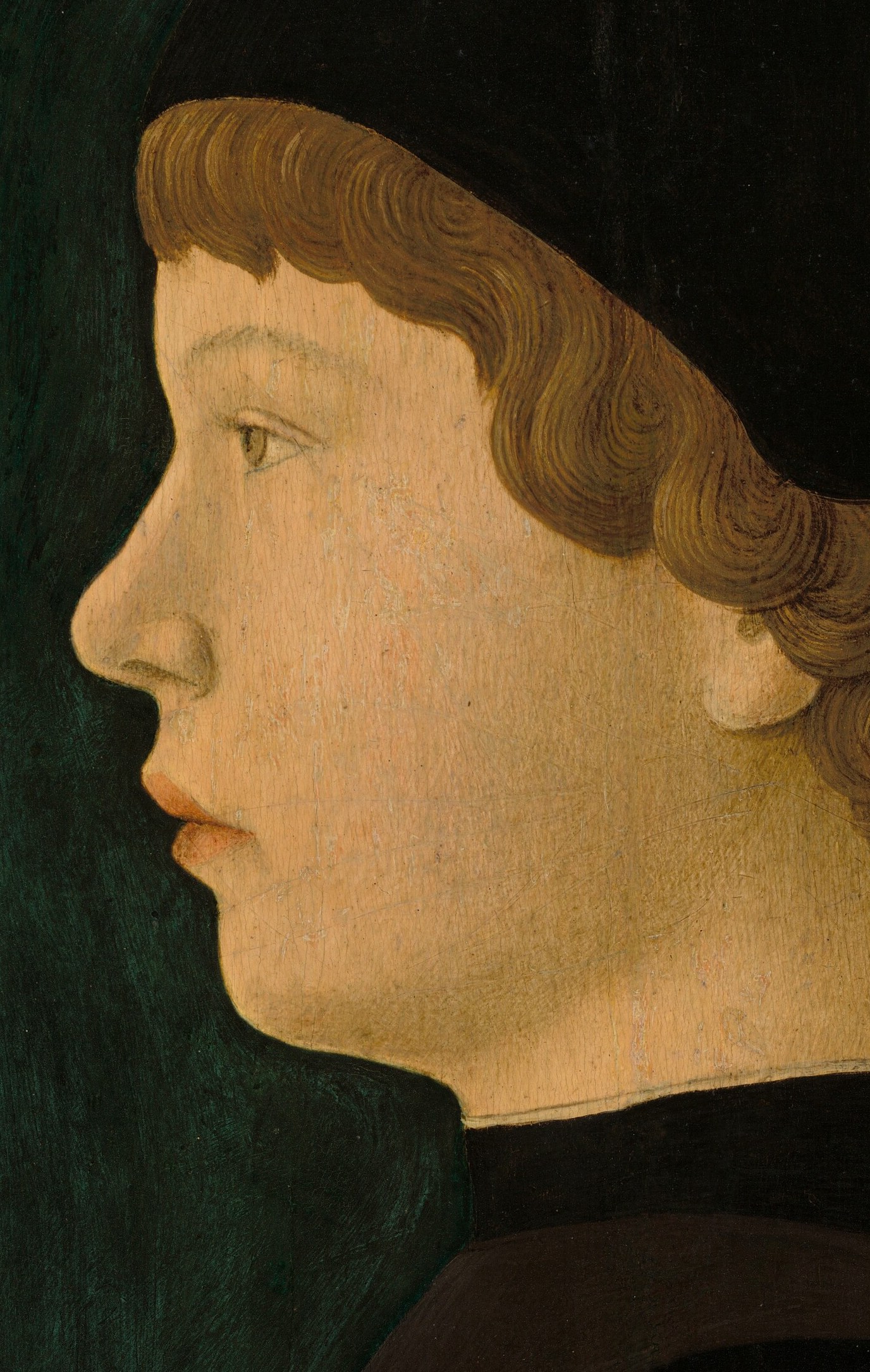
The "Profile Portrait of a Boy" (c. 1460/1470) by an anonymous North Italian painter at the National Gallery of Art, Washington D.C., showcases remarkable technical skill.
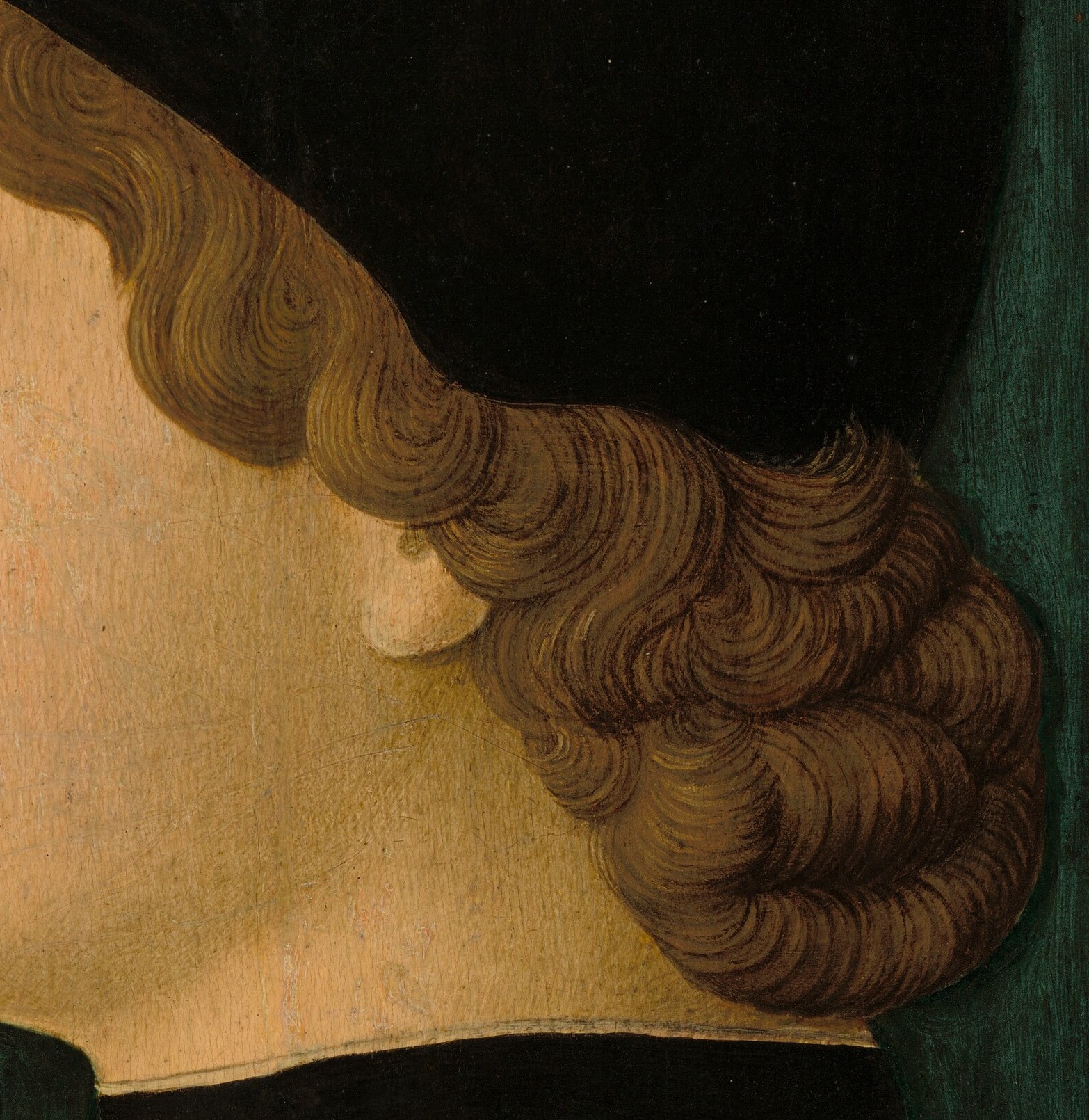
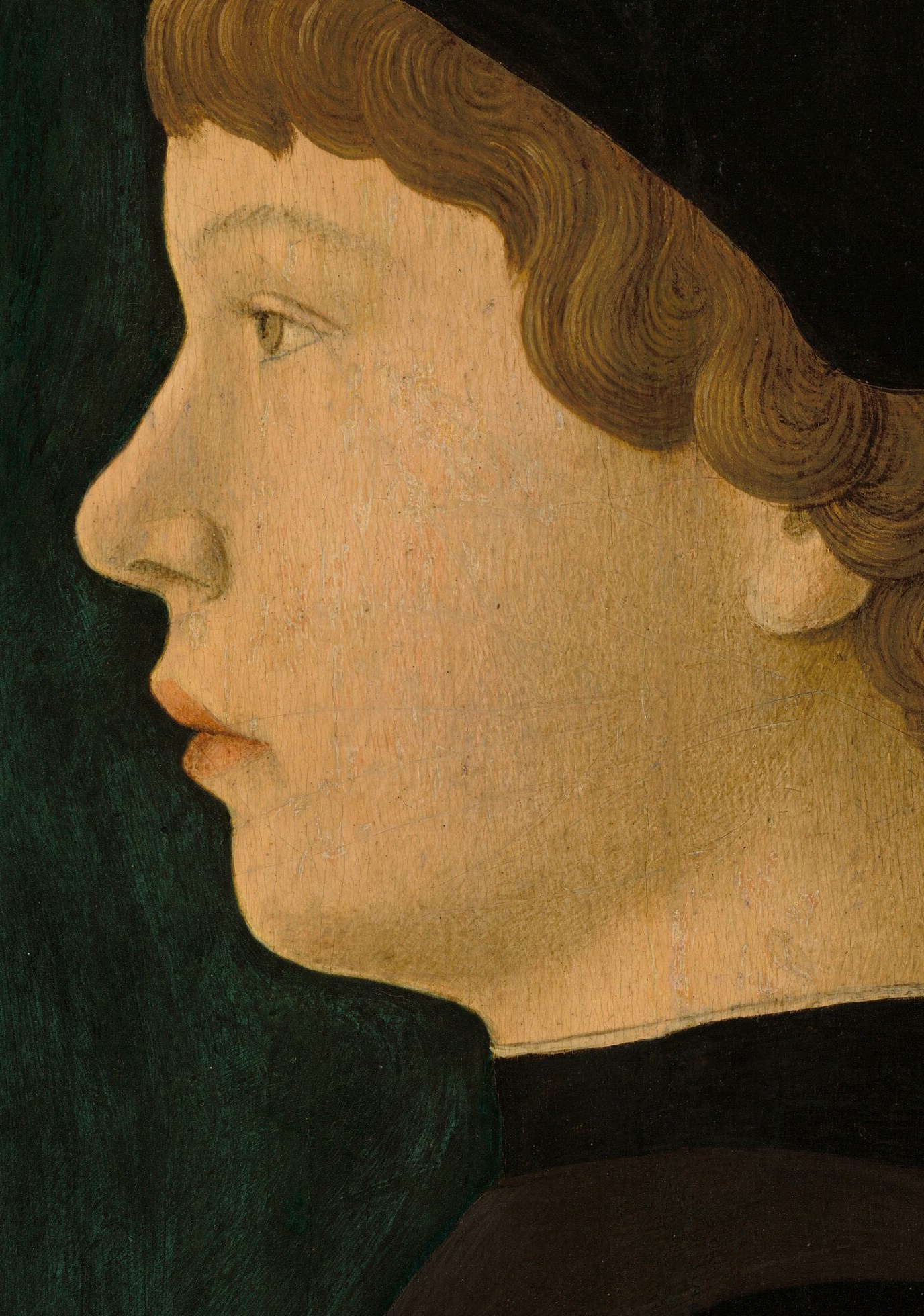
Notice the intricate detail of the boy's curly brown hair, where each strand seems individually rendered. This precision contrasts beautifully with the soft, smooth texture of his skin, giving his face a lifelike, almost luminous quality. The artist masterfully combined tempera and oil paints on a wooden panel to achieve these varied textures.
During the 15th century, the use of both tempera and oil allowed painters greater versatility in creating rich colors, subtle transitions, and distinct surface qualities. This profile view, common in Renaissance portraiture, often conveyed dignity and timelessness, echoing classical traditions. The dark background makes the boy's features stand out vividly.
How do you think such delicate detail was achieved without modern tools?
Details
Transcript
This young man has been looking like this for centuries. The painter used both tempera and oil on wood panel. Look how the fine lines of his hair stand out. Each curl is painted with incredible individual detail. Now see his smooth, lifelike skin, almost glowing. The artist layered paint to sculpt his delicate features.