Portrait of a Woman of the Slosgin Family of Cologne by Barthel Bruyn the Younger
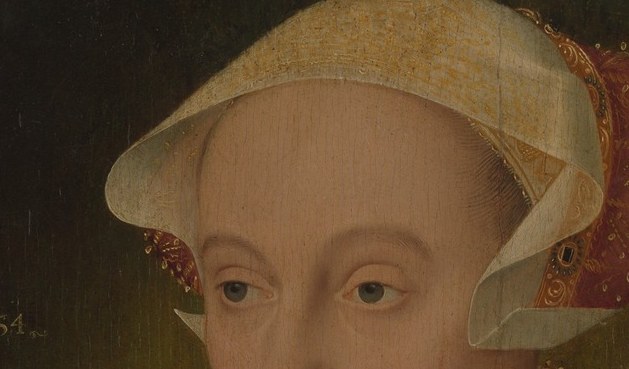
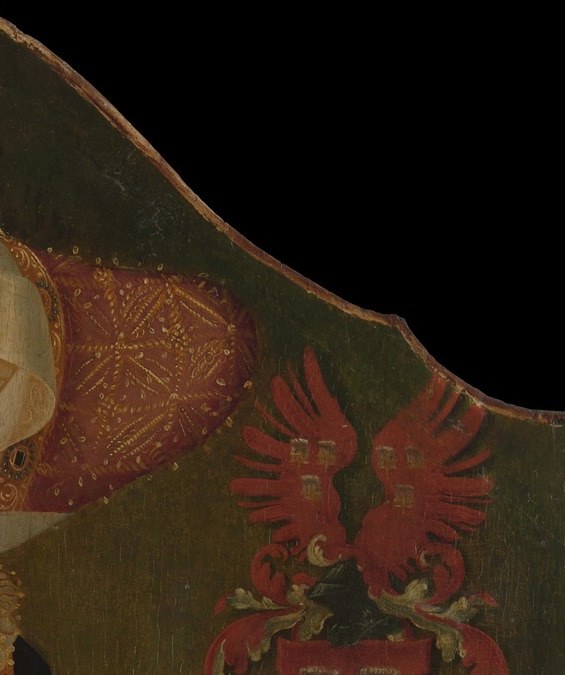
This is Barthel Bruyn the Younger's 'Portrait of a Woman of the Slosgin Family of Cologne,' painted in 1557 and now at The Metropolitan Museum of Art. She is unidentified by name, but the coat of arms behind her right shoulder places her firmly in the Slosgin lineage, a prominent Cologne family. Her steady, level gaze is the reason this portrait works so immediately: across nearly five centuries, she looks you in the eye with the composure of a woman who knows exactly her place in the world.
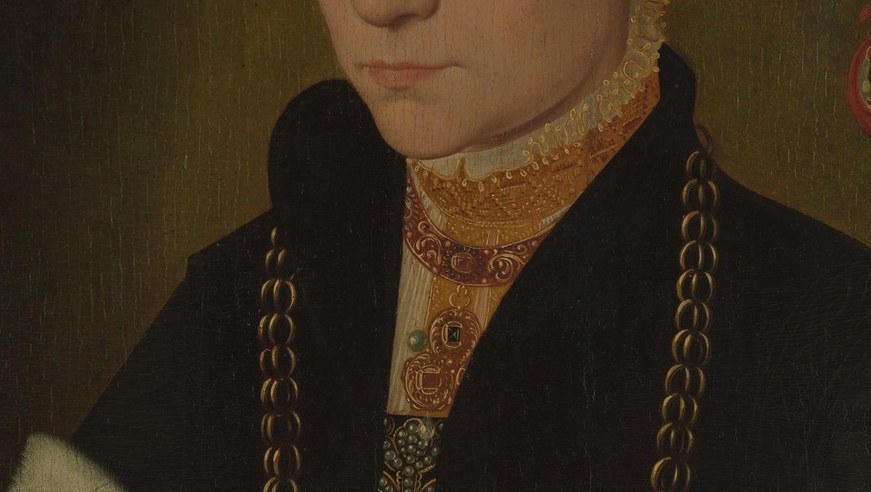
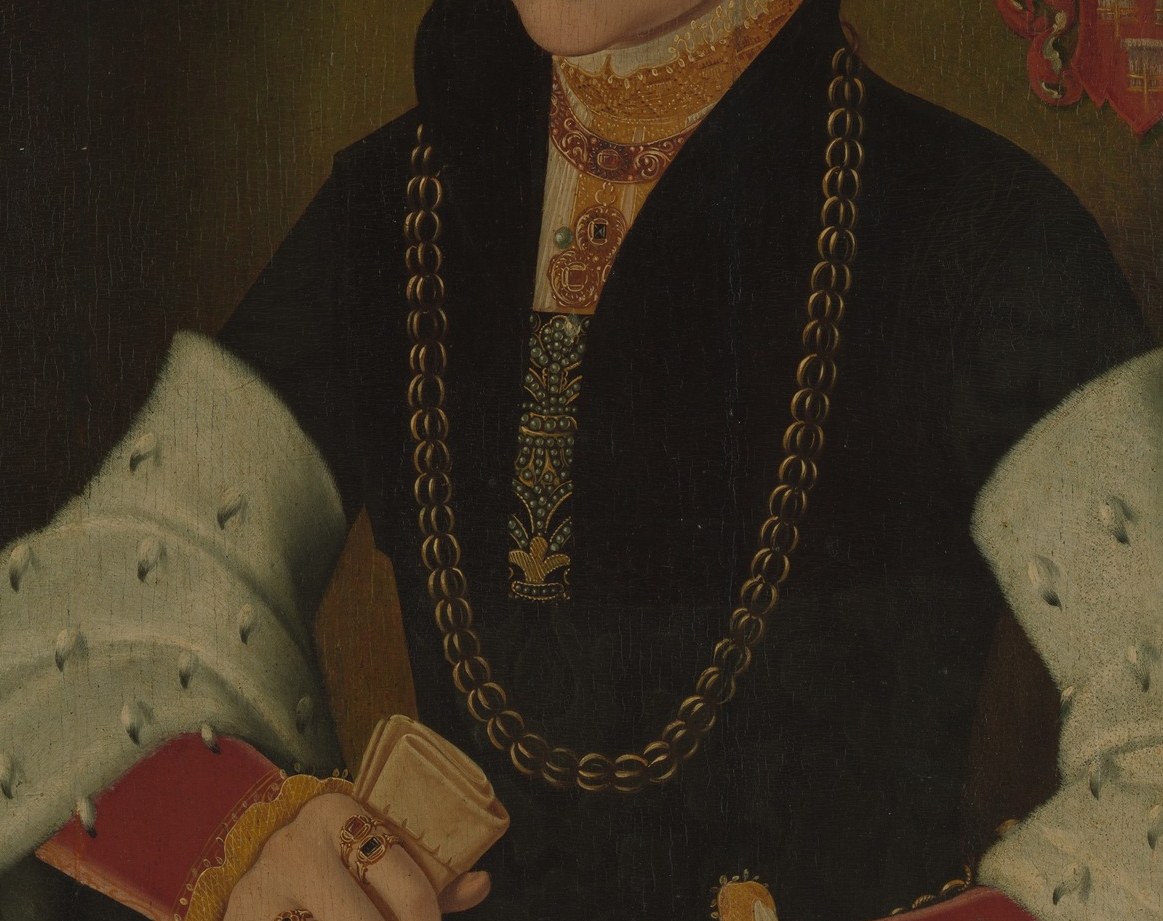
Look first at her face and the crisp white coif framing it. The coif signals married status and household rank. Then look at the gold chain: each link was a literal unit of value in Northern Renaissance Cologne, making the necklace a wearable record of wealth. Notice the red feather or ribbon accent on the right side of her headdress, a rare flash of color in an otherwise dark, severely expensive palette. Black dye was prohibitively costly in 1557, and the dense black gown dominating the composition tells you she chose severity over display, but still used every allowed sumptuary code to signal her standing.
Bruyn the Younger trained in his father's workshop in Cologne and spent his career painting the city's merchant class. The portrait follows the Rhenish convention: a half-length figure against a flat, dark architectural niche, with the face and hands given absolute prominence. The background is not a real room but an ideological choice, an eternal, class-marked space rather than a specific place. The white collar beneath her chin acts as a light trap, drawing your eye upward to the face, a compositional trick Bruyn learned from his father.
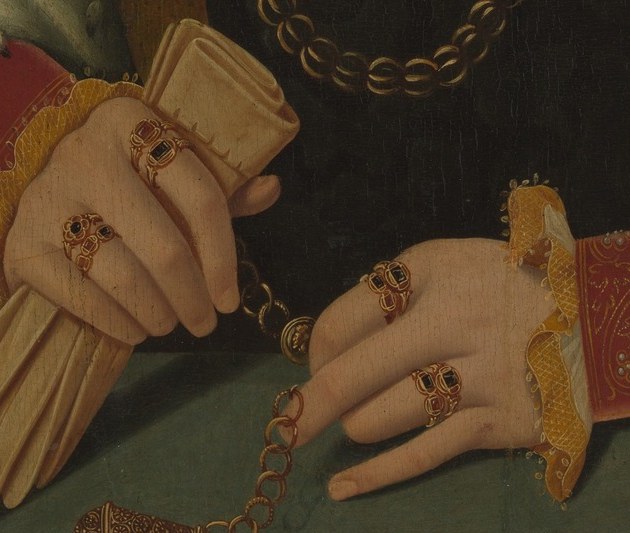
She holds a red-covered book or folded document. In portraits of Rhenish women, that object often signals either piety or household authority, a prayer book or the family accounts. Both are statements about who she was in that household. After nearly five hundred years, the painting remains what it was designed to be: a quiet, permanent assertion of a family's place in the world.
Details
Transcript
She has been holding this gaze for nearly five centuries. Her name is lost, but her family is not. The Slosgins of Cologne commissioned this in 1557. The gold chain around her neck is not just jewelry. Each link was a known unit of value. She is wearing her balance sheet. Her black gown cost a fortune. Black dye in 1557 was extravagantly expensive. What she holds is a choice. A prayer book, or the household accounts.