Self-Portrait by Rembrandt van Rijn
Rembrandt painted this self-portrait in 1659, at the age of 53. He had already buried his beloved wife Saskia and three of their children. His grand house and his collection of art had been auctioned off to pay crushing debts. This painting, now in the National Gallery of Art in Washington, D.C., is a survivor's document.
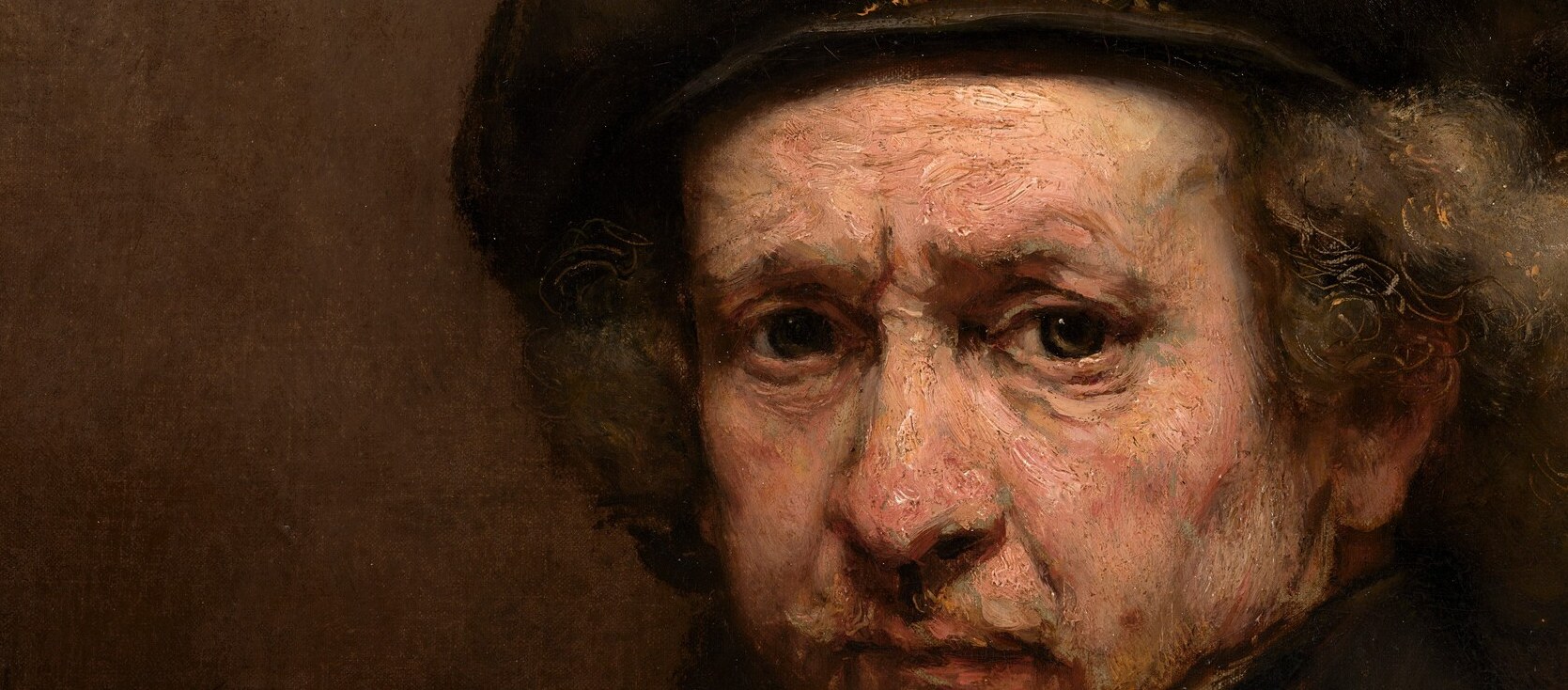
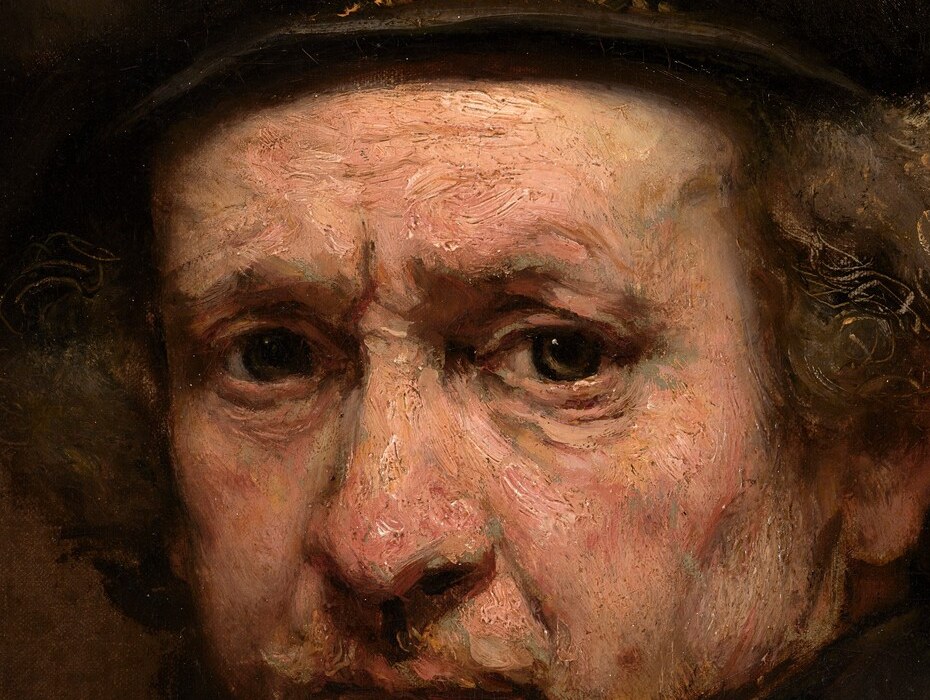
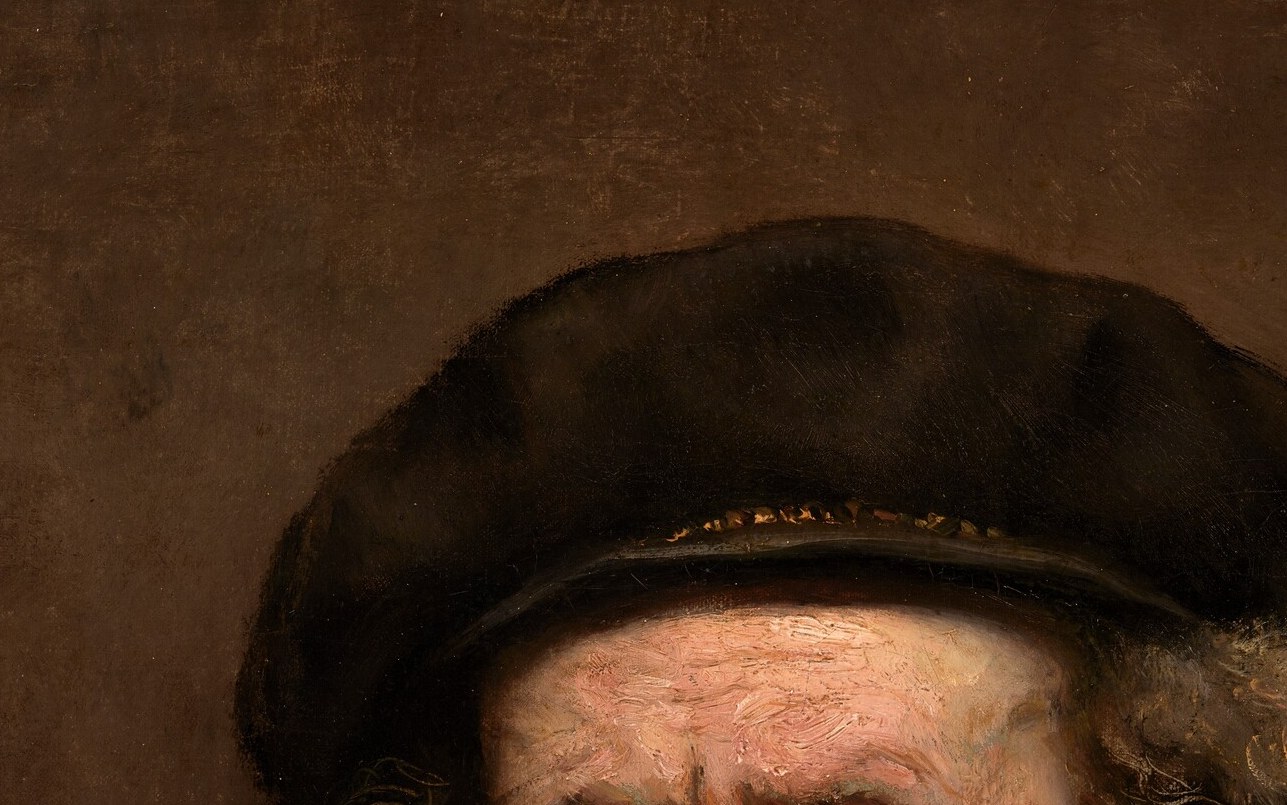
Look at the eyes. Rembrandt loads the left eye with a single thick dab of white paint, a tiny catchlight that keeps the face alive. The right eye barely emerges from shadow. The mouth is tightly closed, asymmetrical, refusing to perform. Everything he had lost is written in the heavy flesh of the jowls and the unsparing honesty of the brush.
This is one of more than forty self-portraits Rembrandt made over his life, but the late ones are different. The young Rembrandt painted himself in costume, playing roles. Here, in the last full decade of his life, he painted the man who remained after the roles fell away. Andrew W. Mellon once owned it, and it came to the National Gallery as a founding piece in 1937.
A portrait can flatter. A self-portrait can lie. Rembrandt chose neither. He studied his own face the way he studied every face, as evidence of a life actually lived. What do you see in his eyes?
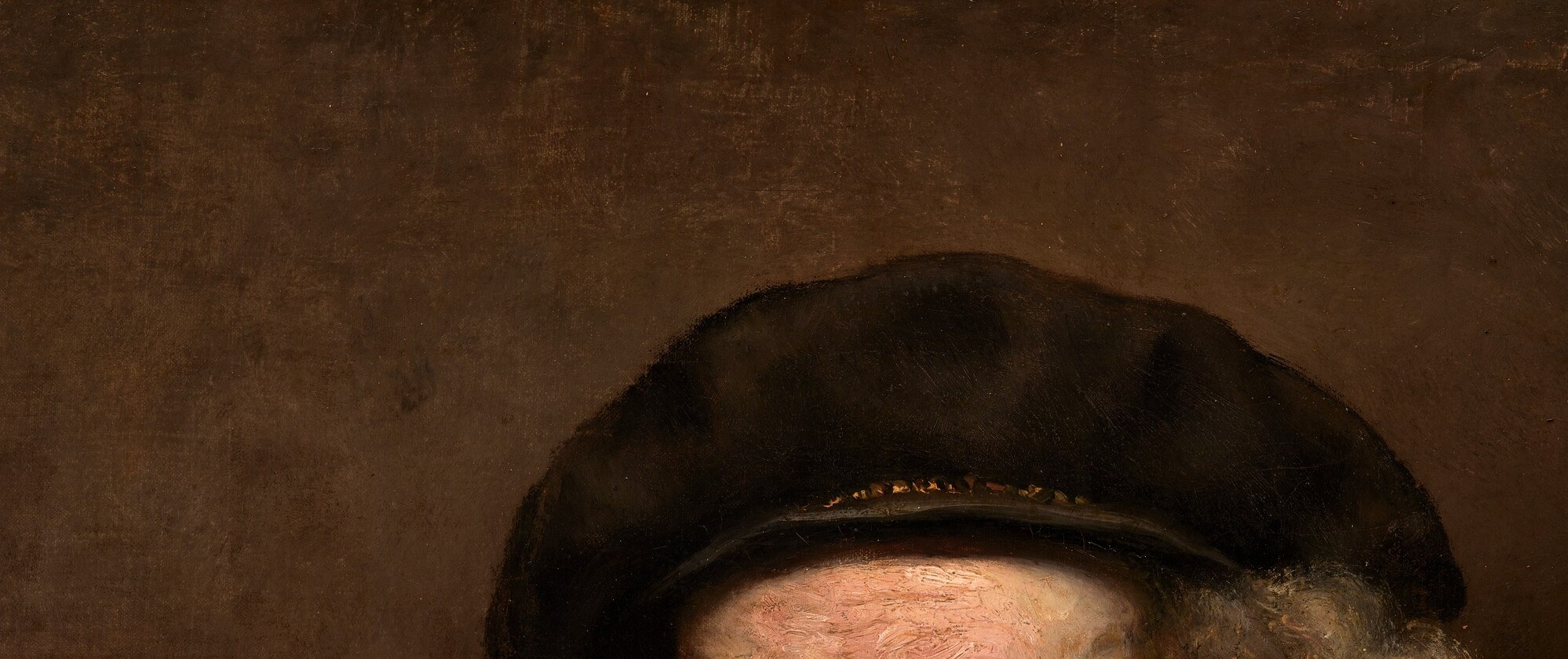
Details
Transcript
By 1659, Rembrandt had buried his wife and three of his children. His house and his paintings were sold at auction to pay his debts. He survived it all. Then he sat down and painted himself. No flattery. The jowls are heavy and the mouth is held tight. The left eye holds a single dot of thick paint, a catchlight. Without it, the face would read as a death mask. He documented what grief had done to his face, and he did not look away.