Roundel with Judgment or Allegorical Scene by http://www.wikidata.org/.well-known/genid/c8d4691ca2f5a4a7f37fde90599e43dc
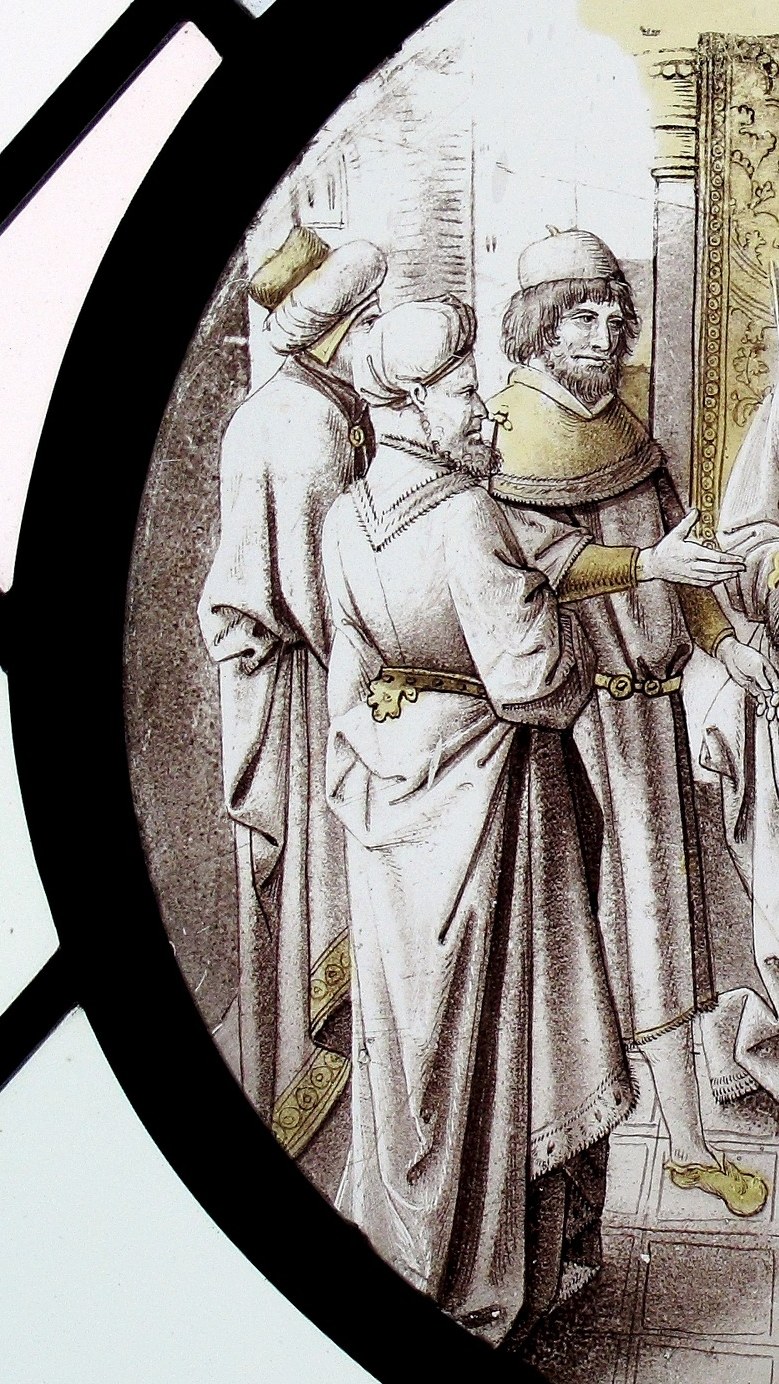
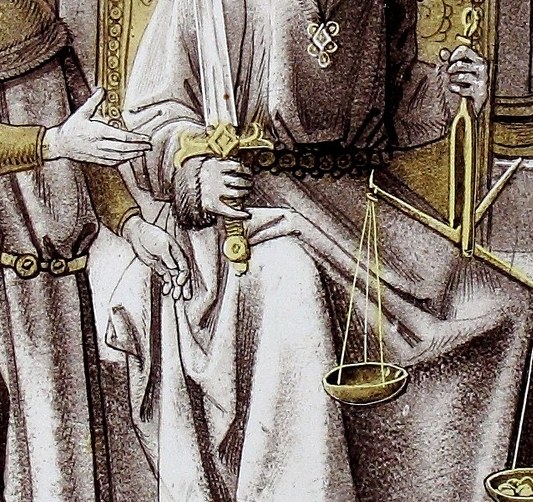
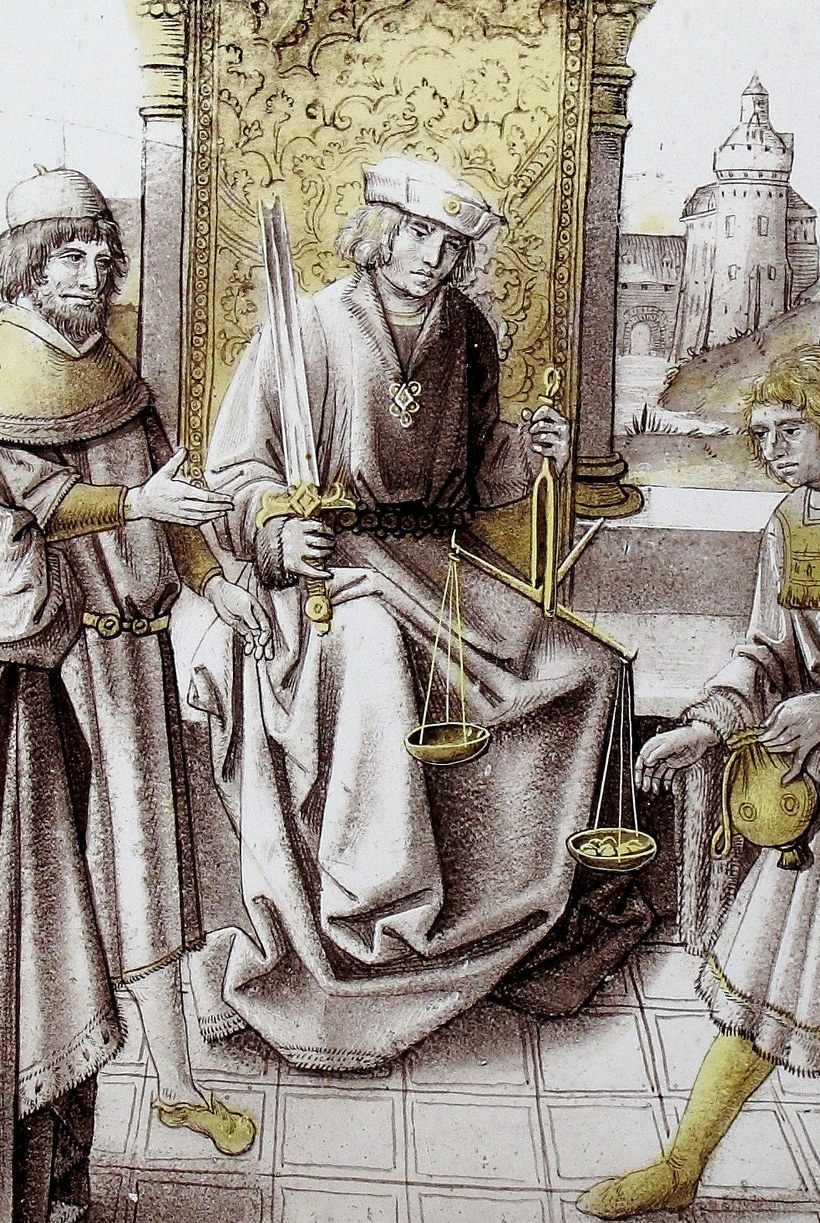
This is "Roundel with Judgment or Allegorical Scene," a small circular painting from around 1520 by an artist known only as the Master of the Antwerp Adoration. It hangs today at the Art Institute of Chicago, but for centuries its story was silent. Six figures fill a tiled room, and at its center sits a man who is more than a man. He holds a sword in one hand and a set of balance scales in the other. He is grave. He is still. And every figure around him knows that stillness is the moment before a life changes.
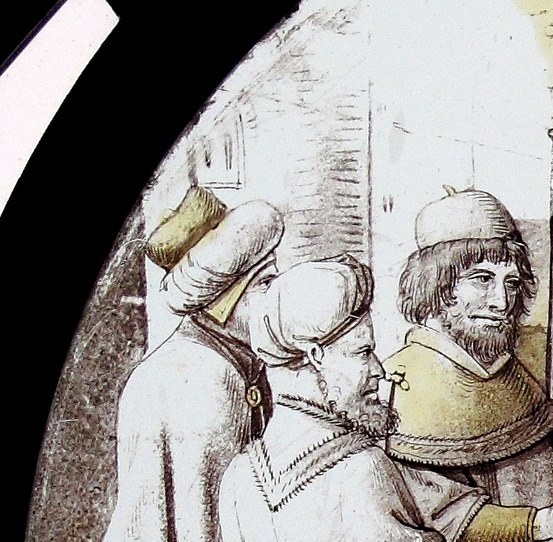
Look at his face, and then at the faces of those who approach him. The two petitioners lean forward from the left, their robes pushing into his space. The foremost one meets his gaze with an expression that carries the whole weight of the scene. Then look at his hands. The scales are small, held delicately, the mechanism of a decision that will favor one side or the other. Coins rest near his lap, a reminder that justice here is not abstract. It is about worth, counted and appraised.
We do not know who commissioned this roundel, or why. The painter worked in Antwerp in the early 1500s, a city booming with trade, where merchant courts settled disputes over cargo and coin. The distant fortified tower glimpsed through the window anchors the allegory in a real civic world. The curtain behind the judge’s throne divides what we can see from what we cannot. The verdict is offstage. Only the waiting is shown.
Five hundred years later, the judge is still waiting. And his face has not changed.
Details

Transcript
They come to him with their case. He listens. He will not rush. In his right hand, a sword. In his left, the scales he must balance. This is not a king. This is Justice itself. Coins sit near his lap. Worth is being weighed. Behind him, a curtain hides what comes next. His face holds the verdict. He is still.