An Incident of Whaling by William Bradford
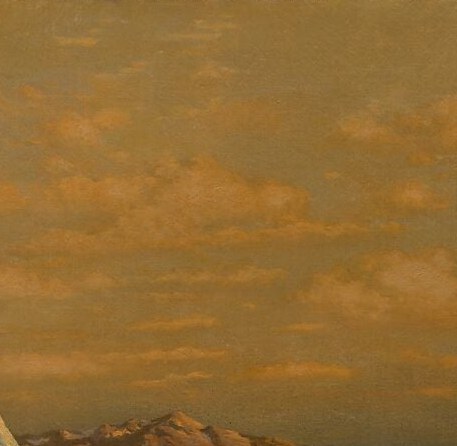
William Bradford painted An Incident of Whaling in 1857, and it is a gorgeous fraud. The scene shows a whaling ship locked in Arctic ice under a sky so warmly golden it could pass for a Caribbean sunset. Bradford painted this inside a studio in Massachusetts, years before he ever set foot in the actual Arctic. He was working from imagination and the secondhand stories of New Bedford sailors, not from ice.
Look at the sky first, then the icebergs. The warm orange light bleaching across the striated face of the right iceberg is the painting's real subject. Bradford treats the ice as cathedral architecture, monumental and glowing, but the color temperature is a seductive lie. The men standing on the ice floe in the foreground are barely a few brushstrokes tall, and they are the only honest scale reference here. Without them, you would not feel how terrifyingly high those ice walls really are.
In 1861, Bradford finally went north on a schooner, and he became obsessed with documenting what he saw through photography and plein-air sketches. The work he made after that trip is colder, truer, and far less romantic. But this painting, the one he made before he knew the truth, is the one that made his reputation. It is currently in the collection of the Metropolitan Museum of Art's American Wing.
There is something very American about selling a dangerous truth wrapped in a beautiful, warm light. Would the painting hit as hard if the sky were honest?
Details




Transcript
Look at the warmth of that sky. Gold and orange, like a tropical sunset. But this is the Arctic. The water can kill in minutes. Bradford painted this in 1857, inside a warm Massachusetts studio. He had never seen pack ice himself. Look closely. The sky is the color of a dying fire. The real scandal? This fantasy sold the Arctic to America.