明 卞文瑜 谿山秋靄圖 卷|Streams and Mountains in Autumn Mist by Bian Wenyu
You are looking at "Streams and Mountains in Autumn Mist," a handscroll painted in 1634 by Bian Wenyu. It lives in the literati tradition of the late Ming dynasty, when a painting's value was measured not in square footage of pigment, but in the sophistication of its restraint. The artist was a member of the Songjiang school, and this scroll reflects his deep study of earlier masters filtered through a distinctively personal brush.
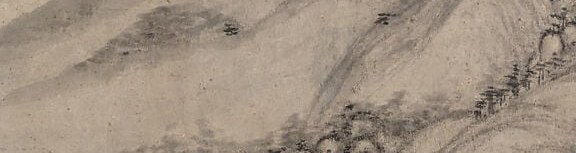
More than a third of this composition is untouched paper. The horizontal band of mist that separates the near shore from the central peaks, the streams in the lower plain, the open sky at the top, all are pure void. Classical Chinese painting treats emptiness as a material, and here Bian Wenyu makes the eye supply the water, the mist, and the depth. The few thin ink strokes at the water's edge carry all the information: the shoreline exists because a single calligraphic line says it does.
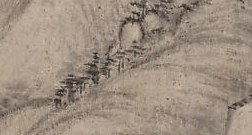
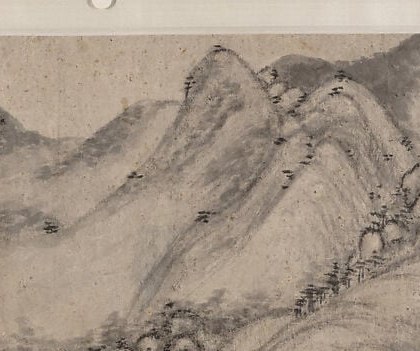
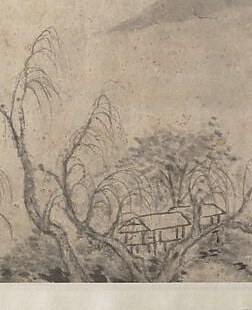
Bian was active between roughly 1620 and 1670, painting through the collapse of the Ming dynasty. This scroll was created in the quieter years before that fall, and its mood is not mourning but meditation. The sharp silhouette of the central peak rises above the mist like a scholar's mind above confusion, a classic literati image. Look for the hidden pavilion tucked into the mountain crags; it is a Ming convention, the recluse's hut visible only to those who look hard.
A painting this old on paper, surviving nearly four centuries, is itself a kind of victory. Its stillness is an argument for looking long enough to see what was left out.
Details

Transcript
The price of this painting is in what is not there. Look first at this horizontal void. A band of untouched paper cuts the scroll in two. So does the sky. One-fifth of the composition is pure absence. The streams themselves are just blank paper. The painter made you supply the water with your own eye. Now look deep in the crags for a tiny geometric shape. A recluse's hut, hidden in wilderness. You find it; the painting trusts you.