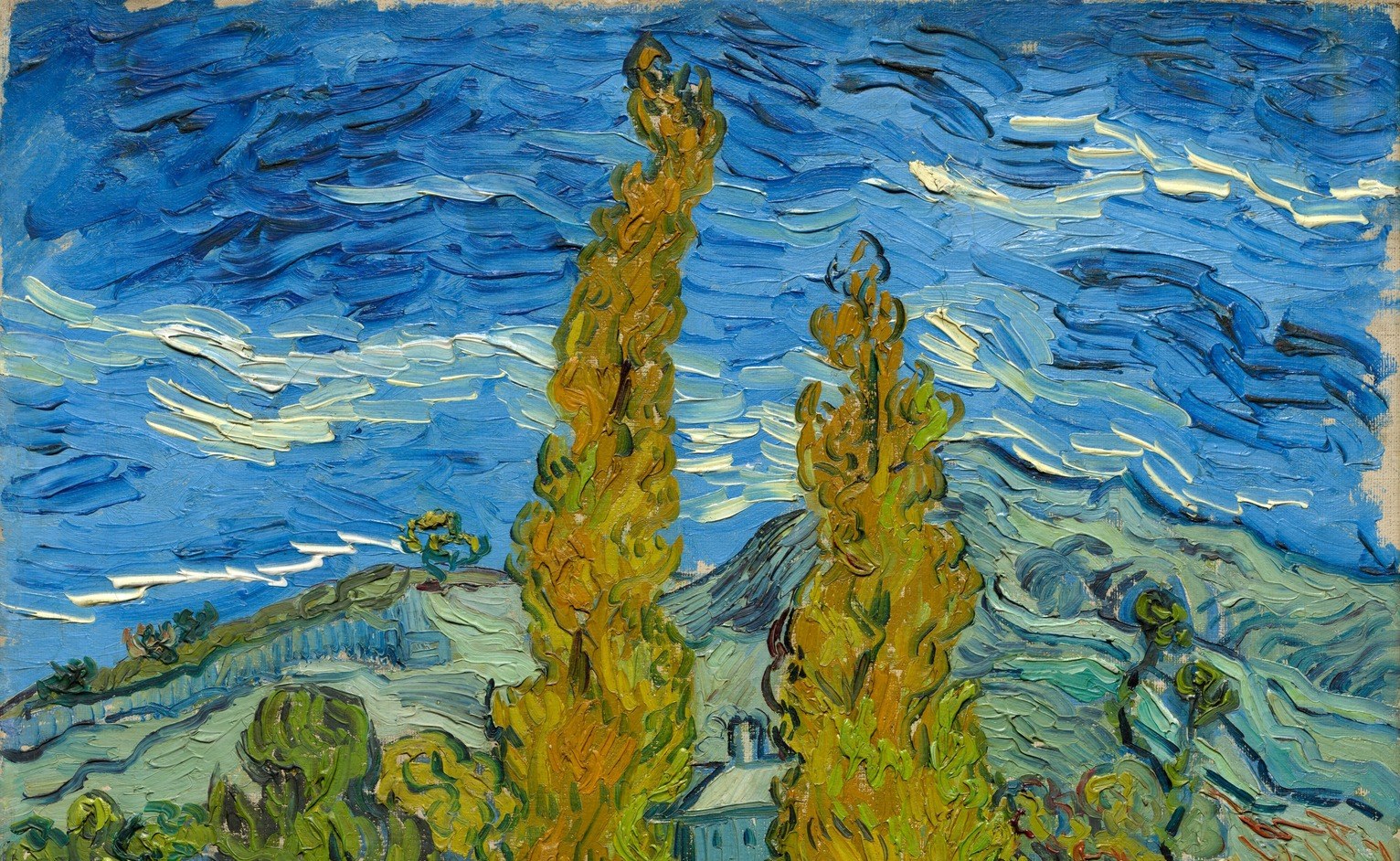
Two Poplars in the Alpilles near Saint-Rémy by Vincent van Gogh
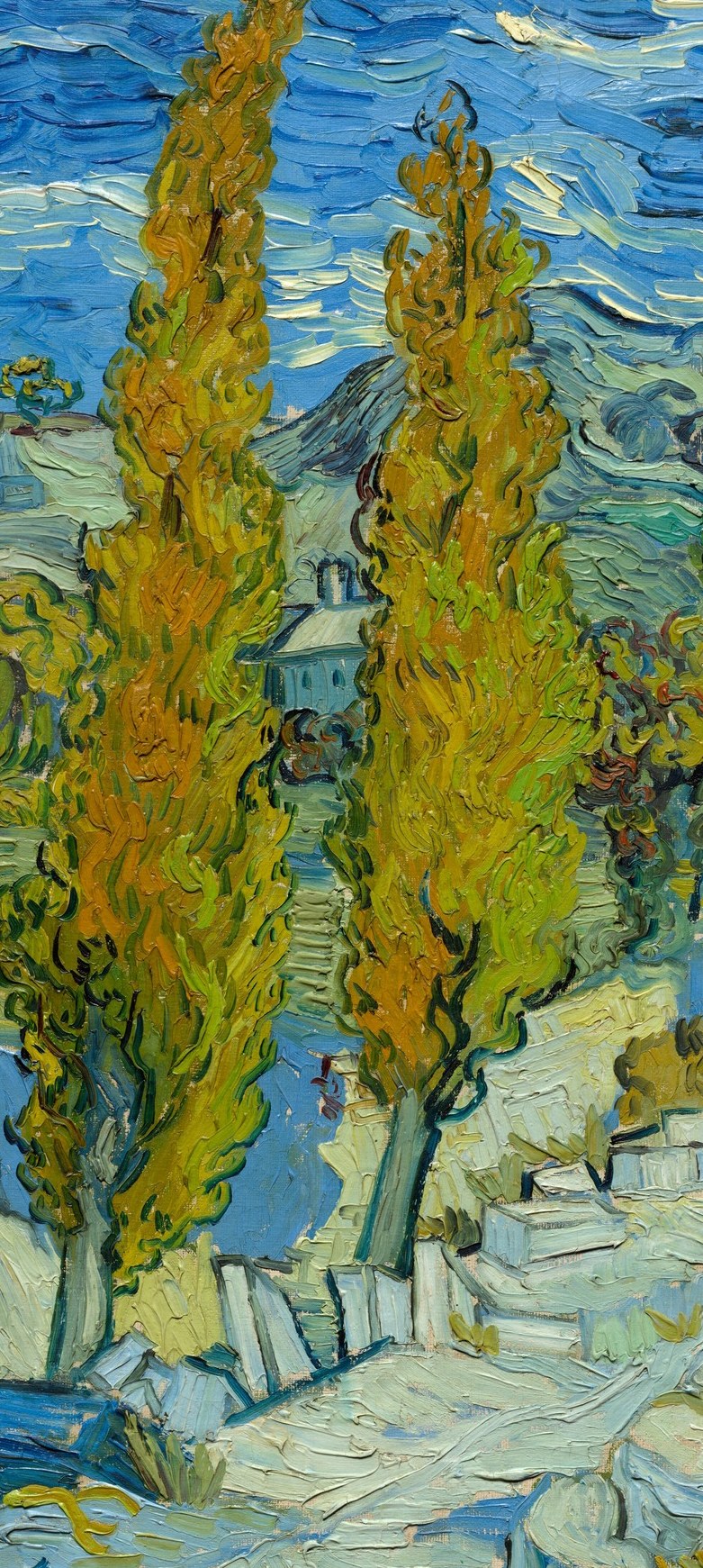
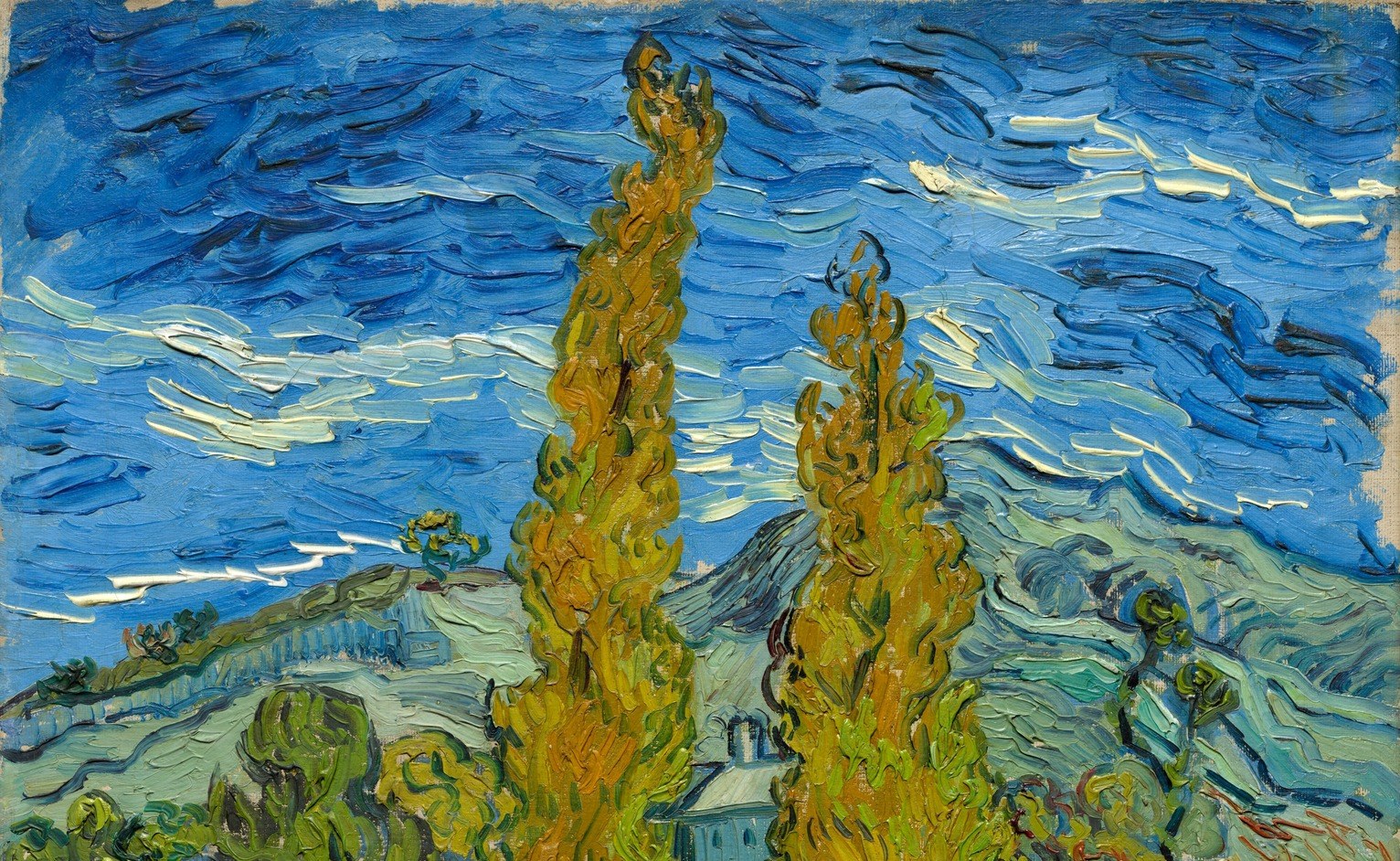
Vincent van Gogh’s 'Two Poplars in the Alpilles near Saint-Rémy', painted in 1889, is a masterclass in impasto and color. Held at The Cleveland Museum of Art, this painting showcases his distinctive technique, where oil paint transcends its medium to become a vibrant, energetic force.
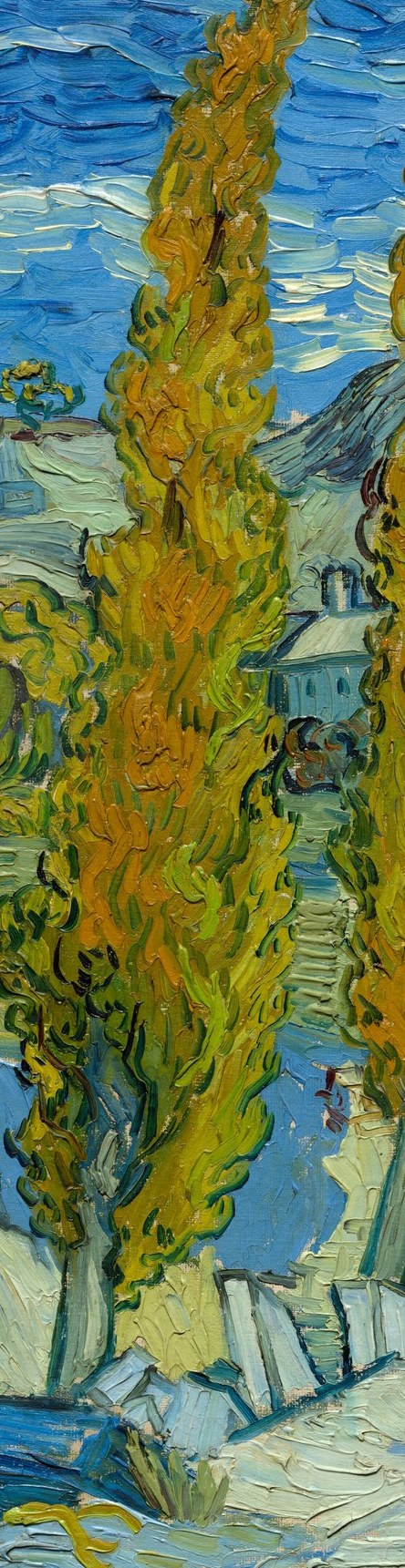
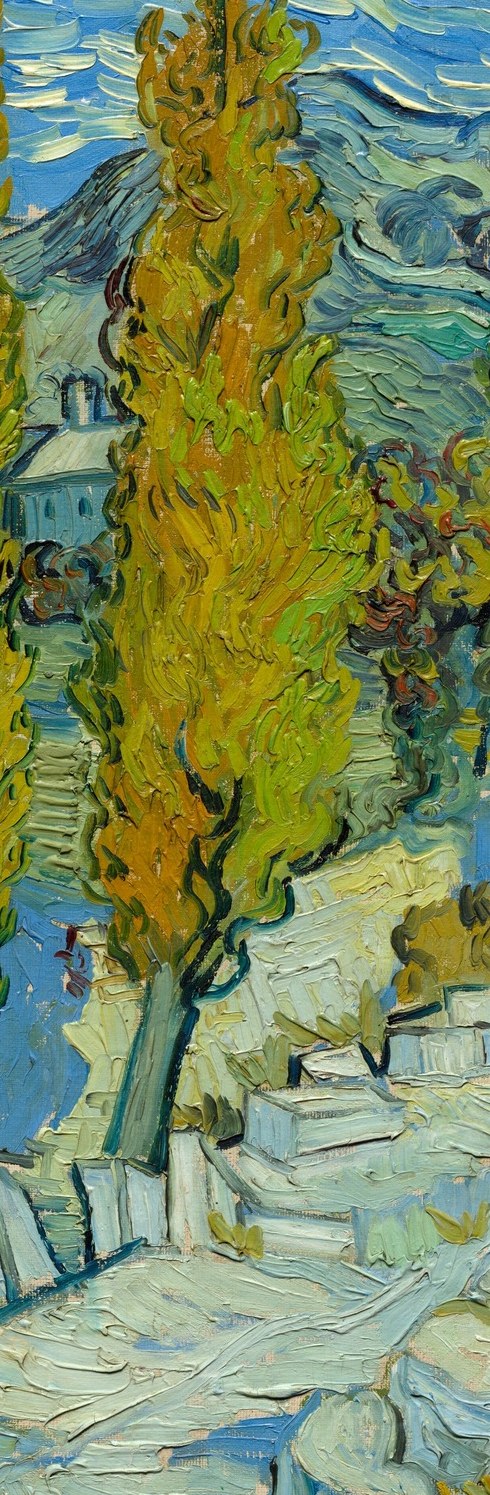
Look closely at the trees and the sky. Van Gogh applied paint so thickly that each brushstroke stands proud from the canvas, giving the scene a sculptural, almost three-dimensional quality. This textured approach captures the dynamism of nature, making the light and movement palpable.
Created just a year before his death, this work exemplifies the bold colors and dramatic, expressive brushwork that define his legacy. It was in his final, prolific years that Van Gogh produced some of his most iconic and influential pieces, often exploring landscapes around Saint-Rémy.
What feeling does this raw, textured painting evoke in you?
Details
Transcript
This painter turned oil paint into pure energy. He built the trees with thick, sculptural strokes. Each mark of paint stands up from the canvas. The sky, too, is a swirl of vibrant, textured color. He used the raw paint to capture the light itself. A unique vision, painted just a year before his death.