Joseph Accused by Potiphar's Wife by Dutch 17th Century
View the artwork: Joseph Accused by Potiphar's Wife →
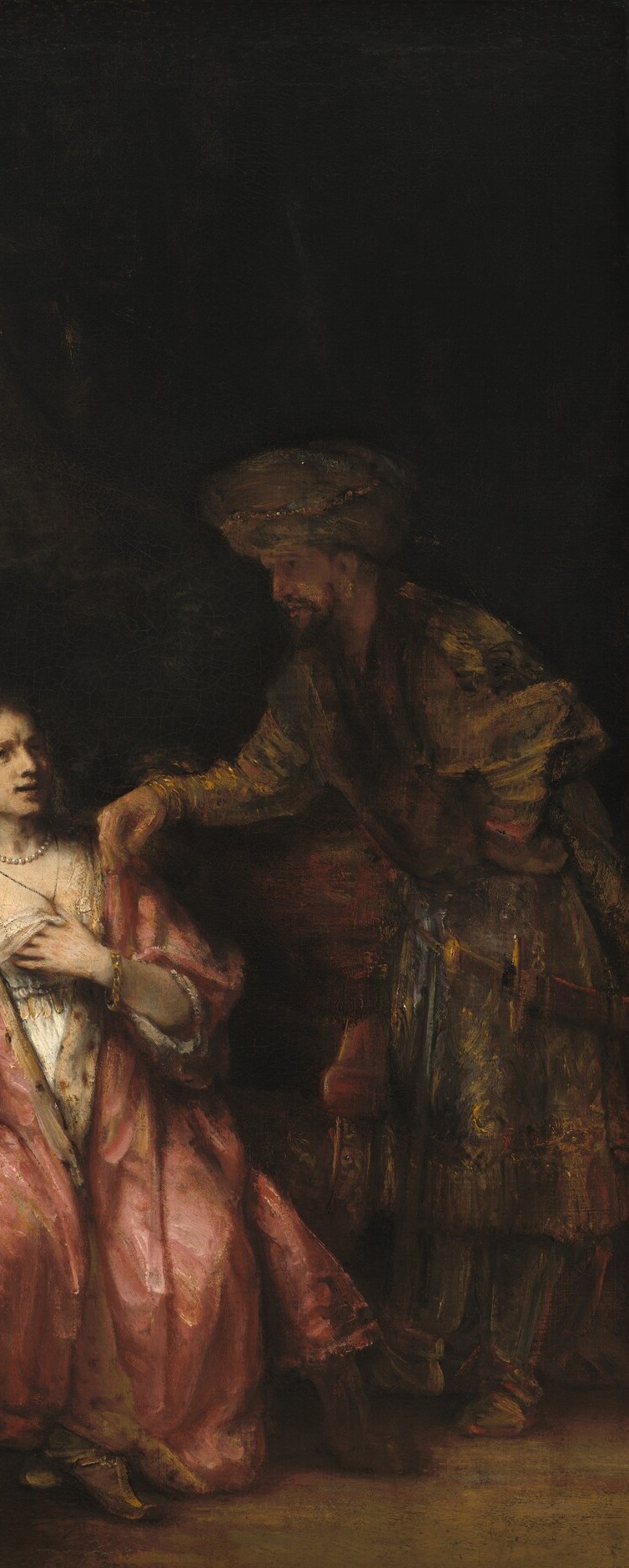
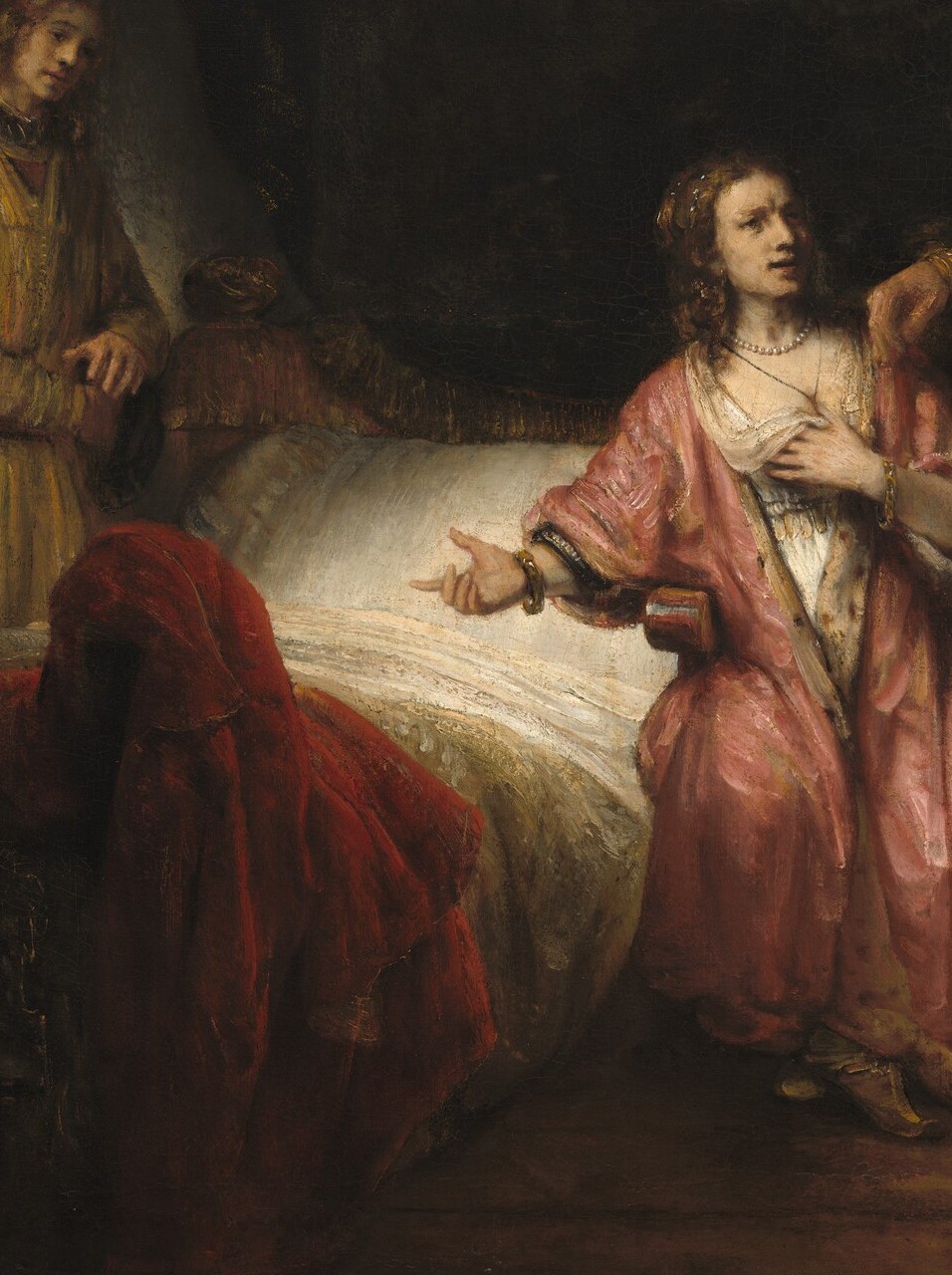
This is Joseph Accused by Potiphar's Wife, painted in 1655 in Rembrandt's workshop and now in the National Gallery of Art. For centuries it was called an autograph Rembrandt. Since the 1960s, scholars have largely reattributed it to a pupil, possibly Constantijn van Renesse, who understood exactly what his teacher's name sold: the illusion that paint is silk, and that light is judgment.
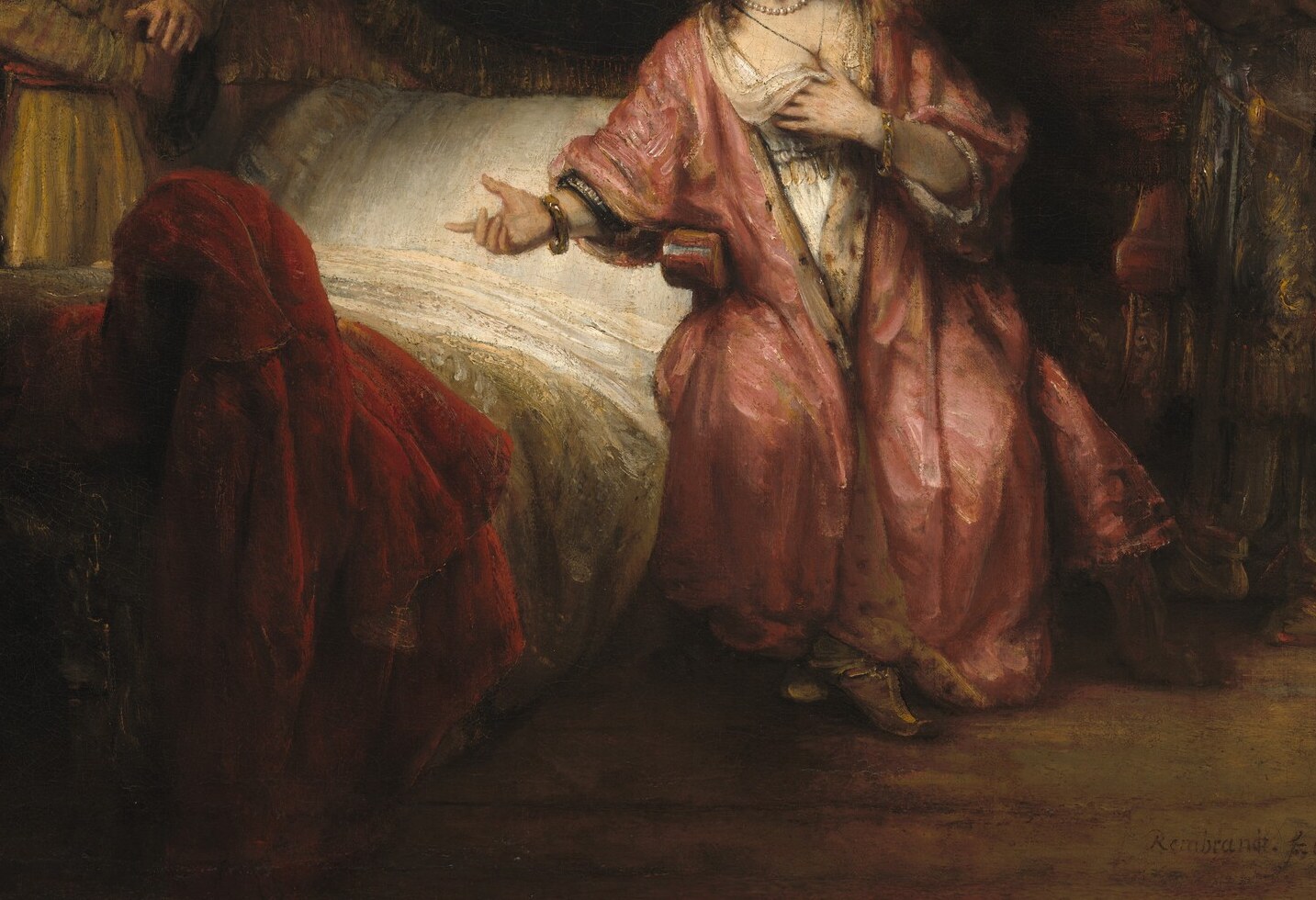
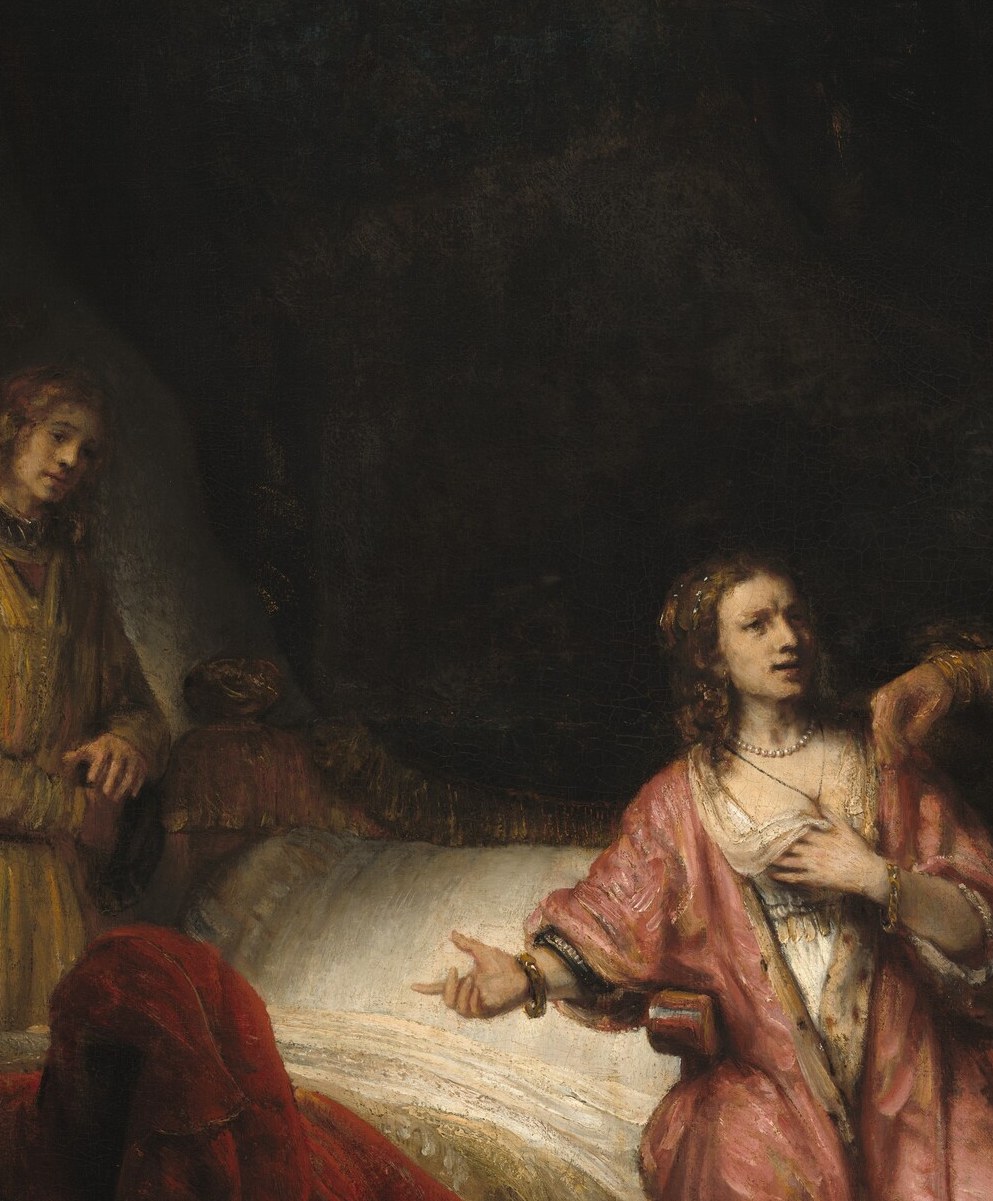
Look where the painter put the effort. The pink silk robe dominates the entire palette; its folds are luminous, liquid, impossibly soft. No other surface in the canvas, not Joseph's tunic, not the bed linens, not Potiphar's shadowed face, gets this treatment. The technique argues: this is the object worth looking at. And the object worth looking at belongs to the liar.
The story is Genesis 39. Joseph, enslaved in Potiphar's house, refuses his master's wife. She seizes his abandoned red robe as fabricated proof of assault. Here the workshop unites all three figures in a single theatrical confrontation, a staging that may have been inspired by Joost van den Vondel's 1639 play Joseph in Egypten. The canvas itself was enlarged during execution, strips added to the left and bottom, suggesting the composition evolved as the painters worked.
The painting traveled from a Dutch collection to Catherine the Great's Hermitage, then survived the Soviet sale of 1931 to enter Andrew Mellon's hands. He gave it to the National Gallery in 1937. The trick still works. Walk up to it and your eye goes straight to the pink silk, exactly where the painter wanted it, exactly where the lie lives.
#arthistory #rembrandt #dutchgoldenage
Details
Transcript
Start with the pink silk. No other surface in this painting gets this treatment. The painter saved his best trick for the liar. A single spotlight isolates her, the accuser becomes the moral center. And the evidence is just a red robe draped on a bedpost. Rembrandt's workshop painted this in 1655. Scholars now think a pupil did the heavy lifting. But they learned the lesson: make the lie beautiful, and people will believe it.