Artwork
Joseph Accused by Potiphar's Wife
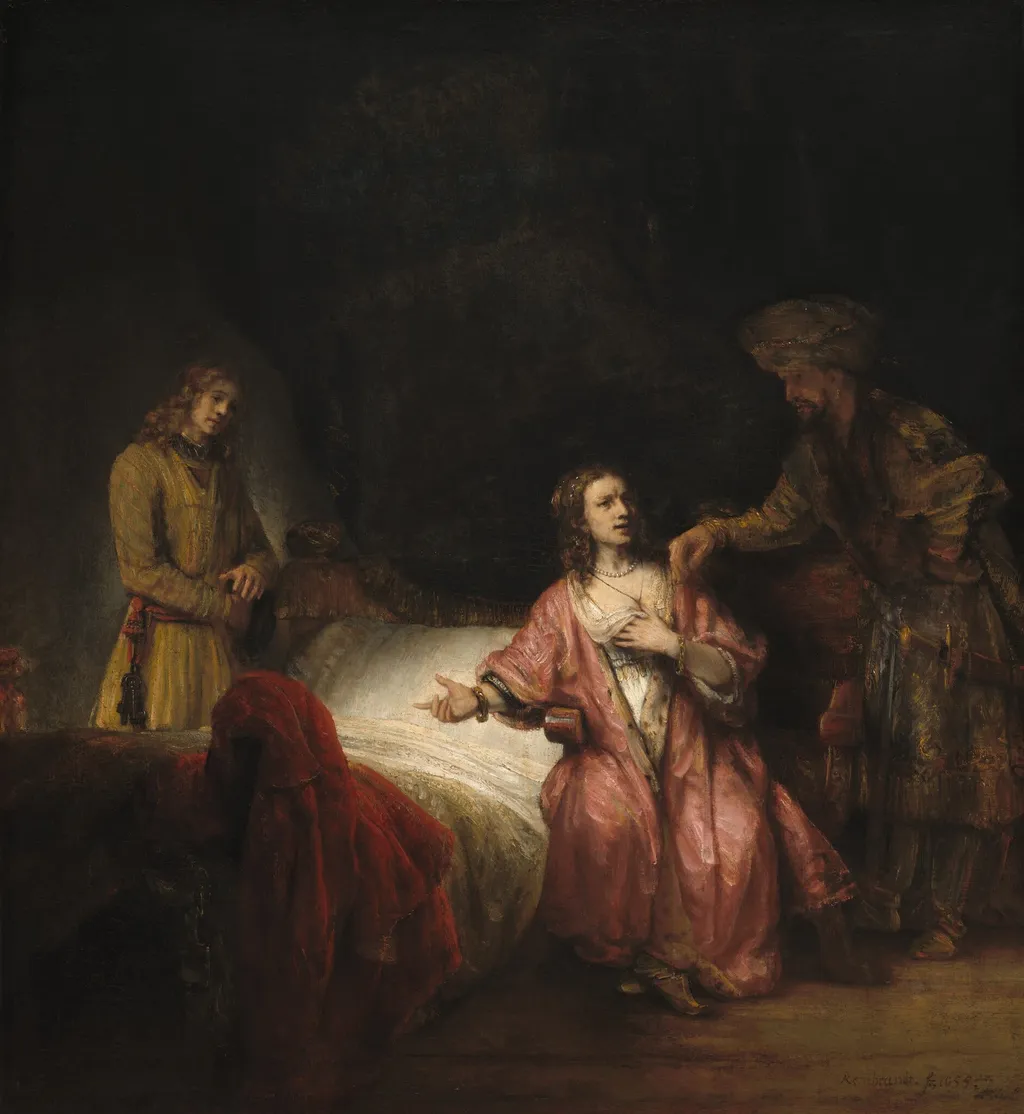
Joseph Accused by Potiphar's Wife is an oil painting. It is held in the collection of the National Gallery of Art.
- Inscription
- Inscribed:lower right: Rembrandt. f.1655.
About this work
Potiphar's wife clutches her chemise in feigned innocence while pointing to Joseph's red robe on the bedpost, the fabricated evidence of his assault. Inscribed 'Rembrandt. f. 1655,' the canvas passed through Catherine the Great's Hermitage before Andrew Mellon bought it for the National Gallery of Art in 1931. Scholars now place its execution within Rembrandt's workshop.
Subject & Meaning
The composition includes the three figures and a bed, establishing the private chamber setting of the attempted seduction and subsequent accusation.
The painting depicts the biblical episode from Genesis in which Potiphar’s wife (Zuleika) falsely accuses Joseph before her husband, Potiphar. The composition includes the three figures and a bed, establishing the private chamber setting of the attempted seduction and subsequent accusation. Classified as religious art, the work’s main subject is explicitly the confrontation between Joseph and Potiphar’s wife.
Technique & Style
The painting is executed in oil on canvas, with the original support having been transferred to another canvas at an unknown date, a common conservation practice. The work measures 105.7 × 97.8 cm. The medium and support are typical of seventeenth-century Dutch painting, though no specific brushwork or handling details are recorded in the sources. The religious subject is rendered in a manner consistent with the period's narrative style, but formal stylistic analysis (e.g., chiaroscuro, facture) cannot be elaborated from the available information. The transfer suggests possible early condition issues, but no further condition notes are provided.
History & Provenance
The painting has a documented provenance dating back to the collection of Gerard Hoet Jr. in The Hague, where it sold at auction in 1760 for 100 florins. It was subsequently owned by Johann Ernst Gotzkowsky of Berlin before being acquired in 1763 by Catherine II of Russia for the Imperial Hermitage Gallery in Saint Petersburg. In January 1931, the Hermitage sold the work through a consortium of Matthiesen Gallery, Colnaghi, and Knoedler to Andrew W. Mellon, who deeded it to his charitable trust in 1937; it was gifted to the National Gallery of Art that same year.
The work is dated to 1655 and has been attributed to the Dutch school of the 17th century, with some sources ascribing it to Rembrandt or his studio.
Overview
This oil painting, titled Joseph Accused by Potiphar's Wife, depicts a dramatic biblical scene from Genesis 39. While long attributed to Rembrandt, scholarly consensus now places its execution within his workshop around 1655. The composition uniquely gathers all three protagonists in a theatrical confrontation, diverging from traditional textual accounts. It has undergone significant conservation, including a transfer to a new canvas support in the 19th century.
Context
The painting's unique composition, uniting all three characters in a direct confrontation, deviates from both the biblical account in Genesis and Flavius Josephus's Antiquities of the Jews, a text Rembrandt owned. This staging may reflect the influence of contemporary theater, possibly inspired by Joost van den Vondel's 1639 play Joseph in Egypten, which similarly brought the protagonists together on stage to heighten the dramatic tension of the narrative.

Artist & collection

 The Death of Lucretia
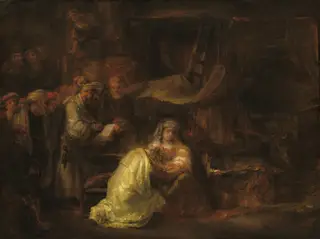 The Circumcision
 De verloochening van Petrus
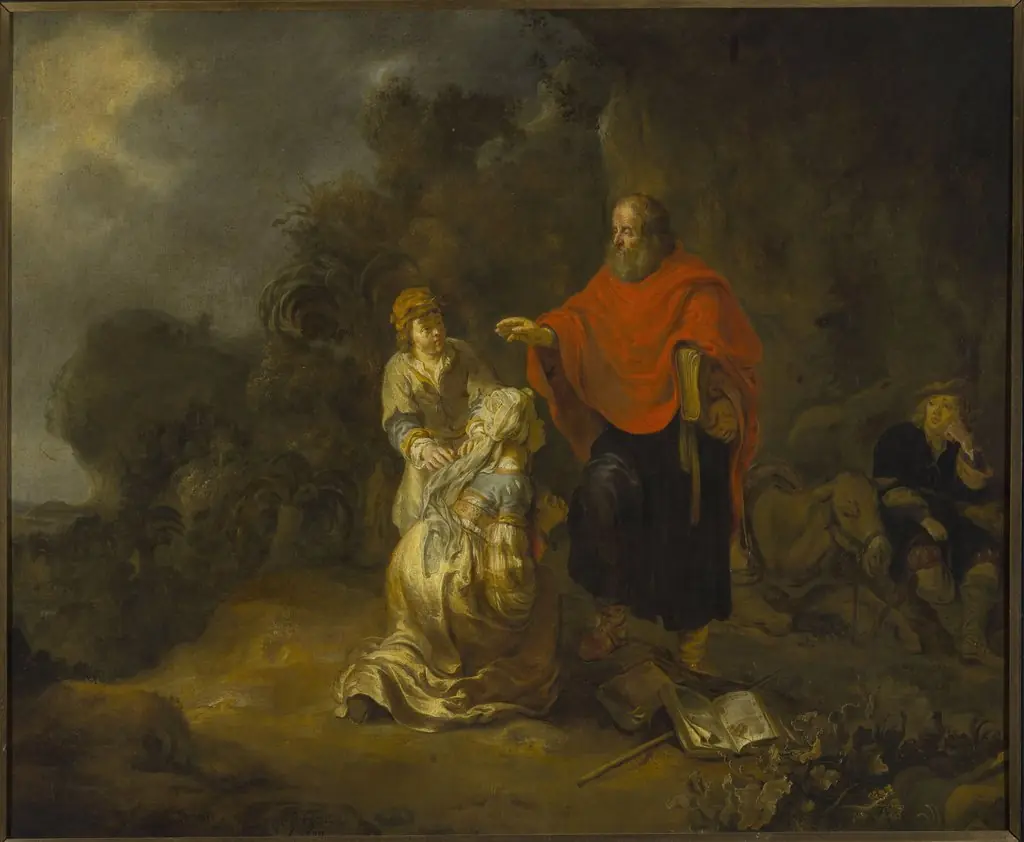 Prophet Elisha and the Shunammite woman on Mt. Carmel
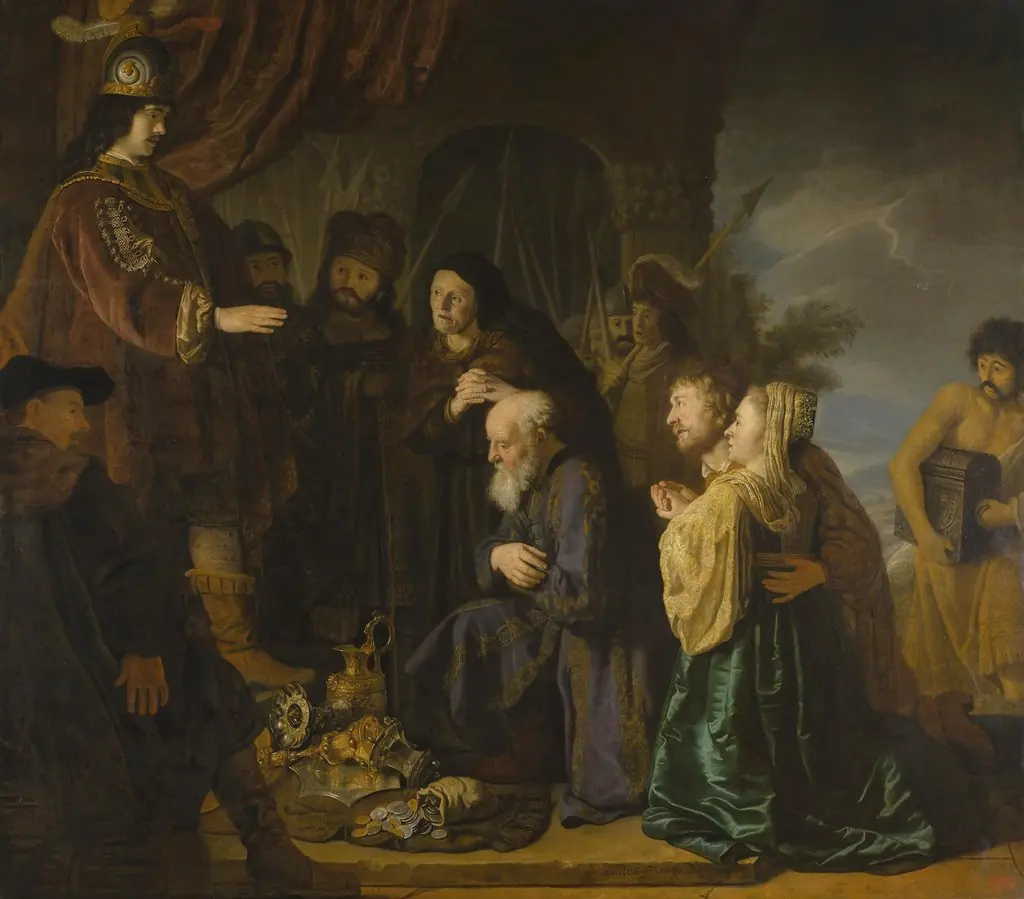 The Magnanimity of Scipio Africanus
 The Denial of Saint Peter
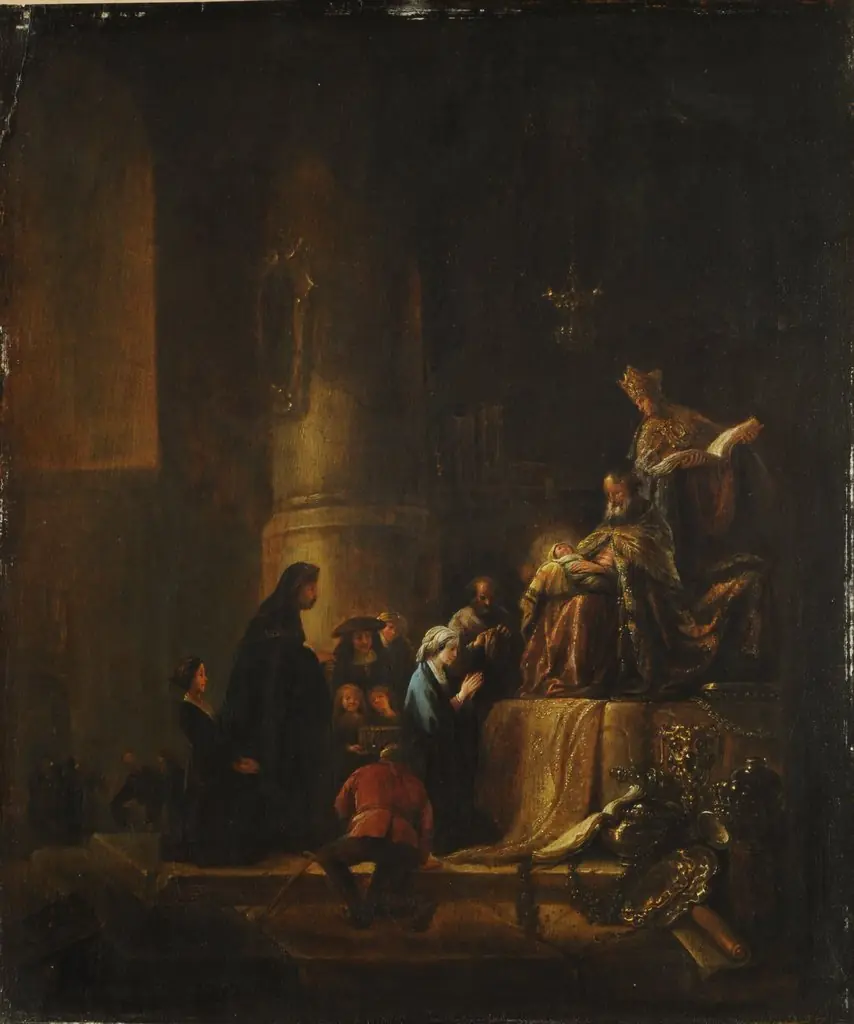 Presentation to the temple
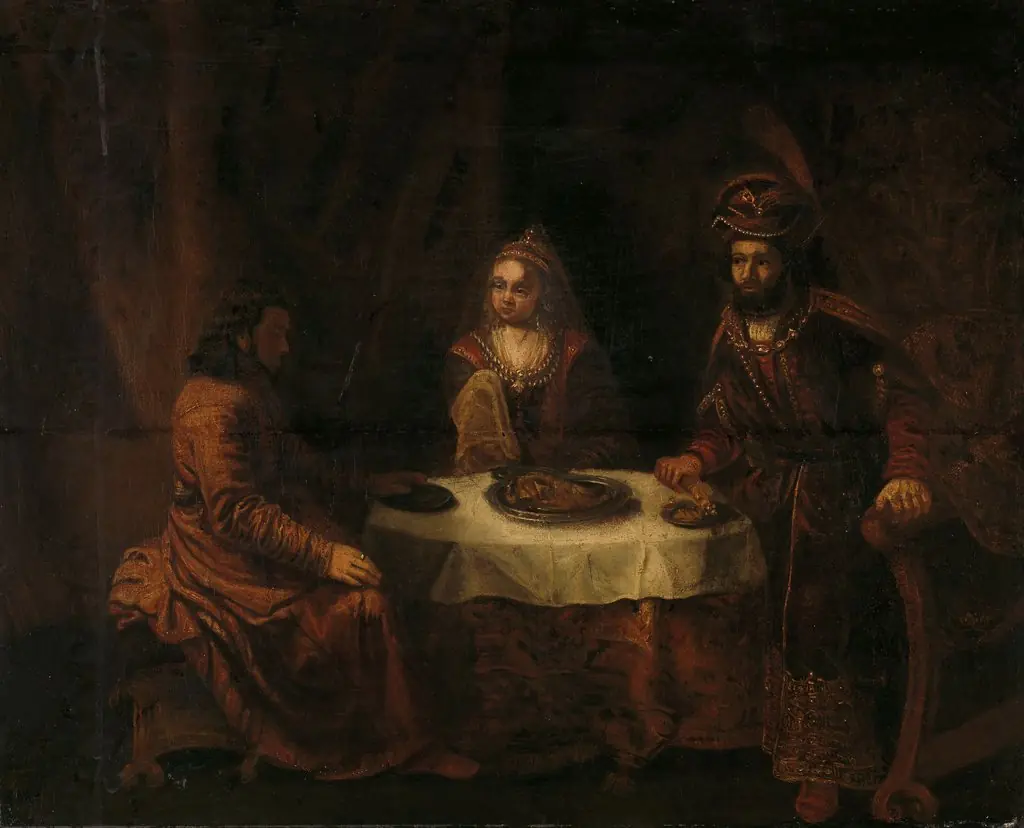 The wrath of Ahasuerus
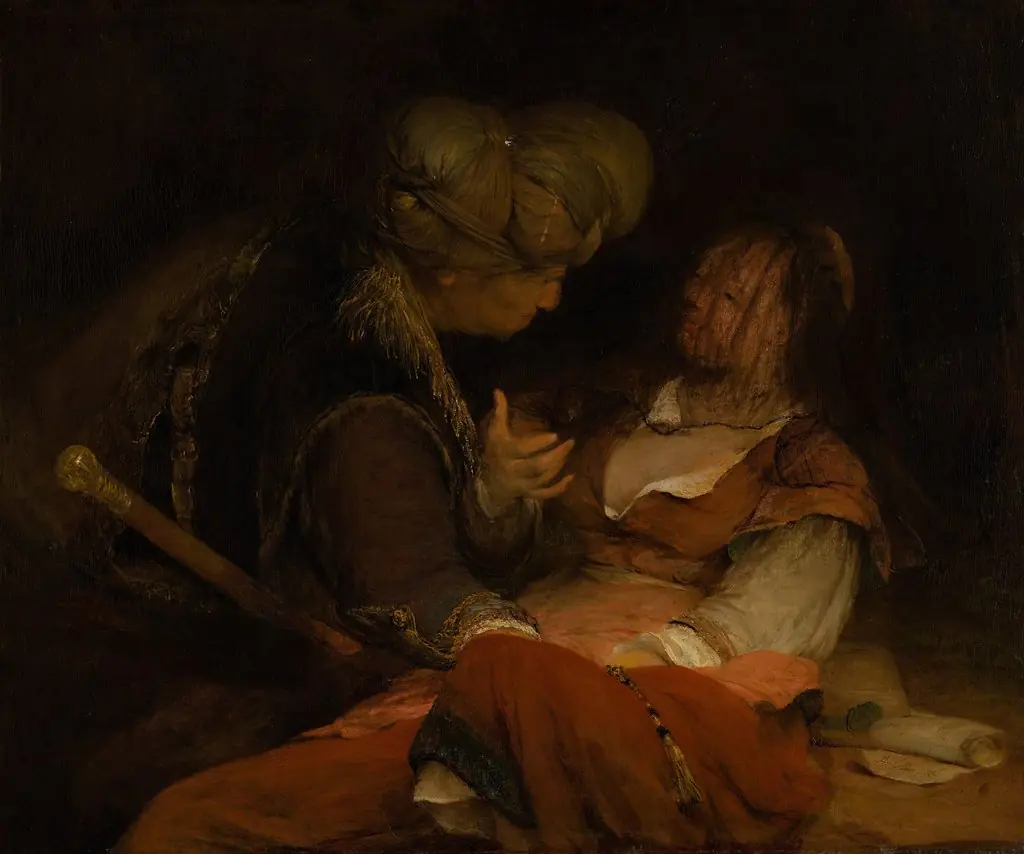 Judah and Tamar
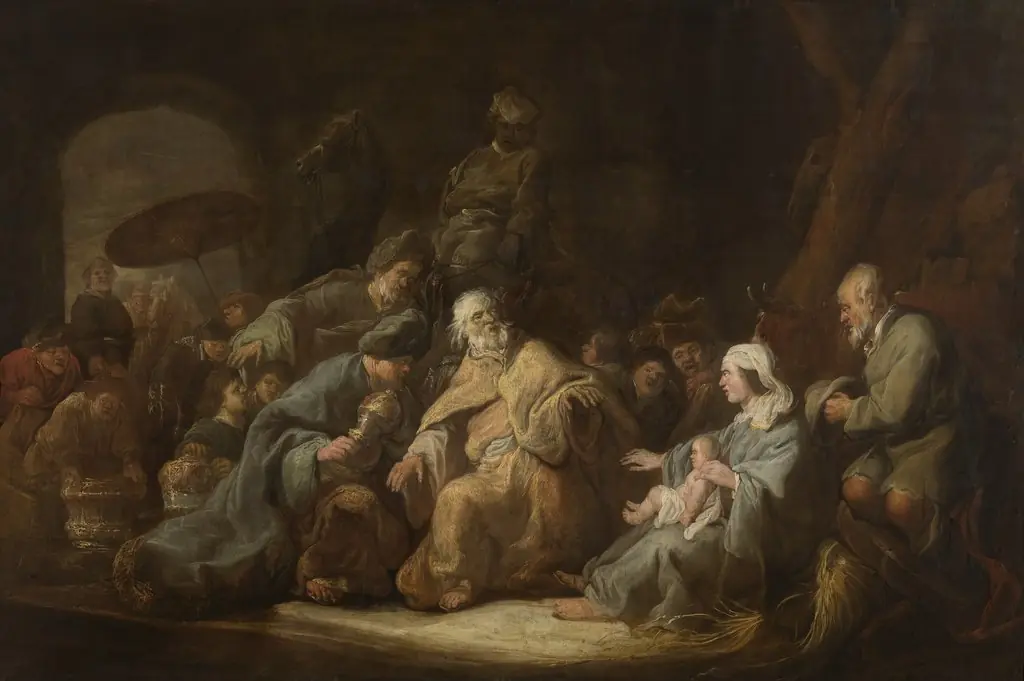 The Adoration of the Magi
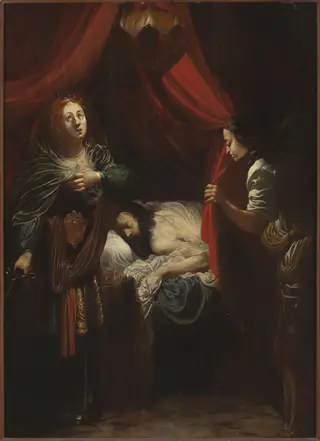 Judith in the tent of Holofernes (Judith 13:4-6)
- Joseph accused by Potiphar's wife