Newburyport Meadows by Martin Johnson Heade
View the artwork: Newburyport Meadows →
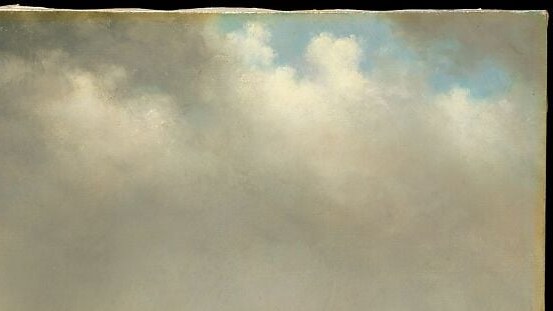
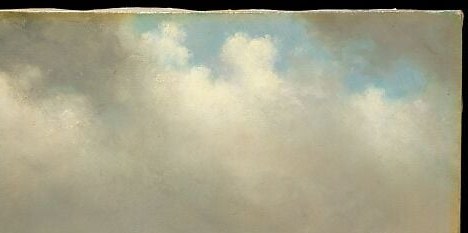
This painting hides its human presence almost completely. Martin Johnson Heade's Newburyport Meadows (ca. 1876-81), held at the Metropolitan Museum of Art, is a quiet rebellion against the monumental mountain vistas that dominated American landscape painting of its era. Heade chose instead the flat, damp salt marshes of Massachusetts, and he gave the overwhelming majority of the canvas to the sky.
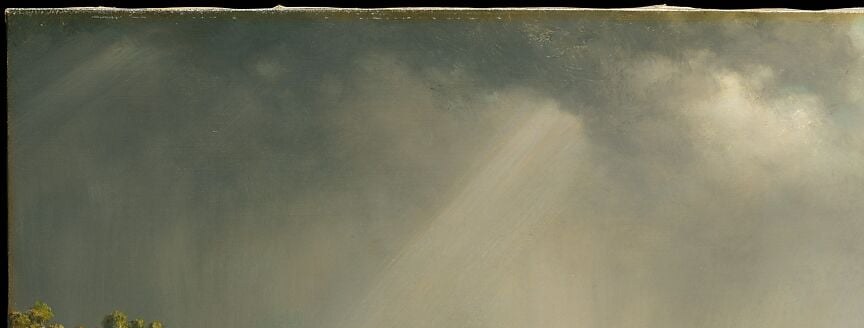
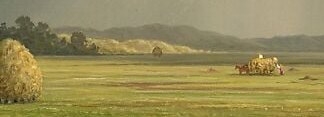
The drama here is purely atmospheric: a shaft of golden light breaks through dark storm clouds on the right, flooding the meadow while the left side remains in shadow. The small, rounded haystacks anchored in the grass act as scale markers, emphasizing the sheer expanse of the landscape. A thin tidal creek gleams through the center, identifying this as a coastal wetland and reflecting the sky's own turmoil back upward.
Heade was an itinerant painter who, unlike his Hudson River School contemporaries, fixated on these understated, marginal environments. During the 1870s and 80s he repeatedly painted the Newburyport marshes, studying the specific matted texture of the wet ground and the transient effects of coastal light. His work fell into obscurity after his death in 1904, only to be dramatically rediscovered in the 1940s when historians recognized his unique luminist sensibility, the spiritual quality he found in precise, quiet observation of flat land and open water.
Next time you see a landscape that seems empty, slow down. Look to the margins. Heade put his whole argument for attention right there on the far-left edge.
#arthistory #luminism #americanart
Details

Transcript
At first glance, the whole story is the weather. Storm shadow on the left, golden light flooding the right. Heade painted this salt marsh around 1876, near Newburyport, Massachusetts. A thin tidal creek cuts across the middle, doubling the glow. The tiny haystacks make the meadow feel enormous by comparison. But look to the very edge of the land. A village and church spire, barely visible, nearly swallowed by the scene. Heade pushed civilization to the margin, making the sky the true subject.