Artwork
Newburyport Meadows
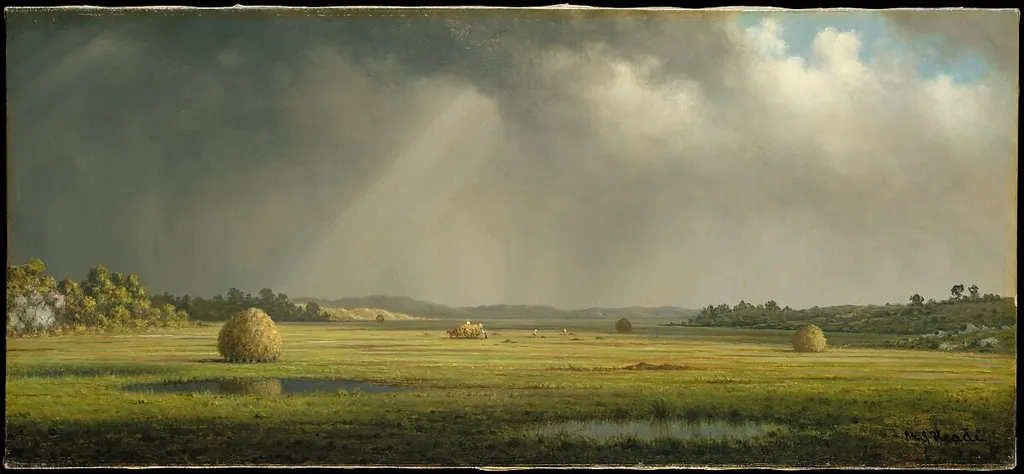
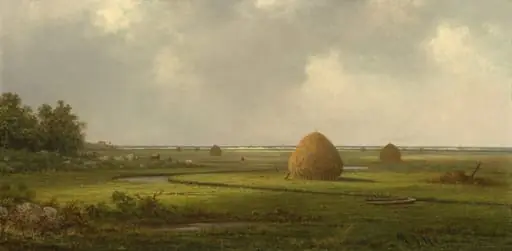
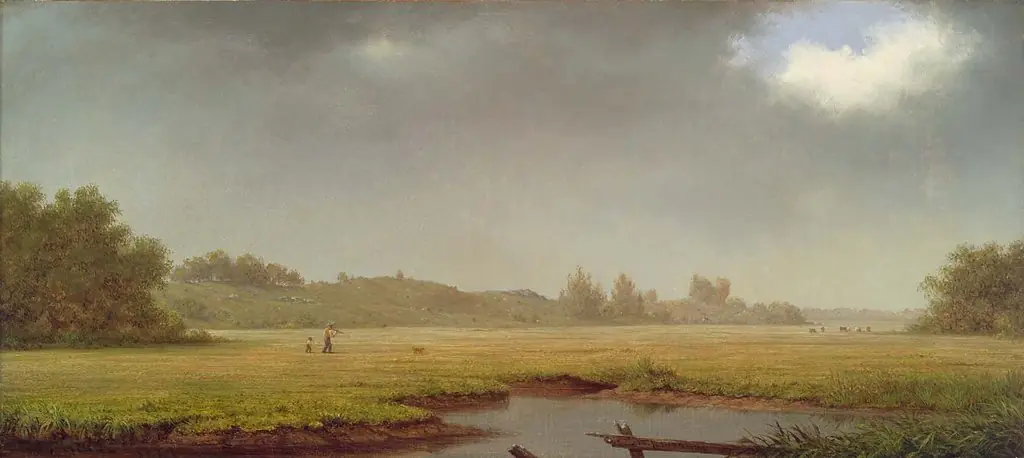
Newburyport Meadows is an oil painting by the American Impressionist artist Martin Johnson Heade. It dates from 1878 and is held in the collection of the Metropolitan Museum of Art.
About this work
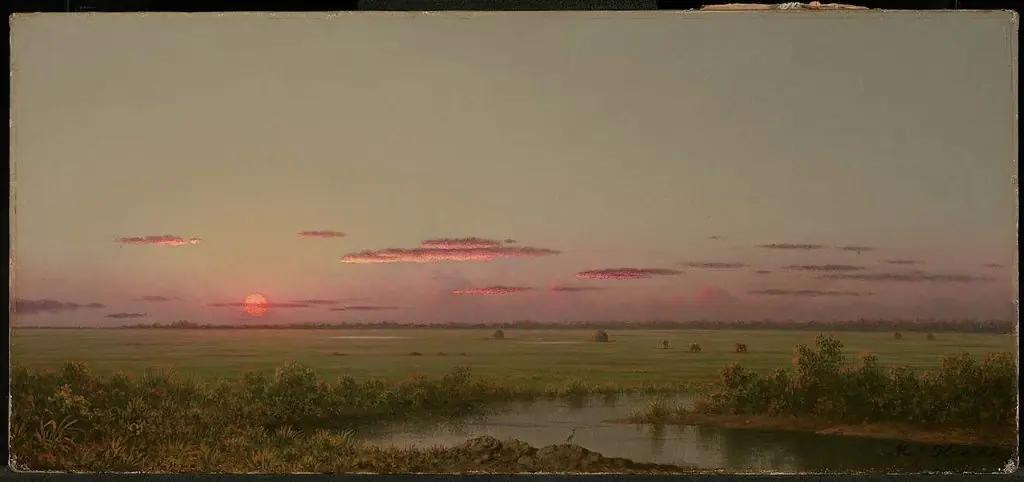
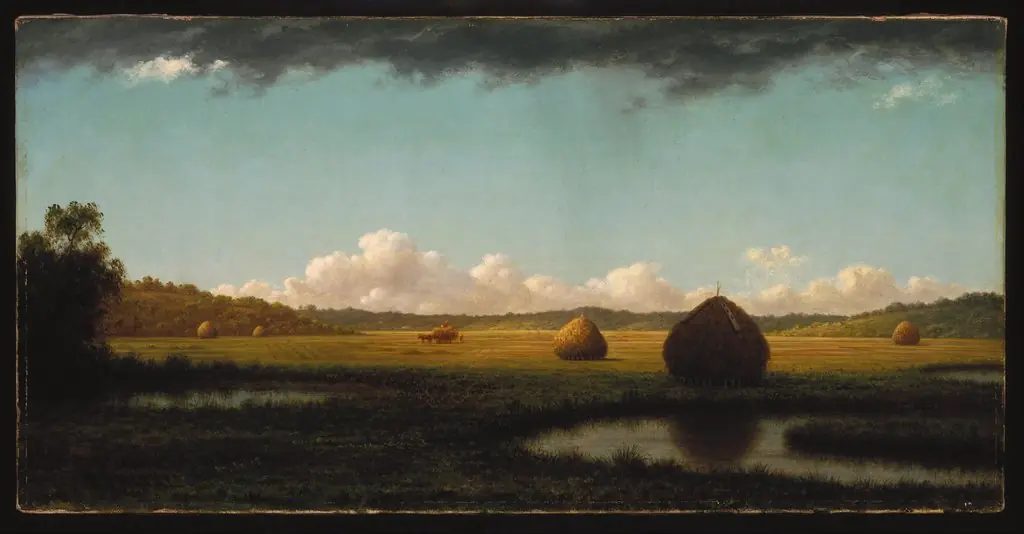
Flat, wet grasslands stretch beside a river, tiny haystacks dotting the land while the sky fills the upper half of the canvas. Martin Johnson Heade returned often to marshes like this, drawn to the light on water and air when other painters chose grand mountains and forests. Around 1878.
Subject & Meaning
The work represents a specific geographical location, documenting the visual qualities of the Newburyport region through the medium of oil on canvas.
Created in 1876, Martin Johnson Heade's Newburyport Meadows is a landscape painting that captures the coastal marshlands of Newburyport. The composition focuses on the flat, expansive terrain of the meadow, characterized by its low-lying vegetation and wetland environment. A defining element of the work's iconography is the inclusion of a haystack, which sits within the marsh setting.
This agricultural feature serves as a focal point against the horizontal stretch of the landscape. The work represents a specific geographical location, documenting the visual qualities of the Newburyport region through the medium of oil on canvas. By combining the natural elements of the marsh and meadow with the man-made haystack, the painting illustrates the intersection of local agriculture and the distinct ecology of the Massachusetts coast.
Technique & Style
Newburyport Meadows is an oil painting on canvas completed in 1876 by Martin Johnson Heade. The work is executed on a rectangular canvas support measuring approximately 26.7 cm in height and 55.9 cm in width. As a landscape, it depicts a marsh scene near Newburyport that includes a meadow and a haystack.
The oil medium on canvas provides the surface for the detailed rendering of these elements. The painting exemplifies the landscape genre.
History & Provenance
Newburyport Meadows is an oil-on-canvas landscape painting created by Martin Johnson Heade in 1876. The work depicts the marshlands, meadows, and haystacks characteristic of the Newburyport area. While the specific commission details and original ownership chain are not documented in the available records, the painting's creation is firmly dated to 1876.
It is currently part of the collection of the Metropolitan Museum of Art in New York, where it is housed within The American Wing. The artwork measures 26.7 inches in height and 55.9 inches in width, representing Heade's focus on coastal marsh scenes during this period of his career.
Overview
Newburyport Meadows, painted by Martin Johnson Heade in 1878, is a representative example of the artist's mature marsh landscape series. The composition depicts the flat, tidal grasslands of Newburyport, Massachusetts, characterized by a vast, luminous sky that occupies approximately half of the canvas. This emphasis on the atmospheric conditions reflects Heade's departure from the grandiose mountain vistas typical of the Hudson River School, focusing instead on the subtle interplay of light and moisture in low-lying wetlands.
Small, isolated haystacks punctuate the foreground, serving as rhythmic visual anchors against the expansive, undulating terrain. Executed in oil on canvas, the work demonstrates Heade's distinctive technique of layering thin glazes to capture the specific humidity and soft light of the New England coast. Created during a period when the artist was deeply engaged in documenting the unique ecology of coastal marshes, this painting underscores his role as a pioneer in American landscape painting who found aesthetic significance in the mundane and the marshy.
The work remains a key illustration of Heade's ability to transform a seemingly ordinary stretch of wetland into a study of light, space, and atmospheric mood.
Context
During a period when many American landscape painters favored monumental depictions of mountains, forests, and dramatic natural wonders, Heade distinguished himself by focusing on more intimate and less imposing subjects. His repeated choice of marshlands and coastal plains, such as those seen in Newburyport Meadows, represented a departure from prevailing artistic trends. This preference allowed him to explore the subtle beauty and atmospheric qualities of these quiet, expansive spaces.
Legacy
Heade's distinctive marsh scenes, including Newburyport Meadows, have drawn comparisons to the work of other American artists who explored similar themes of light and landscape. Observers have noted stylistic parallels between Heade's atmospheric depictions and certain watercolors by Winslow Homer, particularly in their shared attention to the transient effects of light and the quiet solitude of natural settings.
Artist & collection

Artist
Martin Johnson Heade (August 11, 1819 – September 4, 1904) was an American painter known for his salt marsh landscapes, seascapes, and depictions of hummingbirds, often depicted with orchids, as well as lotus blossoms and other still lifes.