Pioneer's Home, Eagle Cliff, White Mountains by Jasper Francis Cropsey
Jasper Francis Cropsey, a prominent artist of the Hudson River School, captured the essence of American landscapes. His 1859 oil painting, "Pioneer's Home, Eagle Cliff, White Mountains," showcases the dramatic beauty of the White Mountains alongside the quiet resilience of early settlers.
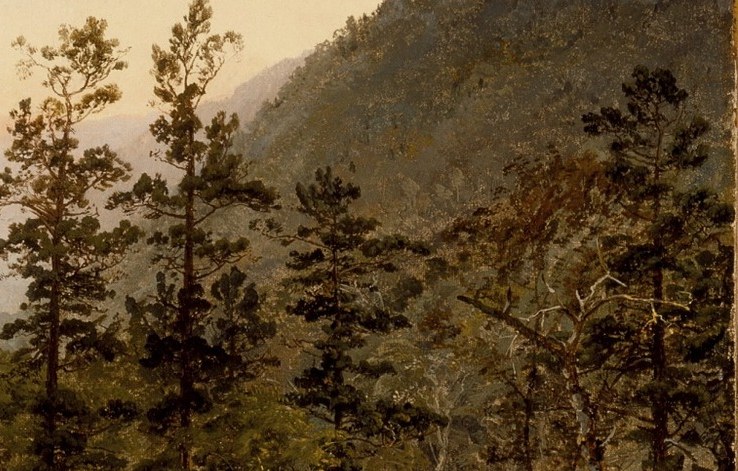
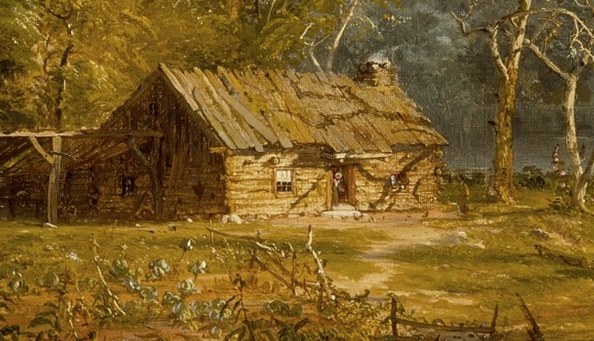
Look closely at the small, rustic cabin nestled amidst the towering pines and rugged cliffs. The axe leaning against the cabin and the dried sunflower stalks hint at human endeavor and the daily life of those who tamed the wilderness.
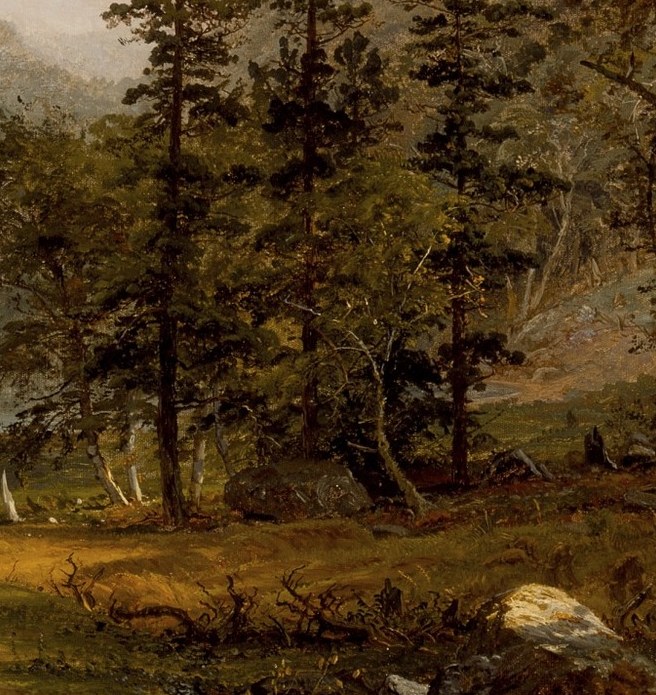
This work reflects Cropsey's mature phase, during which he increasingly focused on the stunning scenery of New England. His meticulous attention to light and shadow creates a harmonious, yet challenging, depiction of frontier existence.
The painting is a testament to the relationship between human habitation and the untamed natural world, now part of the collection at the Los Angeles County Museum of Art. What details do you notice first?
Details
Transcript
This painter was a master of grand American landscapes. He captures the quiet power of the White Mountains. Notice the small cabin, a pioneer's home in the wilderness. An axe leans against the wall, symbolizing hard work. The artist often focused on New England scenery in this period. He paints the harmony and challenges of frontier existence.