Pulpit in Saint Mark's, Venice by George Henry Yewell
In 1870, American artist George Henry Yewell captured the majestic interior of Saint Mark's Basilica in Venice. This oil painting, "Pulpit in Saint Mark's, Venice," is held at The Metropolitan Museum of Art.
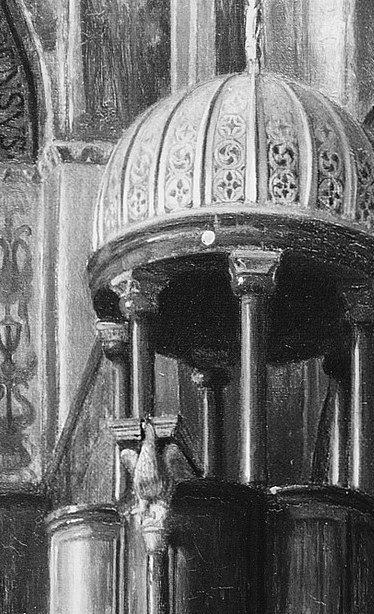
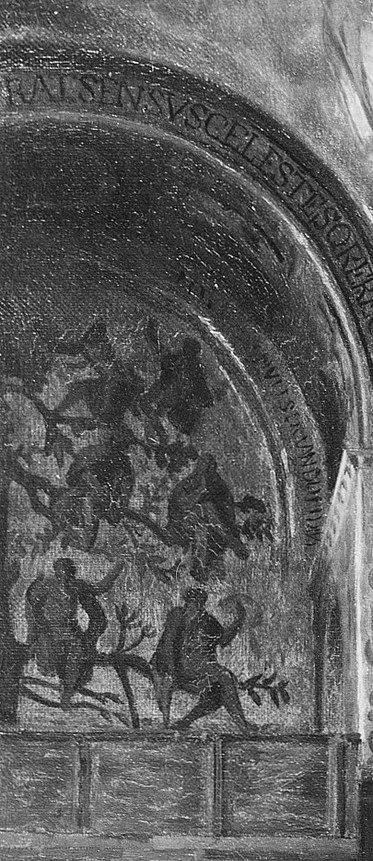
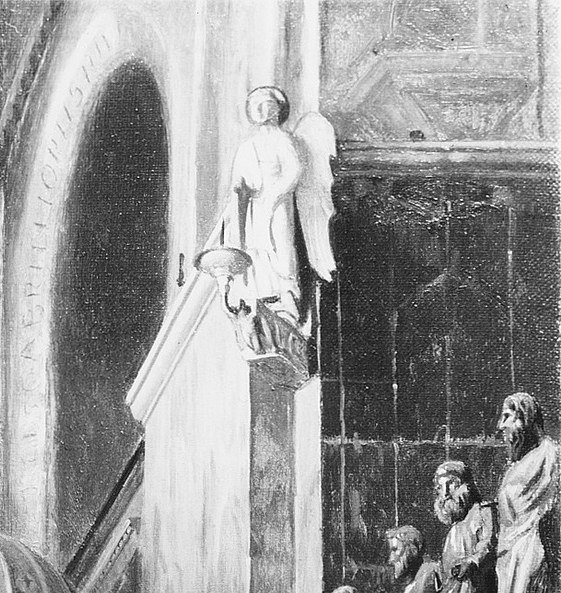
Yewell's composition draws the eye to the ornate pulpit, a focal point of the basilica's ceremonies. Notice the intricate carvings, including a delicate angelic figure, illuminated by the ambient light. The faded frescoes on the walls and the receding arched colonnades hint at the immense history and grandeur of this sacred space.
During this period, many American artists traveled to Italy to study European art and architecture. Yewell's work reflects his deep engagement with these historic sites, providing a meticulous record of the basilica's interior as it appeared in the late nineteenth century. He masterfully used light and shadow to bring out the textures of stone, creating an atmospheric depth.
This painting isn't just a depiction; it's a historical witness to a moment in time within one of the world's most iconic buildings. What details in the architecture catch your eye most?
Details
Transcript
Venice, 1870. An American painter captures Saint Mark's Basilica. He focused on this pulpit, central to the basilica's ceremonies. Light illuminates the carved angelic figure, a spiritual detail. These faded frescoes tell centuries of the basilica's story. The repeating arches recede, creating monumental depth. The artist studied Old Masters in Italy, documenting historic monuments.