Landscape with Cattle at Limousin by Jules Dupré
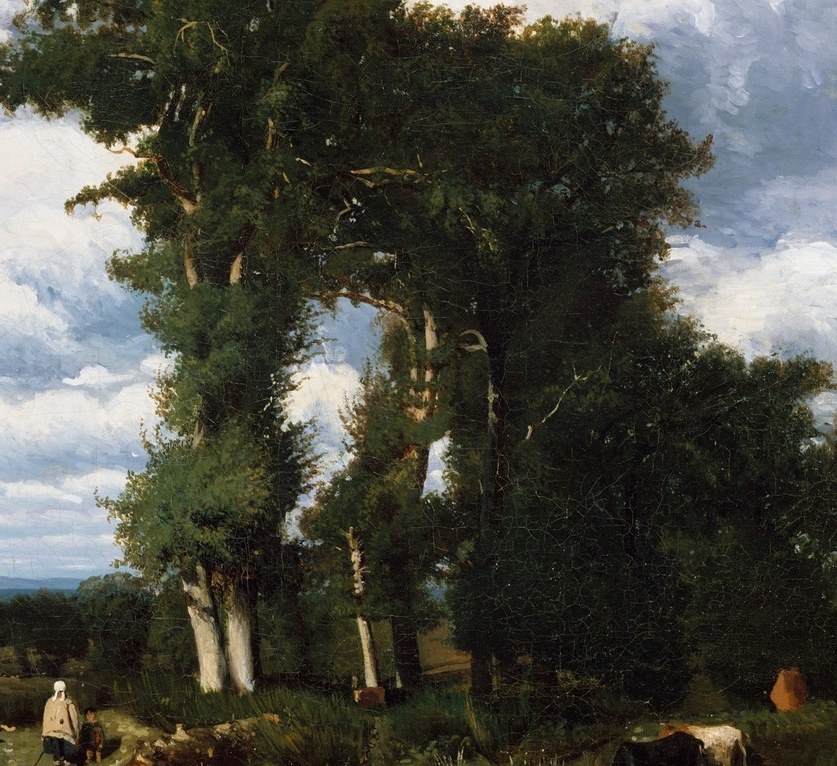
Jules Dupré's "Landscape with Cattle at Limousin," painted in 1837, is more than just a tranquil scene of the French countryside. This oil painting, part of The Metropolitan Museum of Art collection, represents a quiet rebellion against the dominant art world of its time.
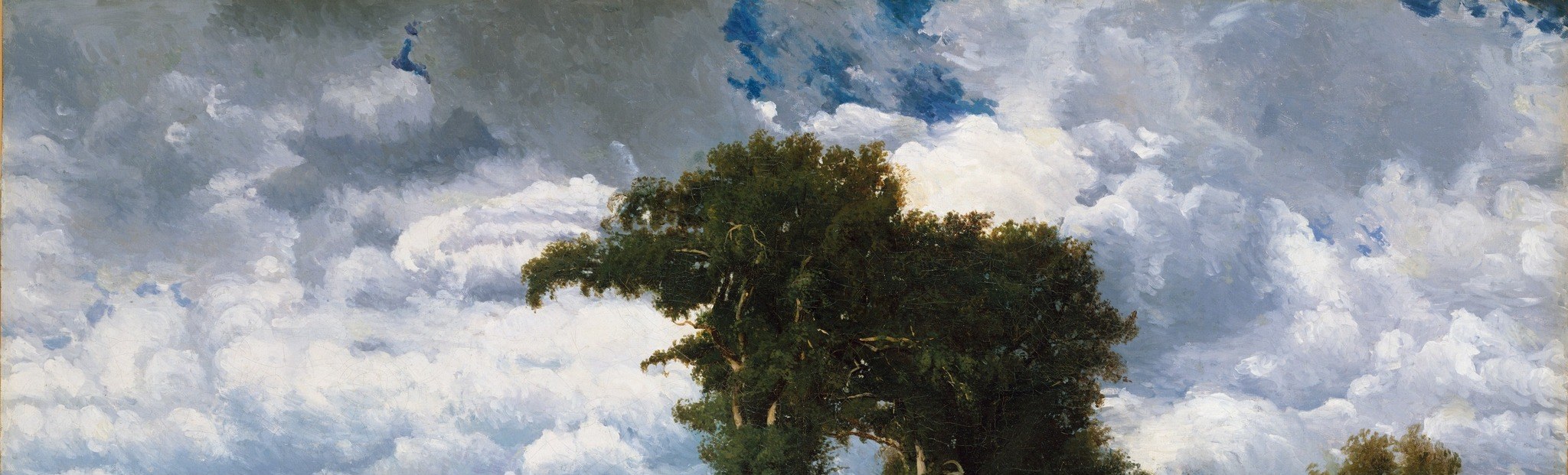
Dupré, a leading figure of the Barbizon school, chose to depict unidealized rural life. Notice the simplicity of the woman with her basket, the grazing cattle, and the dramatic, natural clouds. These ordinary elements were a radical departure from the grand historical or mythological subjects favored by the academic art establishments of the 19th century.
The Barbizon artists prioritized direct observation of nature, seeking to capture the authentic beauty of the French countryside. By focusing on everyday scenes rather than idealized narratives, Dupré and his contemporaries helped shift the course of landscape painting, paving the way for future art movements.
What do you find most striking about this unvarnished view of nature?
Details
Transcript
This painting, from 1837, shows an ordinary French landscape. Its painter, Jules Dupré, was a leader of the Barbizon school. They focused on painting landscapes from direct observation, not myth. Look at the woman in white and her basket, a simple rural scene. Or the heavy, dramatic clouds that fill the sky above the fields. This was a radical act, a quiet challenge to academic tradition.