Virgin and Child by http://www.wikidata.org/.well-known/genid/1285005b943a999d4439326ceb01fd01
This deeply resonant sculpture, "Virgin and Child" from the workshop of Tilman Riemenschneider, dating to circa 1350, reveals its long history through its surface. Though we see it today in muted tones, it was originally a vivid, painted artwork, a common practice for enhancing carved figures in medieval Europe.
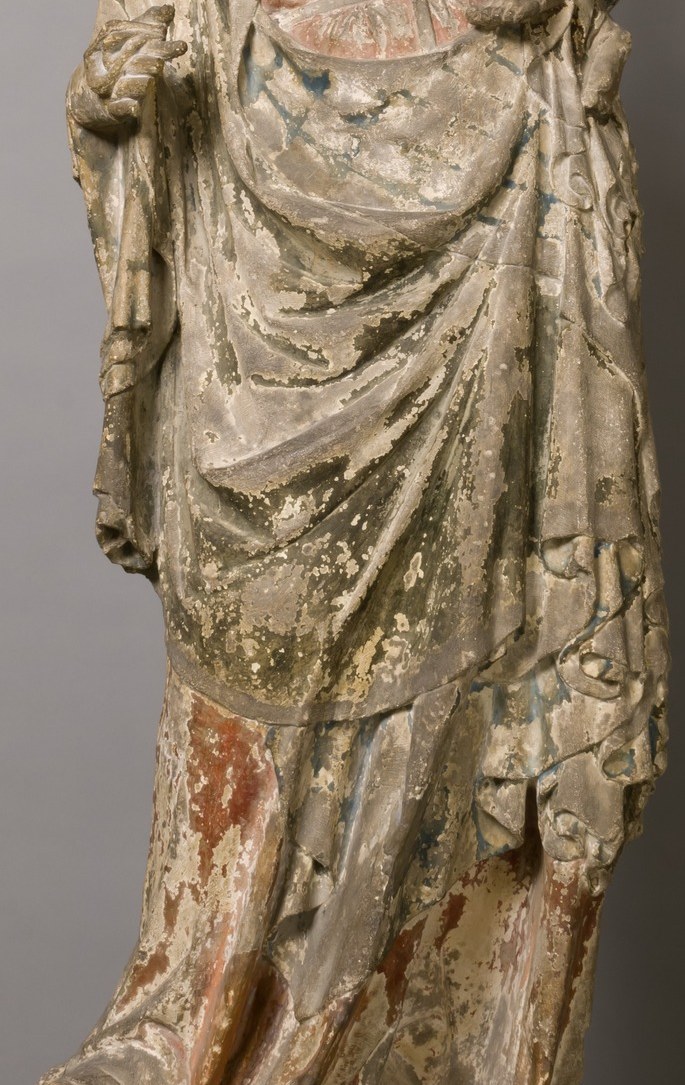
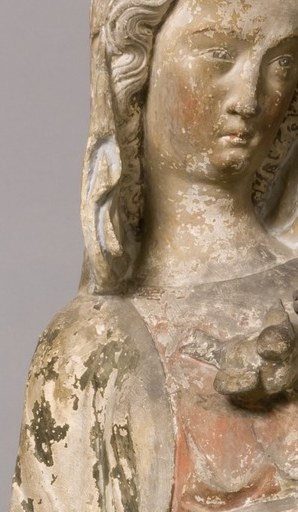
Look closely at the remnants of red pigment on the Virgin's robe and the faded areas on the child's face. These hints of color suggest a much more vibrant past, bringing the figures to life for their original viewers.
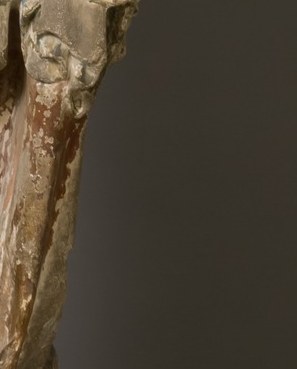
Over many centuries, exposure and the natural processes of time have worn away much of this original paint. The chipped areas on the lower robe, for example, offer a direct glimpse at the underlying wood from which the sculpture was carved, connecting us directly to the material and the hands that created it.
What stories do you think this sculpture could tell if it could speak?
Details
Transcript
This ancient sculpture once looked very different. Traces of pigment show it was once brightly painted. See the vibrant red that remains on her robe? And even the child's face held more color. But centuries of display wore the surface thin. Look closely: that's the raw wood beneath the paint.