Steamer "St. Lawrence" by Bard, James
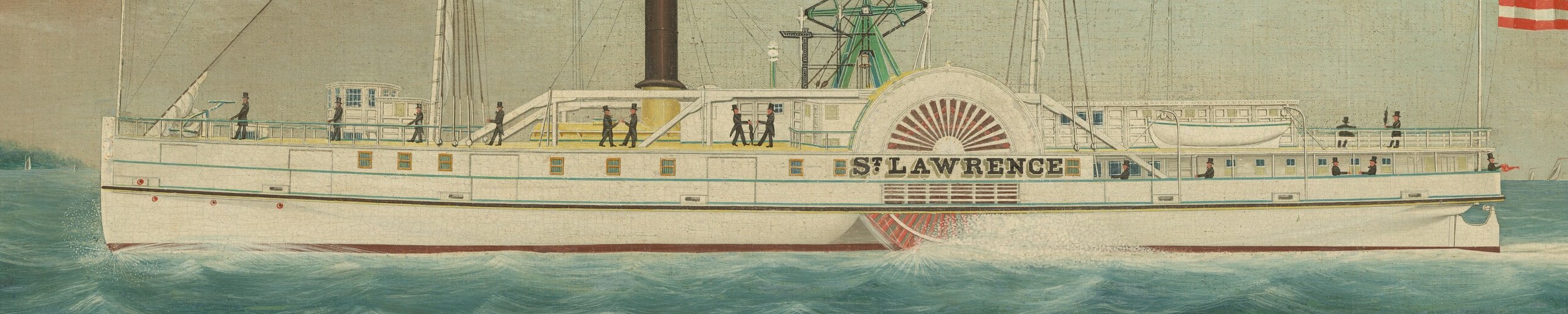
James Bard's "Steamer St. Lawrence," painted in 1850, offers a meticulous look at American river transportation during the mid-19th century. Bard, a self-taught marine artist, was renowned for his precise depictions of steamboats, making his work a valuable historical record.
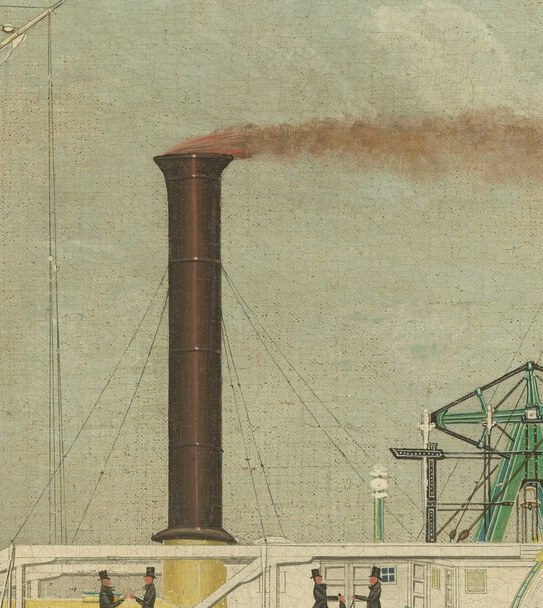
Notice the detailed rendering of the steamboat's paddle wheel and smokestacks, which were crucial to its operation. The small figures on deck provide a sense of scale, and the distant village on the shore suggests the vital role these vessels played in connecting burgeoning towns.
Steamboats like the St. Lawrence were the lifeblood of American commerce and travel, linking communities before the widespread advent of railways. Bard's dedication to capturing these technological marvels offers a unique window into a transformative period of American infrastructure.
His art, though sometimes categorized as 'naïve,' preserves a fascinating era of innovation and connection.
Details

Transcript
This painter recorded American steamboats in remarkable detail. This is the Steamer St. Lawrence, built in 1850. Its tall smokestacks powered the vessel for river travel. And this massive paddle wheel propelled it forward. Steamboats like this were vital arteries of commerce and travel. They connected communities across 19th-century America.