Sir John Shurley of Isfield (1565–1632) by http://www.wikidata.org/.well-known/genid/9935a7844cb7f3599a1e9ce3322f8dce
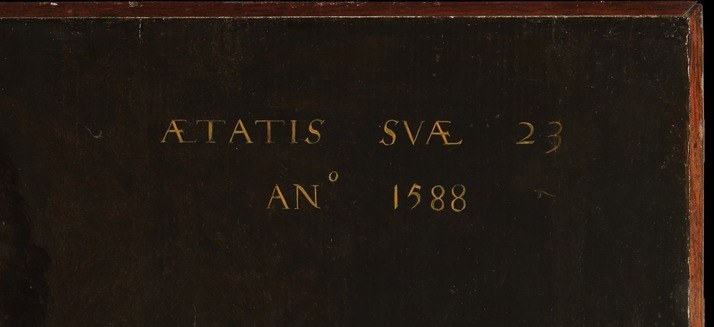
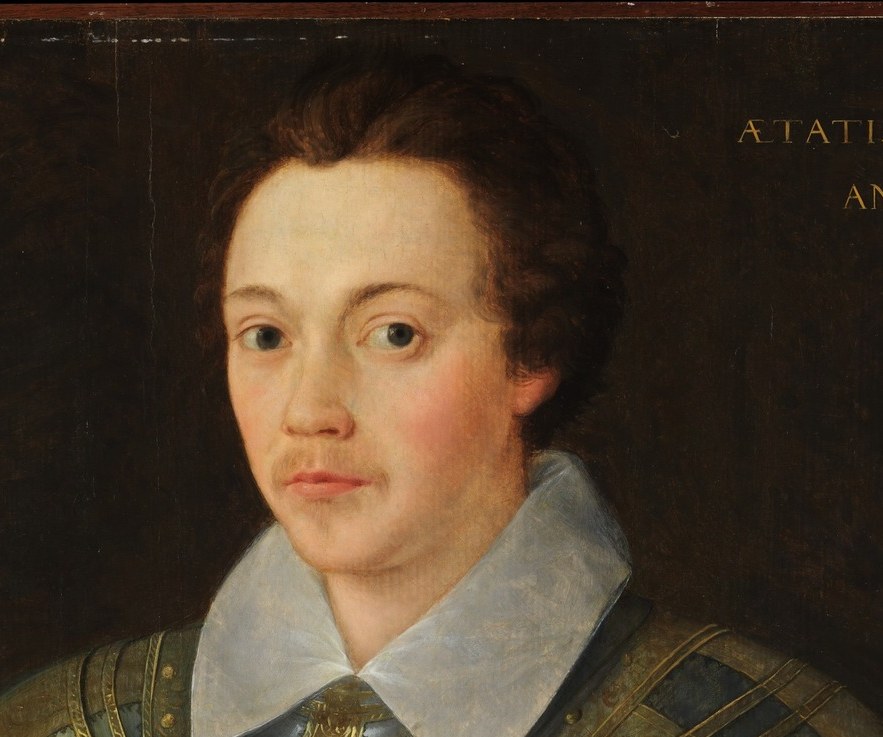
This is Sir John Shurley of Isfield, painted in 1588, the year of the Spanish Armada. The portrait hangs in quiet stillness now, but it was made during one of England's most precarious moments. The date inscribed in the upper right corner places the painting in the exact same window when England expected an invasion that might have ended its Protestant nationhood.
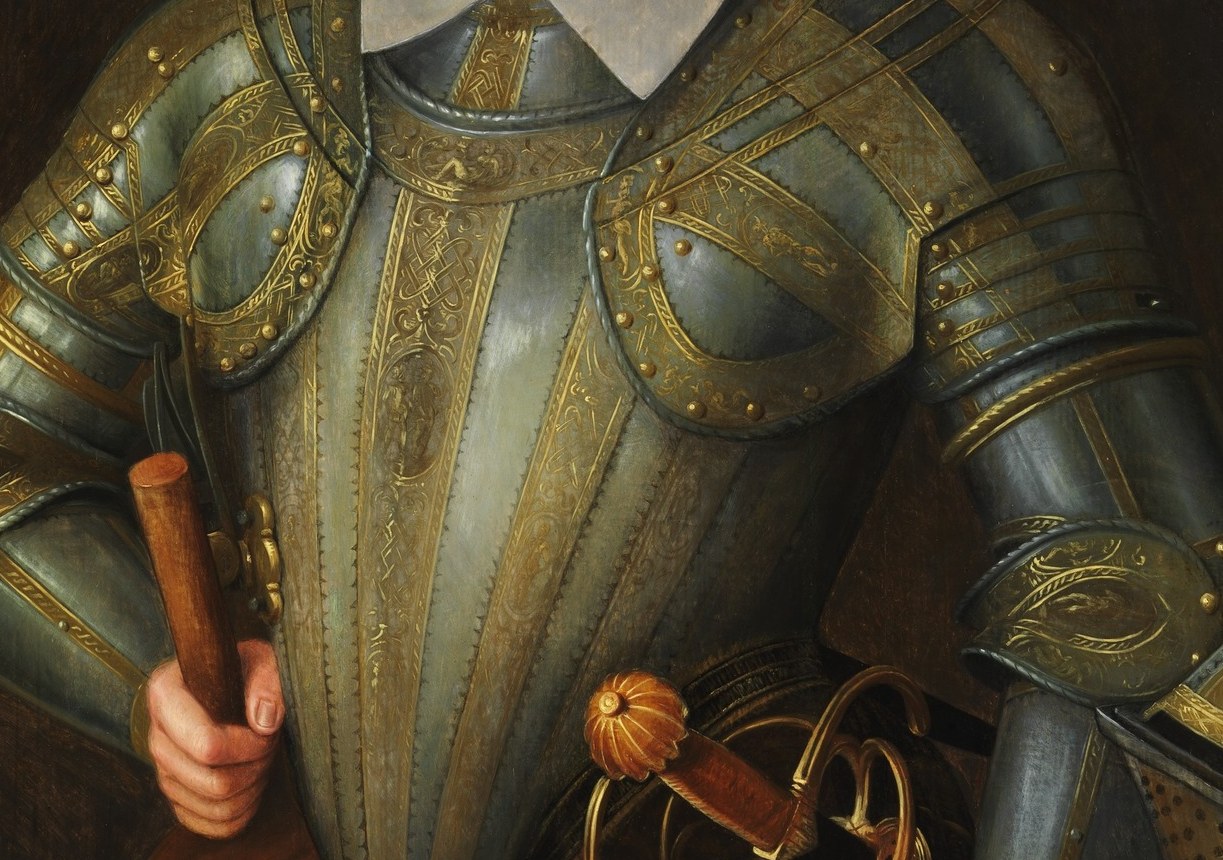
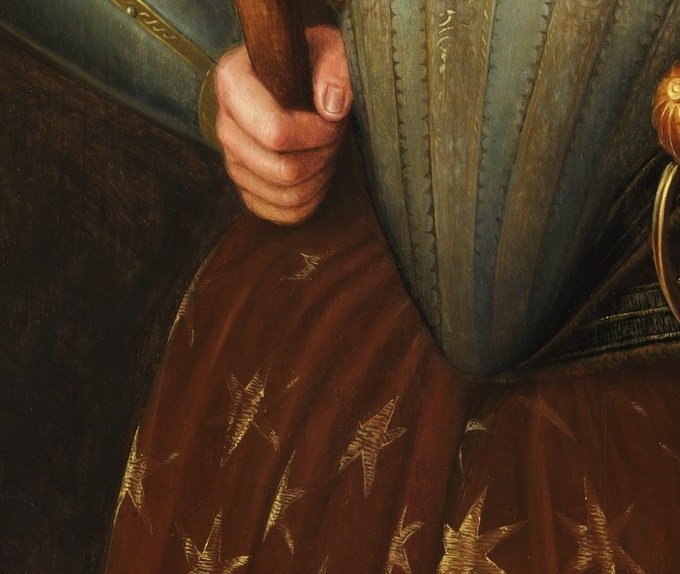
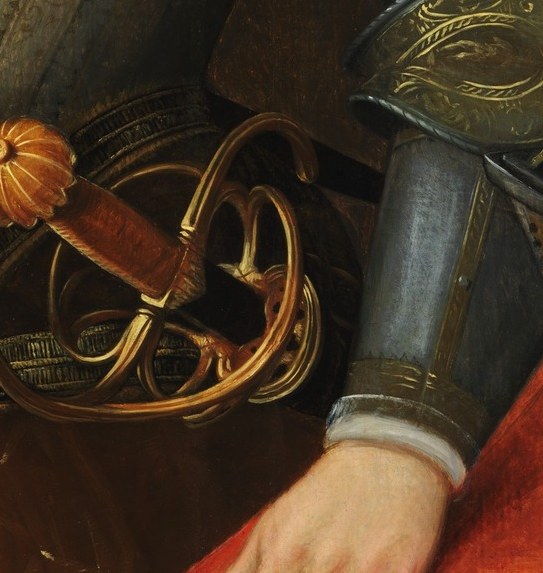
Look at the armor first. The breastplate is intricately etched and gilded, this is parade armor, ceremonial plate, not field-worn gear scarred by combat. The same is true of the laminated pauldrons and the articulated gauntlet at his wrist. Every metal surface is pristine. This is armor worn for a portrait, not a battle. His hand rests on the helmet and grips the baton of command, both are the standard Elizabethan props of military rank. They tell us he was a soldier of status without telling us he fought.
Now look at his face. The inscription likely recorded his age at twenty-three. That is startlingly young to project such formal authority, his ruff is immaculate, his posture rigid, his gaze level and direct. But the face has the softness of someone barely out of boyhood, wrapped in a costume of adult martial power. Sir John Shurley lived long, he died in 1632 at sixty-seven, but in this frozen moment, he is a young man dressed for a war that never came ashore.
The portrait does not record heroism in action. It records readiness. That may be its truest emotion: a nation holding its breath, a young man dressed for the worst, and the relief, somehow legible in his unlined face, that the storm passed him by.
Details
Transcript
The year is 1588. Spain's armada is coming. This man waited, dressed for a war that never reached him. His armor is gilded, engraved, never swung at. He rests his hand on the conventional helmet of command. And grips the baton of authority he never had to use. But look at his face. He is twenty-three. A boy inside a carapace of power, gazing straight at us.