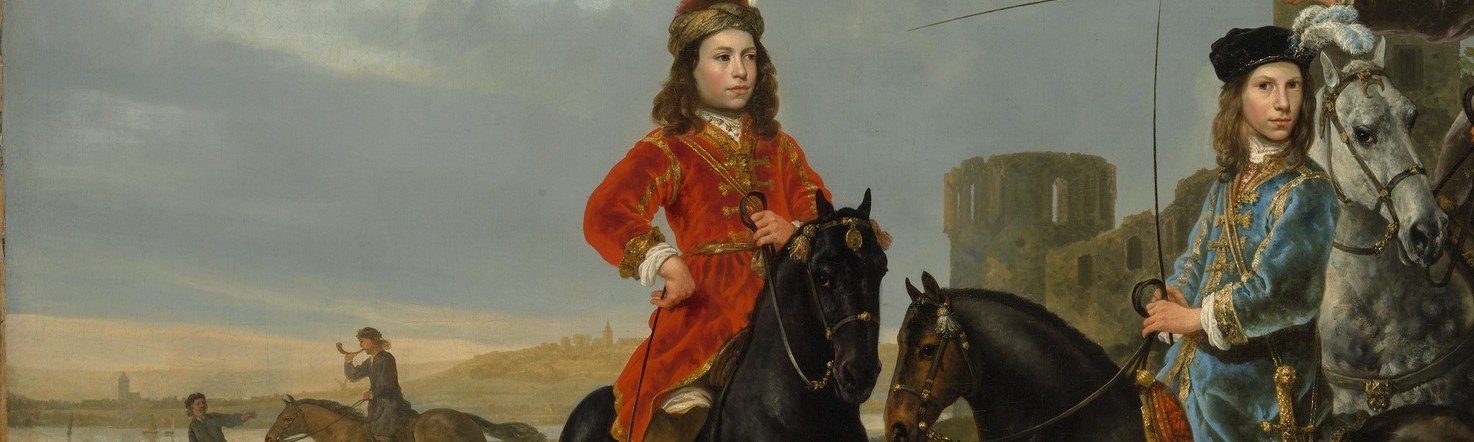
Equestrian Portrait of Cornelis (1639–1680) and Michiel Pompe van Meerdervoort (1638–1653) with Their Tutor and Coachman ("Starting for the Hunt") by Aelbert Cuyp
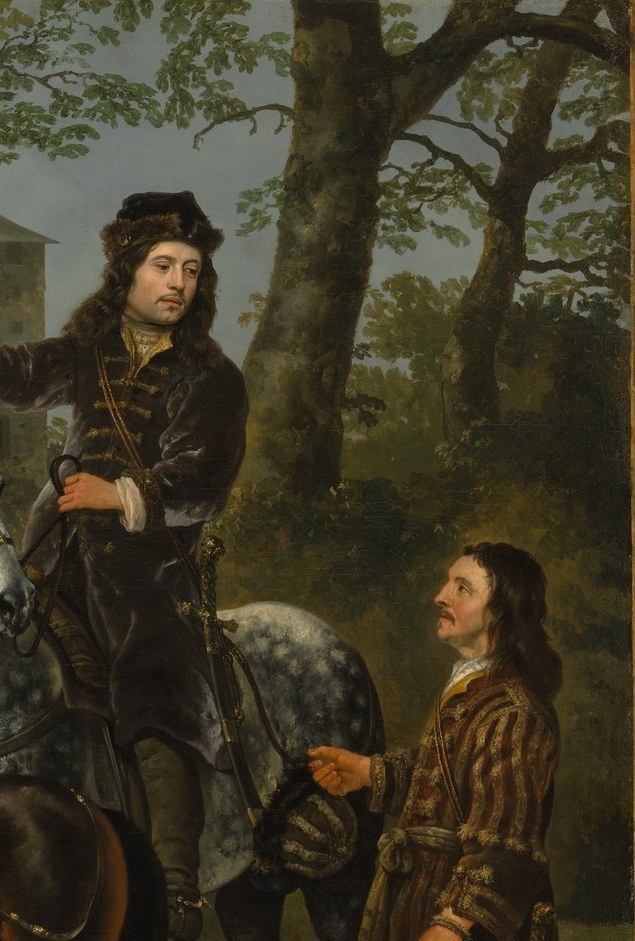
Equestrian Portrait of Cornelis and Michiel Pompe van Meerdervoort with Their Tutor and Coachman, also known as "Starting for the Hunt," is a painting by Aelbert Cuyp from around 1652-53. It lives at the Metropolitan Museum of Art. Its most arresting fact is not visible: young Michiel Pompe van Meerdervoort, the boy in silver-gray at the center, would be dead at fifteen. The painting is his only surviving portrait.
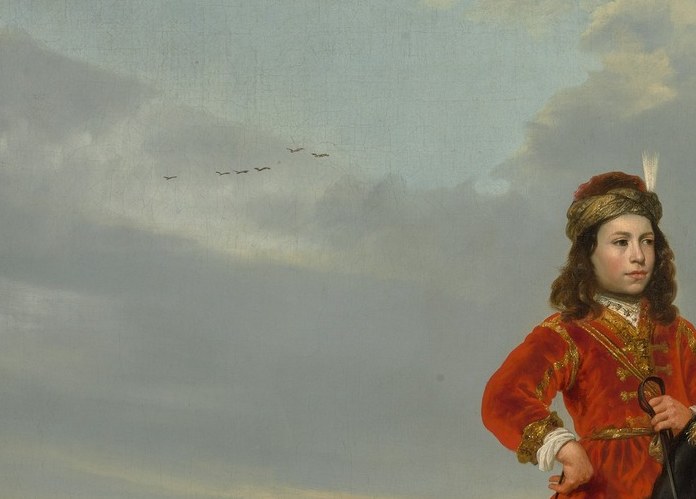
The eye goes first to the bright red coat of Cornelis on the left, a deliberate signal of wealth and martial ambition. But let your gaze settle on Michiel. Cuyp renders his softer features with an individualized care that carries a biographical weight the artist could not have known it would hold. The warm golden light that bathes the scene is pure Cuyp, a signature effect that makes a Dutch river delta feel almost Italian, which makes the stillness of that central face feel even more intimate.
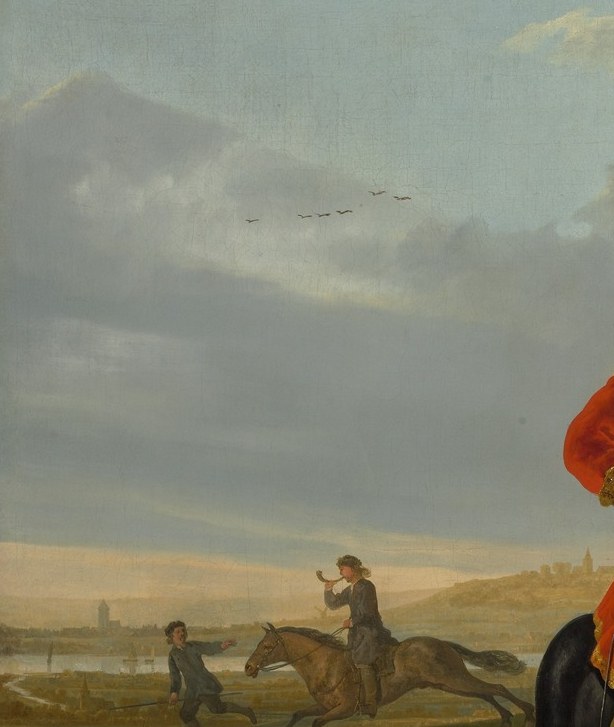
This work is an early example of an equestrian portrait painted for a family that was not royal. The Pompe van Meerdervoorts were a prominent Dordrecht family, and Cuyp, together with his father, helped pioneer the grand mounted portrait for a wealthy merchant class eager to claim the visual language of the nobility. The ruined castle in the background is not their real house, but a symbol of ancient lineage they wished to project.
What began as a celebration of a family's ascent was redefined by loss. Michiel died in 1653. Cornelis lived to be eighty. The painting outlasted them both, but it is Michiel's thirteen-year-old face, preserved in that golden afternoon, that stays with you. What do you see in his expression knowing what the future held?
#arthistory #aelbertcuyp #dutchgoldenage
Details
Transcript
They look like any rich brothers, out for a hunt. Cornelis, in red, was fourteen. His brother Michiel, in silver-gray, was thirteen. This painting was a new kind of portrait, one of the first of non-nobles on horseback. Two years after it was finished, Michiel died. His face here is the only one we have.