Artwork
Equestrian Portrait of Cornelis (1639–1680) and Michiel Pompe van Meerdervoort (1638–1653) with Their Tutor and Coachman ("Starting for the Hunt")
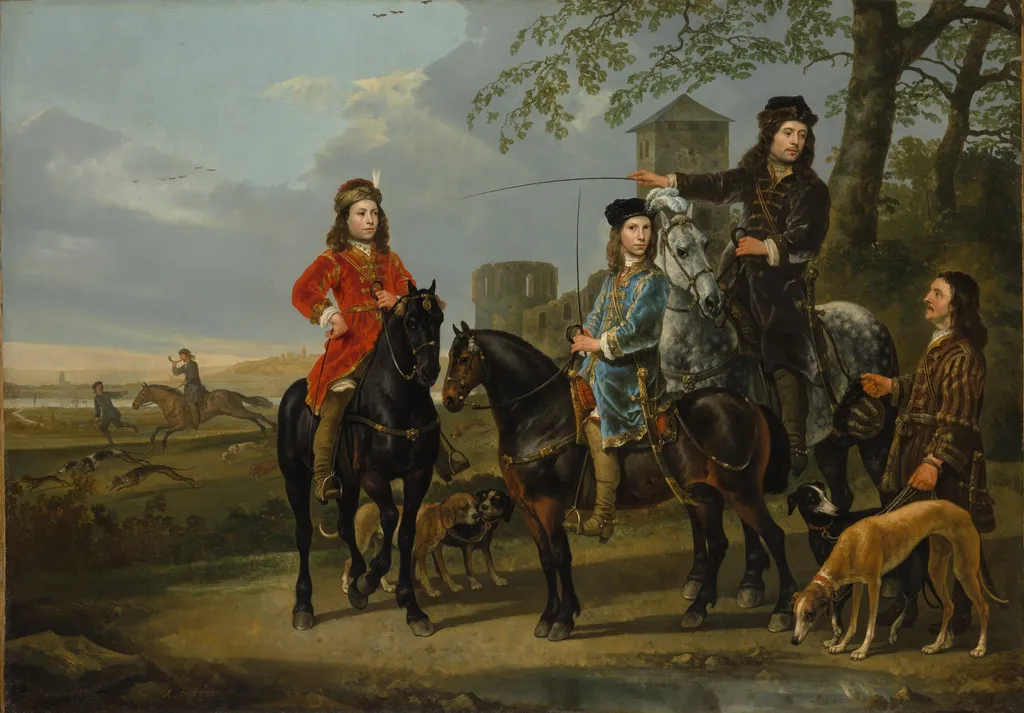
Equestrian Portrait of Cornelis (1639–1680) and Michiel Pompe van Meerdervoort (1638–1653) with Their Tutor and Coachman ("Starting for the Hunt") is an oil painting by the Dutch Golden Age artist Aelbert Cuyp. It dates from 1652 and is held in the collection of the Metropolitan Museum of Art.
About this work
Two brothers from a wealthy Dutch family, Cornelis and Michiel, sit on horseback with their tutor and coachman beside them, setting out for a hunt you never quite see. Aelbert Cuyp painted this large outdoor portrait in 1652, when the boys were about thirteen and fourteen.
Subject & Meaning
The figures wear exotic attire described as Hungarian or Persian, including tight dolmans and a turban-like cap, distinguishing them from common local dress.
Painted circa 1652–53, this work depicts brothers Cornelis and Michiel Pompe van Meerdervoort accompanied by their tutor Caulier, coachman Willem, and hunting dogs, signaling an imminent hunt. The composition is historically significant as an early equestrian portrait of non-royal subjects, reflecting a shift in Dutch society where such imagery expanded beyond the high nobility. Symbolism is embedded in the background's ruined castle, which alludes to the family's ancient lineage rather than depicting their actual home.
The figures wear exotic attire described as Hungarian or Persian, including tight dolmans and a turban-like cap, distinguishing them from common local dress. Additionally, the tutor's hand gesture, originally directional, acquired new meaning following Michiel's early death, indicating Cornelis as the sole heir. The presence of greyhounds, foxhounds, and a hare further reinforces the hunting theme.
Technique & Style
The work is an oil-on-canvas painting executed circa 1652–53. Cuyp's handling reflects his landscape background: the heads of the figures are rendered somewhat awkwardly, and the background castle was originally placed left of centre before being repainted to the right, indicating a revision. Stylistically it is an early example of a non-noble equestrian portrait, blending portraiture with Cuyp's characteristic landscape sensibility, evident in the distant ruined castle, the river sailboats, and the atmospheric sky.
The sitters wear Hungarian- and Persian-inspired dress: tight dolmans for the boys and tutor, a heavier mente for the coachman, and a turban-like cap on Cornelis.
History & Provenance
The painting is held by the Metropolitan Museum of Art in New York City. It entered the museum's collection in 1931 as part of the bequest of Michael Friedsam, who acquired the work at Galerie Georges Petit in Paris in 1922. The source text does not provide a specific inventory or accession number for the piece.
Regarding its exhibition history, the work has been displayed at several institutions in the United States and the Netherlands since its acquisition. Confirmed venues include the National Gallery of Art in Washington, D.C., the Rijksmuseum in Amsterdam, the Dordrechts Museum, and the Museum of Fine Arts in Boston. Prior to its arrival at the Met, the artwork changed hands through various sales in The Hague, Paris, and London between 1806 and 1922.
Context
Cuyp's equestrian portrait occupies a transitional place in Dutch art, bridging the elite tradition of courtly equestrian imagery and the emergent Dutch taste for individualized portraiture among the regenten class. As one of the few portraits in Cuyp's oeuvre, it exemplifies his rare foray into figure painting while retaining his signature landscape handling, with critics noting the figures' stiff articulation as a concession to his focus on luminous, atmospheric scenery. It aligns with broader shifts in the 1650s, when equestrian portraits began appearing for wealthy burghers rather than royalty alone.
Its later market trajectory, from Dutch family possession through successive European sales to the Met's 1931 Friedsam bequest, underscores its growing canonical status, reinforced by loans to major institutions such as the Rijksmuseum and the National Gallery of Art.
Overview
Aelbert Cuyp's "Equestrian Portrait of Cornelis and Michiel Pompe van Meerdervoort with Their Tutor and Coachman," also known as "Starting for the Hunt," is an oil painting from around 1652–53. It depicts two young brothers on horseback, accompanied by their tutor and coachman, preparing for an outing. This large-scale work is now part of the collection at the Metropolitan Museum of Art in New York.
Own this work as a print
Artist & collection

Artist
Aelbert Jacobszoon Cuyp or Cuijp (Dutch pronunciation: ; 20 October 1620 – 15 November 1691) was one of the leading Dutch Golden Age painters, producing mainly landscapes.

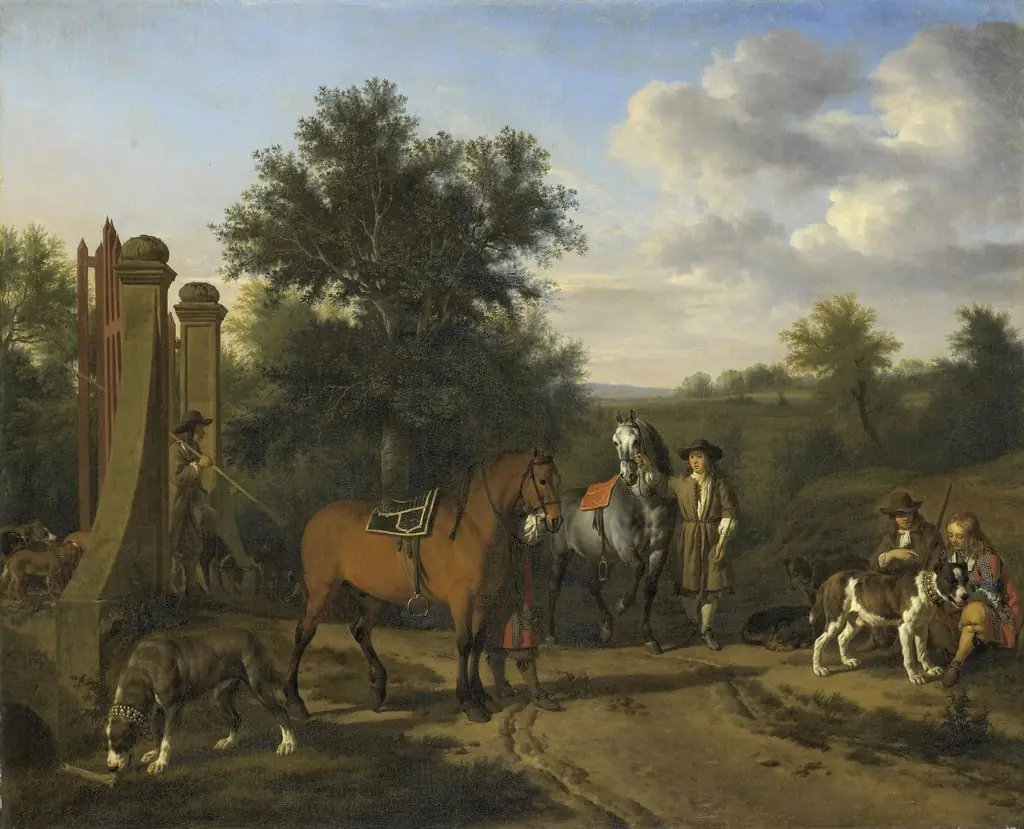 The hunting party
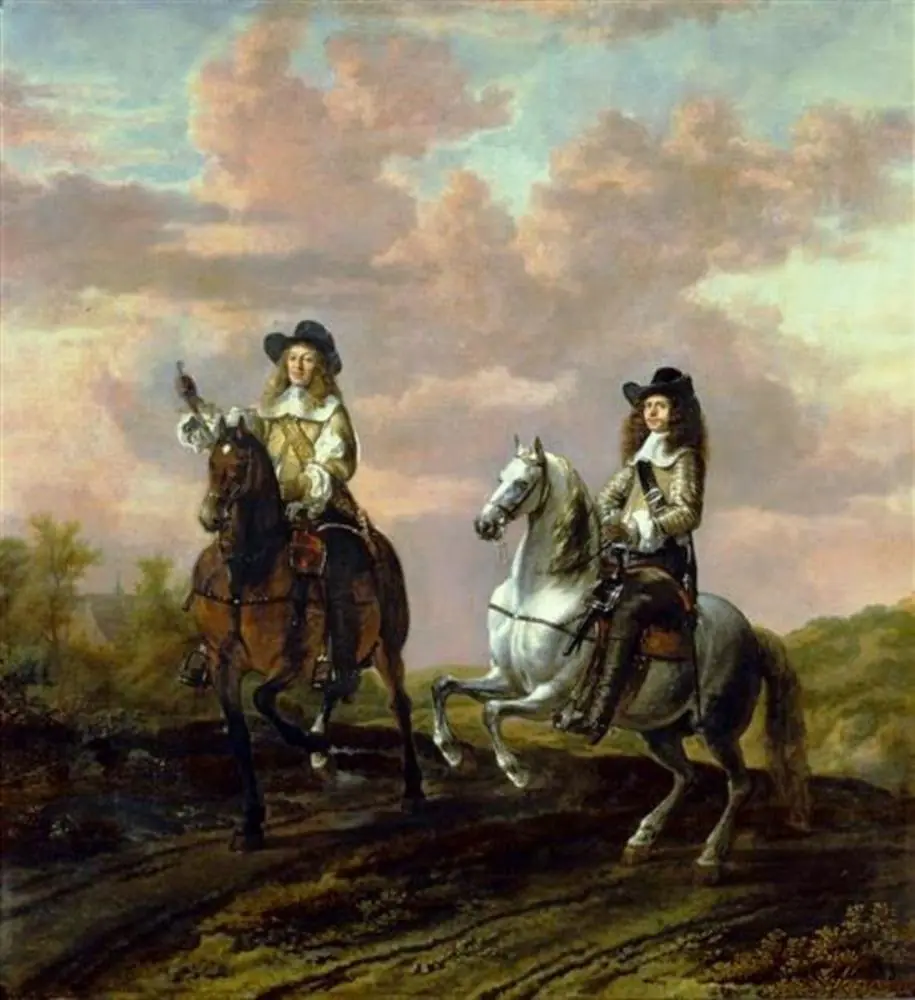 Portrait of two unknown man on horseback
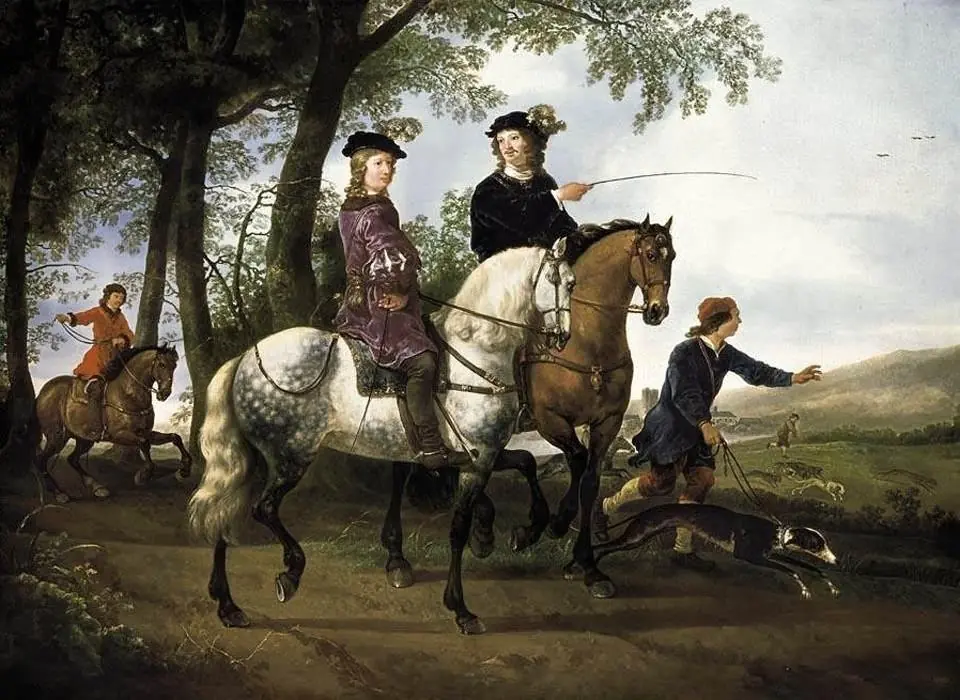 Landscape with a Youth and his Tutor on Horseback
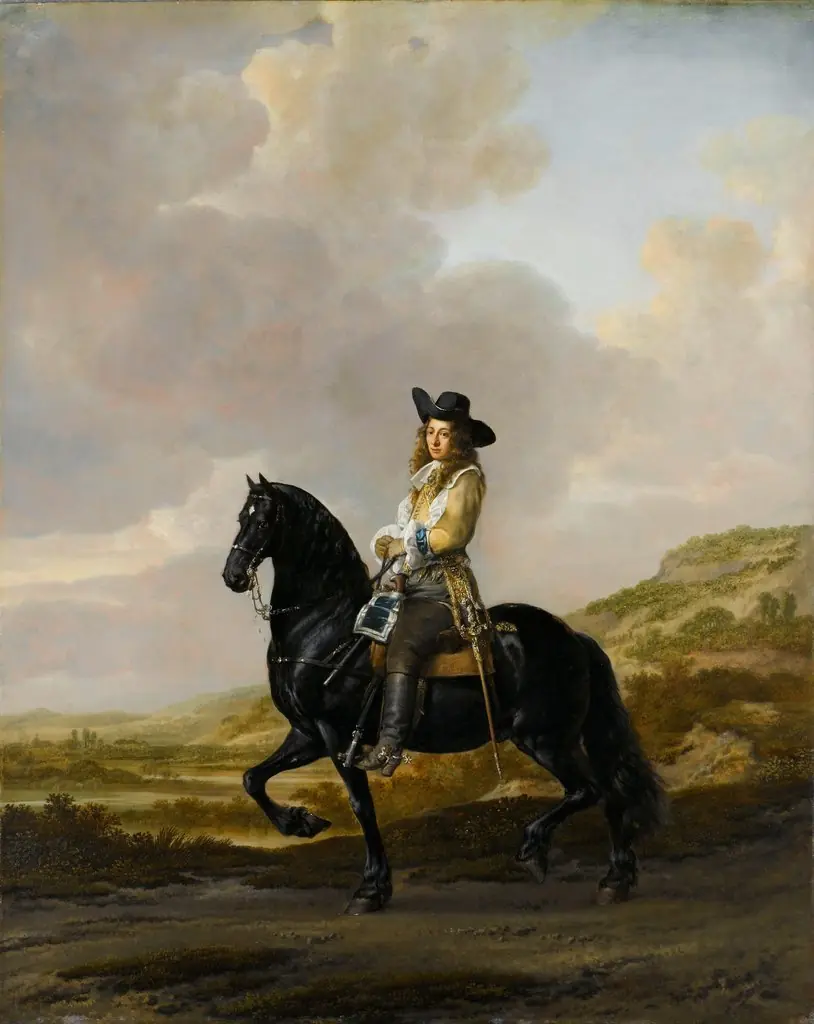 Pieter Schout on Horseback
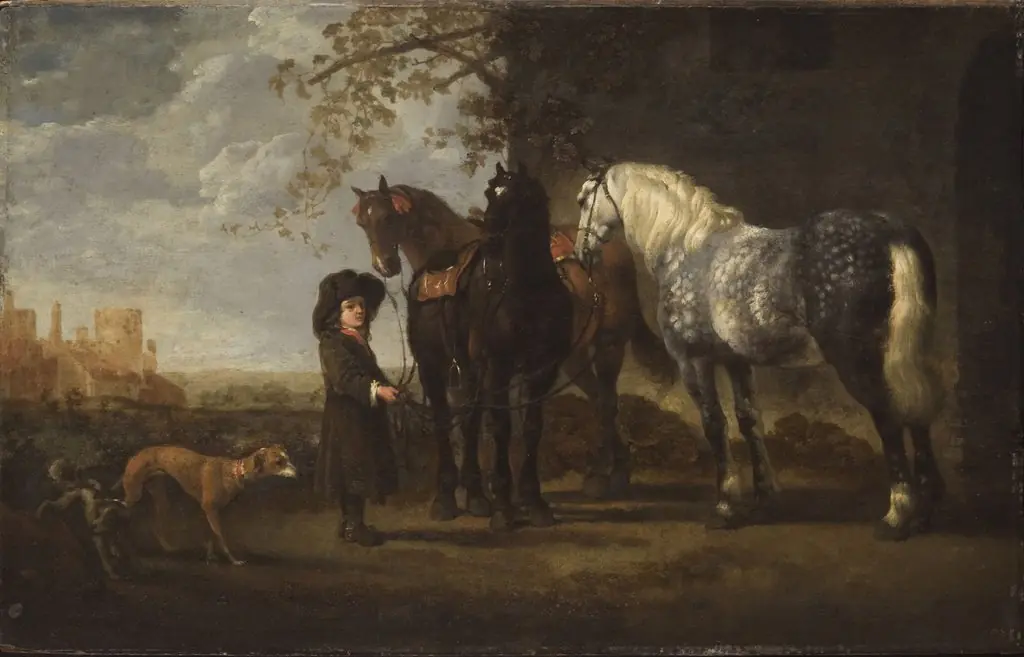 Groom with Three Horses and Two Dogs
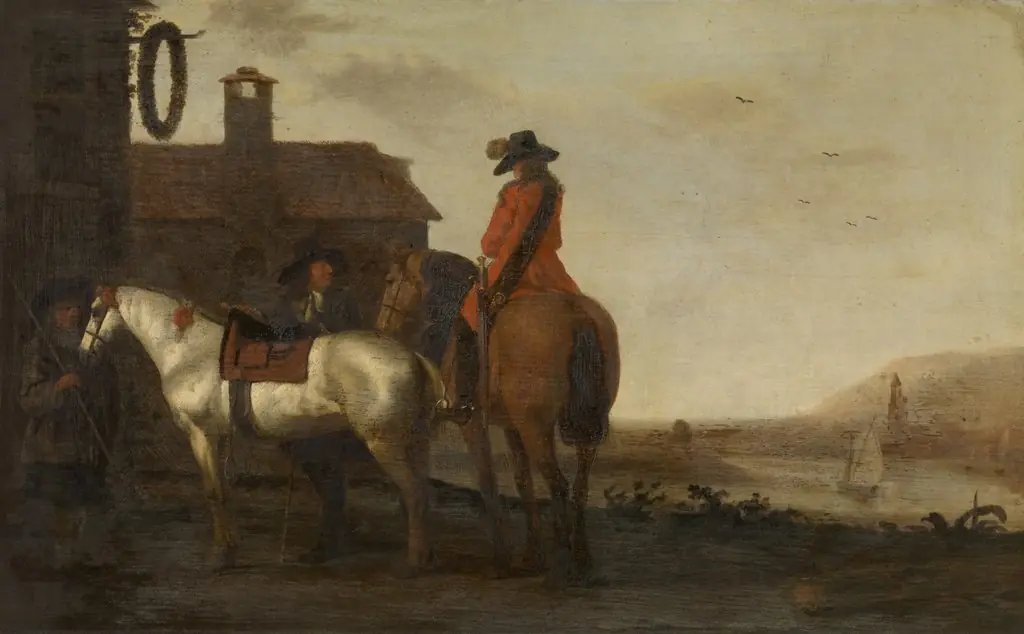 Stopping Place for Horsemen and Horses
 The leavetaking of Captain Hendrik de Sandra (1619-1707), sent off by his wife and children
 Ausritt zur Jagd
 The return from the hunt