Lake George and the Village of Caldwell by Thomas Chambers
View the artwork: Lake George and the Village of Caldwell →
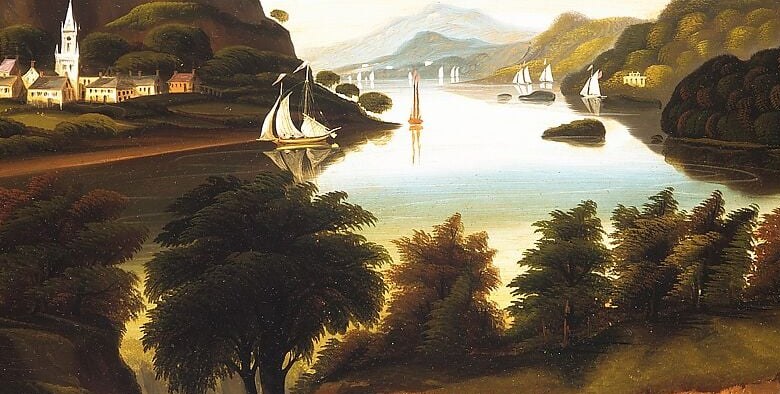
The Metropolitan Museum of Art holds "Lake George and the Village of Caldwell," a painting by Thomas Chambers from the 1850s, an artist who died a pauper in an English poorhouse in 1869. The irony is palpable: his work now sits in one of the world's great museums, yet for nearly a century after his death, his name was entirely lost to the picture.
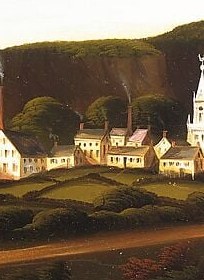
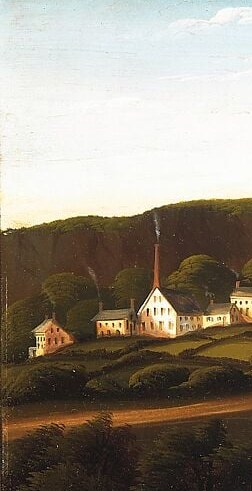
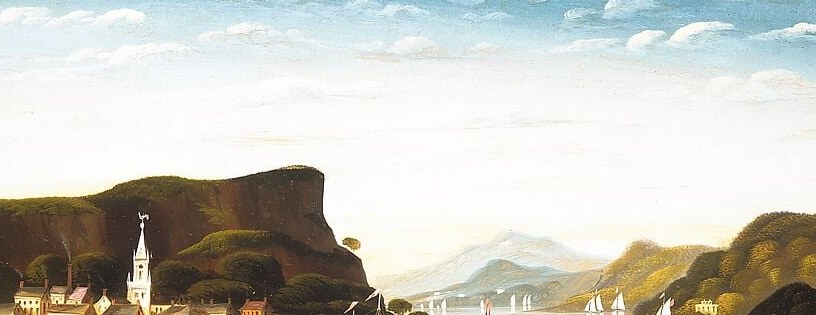
Chambers built his landscapes from popular prints, in this case a lithograph by Jacques Milbert, but he completely reinvented the source. Look at the saturated light on the water and the theatrical framing trees. He was not interested in naturalistic detail. He painted flat, bold, and decorative, selling these affordable visions to a middle-class public hungry for parlor pictures.
Why did the market ignore him? Chambers rarely signed his canvases. He moved itinerantly between New York, Boston, and Baltimore, listing himself as a marine, landscape, and "fancy" painter. When the taste for his bright, flat style passed, he vanished from the American scene entirely. He returned to Whitby, England, and died in obscurity.
In 1942, a collector identified his hand by linking an unsigned canvas to a rare signed scene of the USS Constitution. That single match resurrected the artist. The name "Chambers" now commands a place in the Met, a quiet reminder that the art market's recognition is a fickle and often tardy judge of lasting value.
#arthistory #folkart #thomaschambers
Details

Transcript
For nearly a century, no one knew who painted this. The artist rarely signed his work. His name was Thomas Chambers, and the market paid him so little he died in a poorhouse in 1869. But his pictures were popular. He painted at least eight versions of this view. He built them from a Frenchman's lithograph, then flattened everything into bold, decorative color. He worked as a 'fancy painter' for middle-class parlors, far from the academic fame of the Hudson River School. Not until 1942 did a collector match this hand to a signed battle scene, pulling his name from obscurity. Today his work hangs in the Met. His pauper's grave holds a museum artist.