Artwork
Lake George and the Village of Caldwell
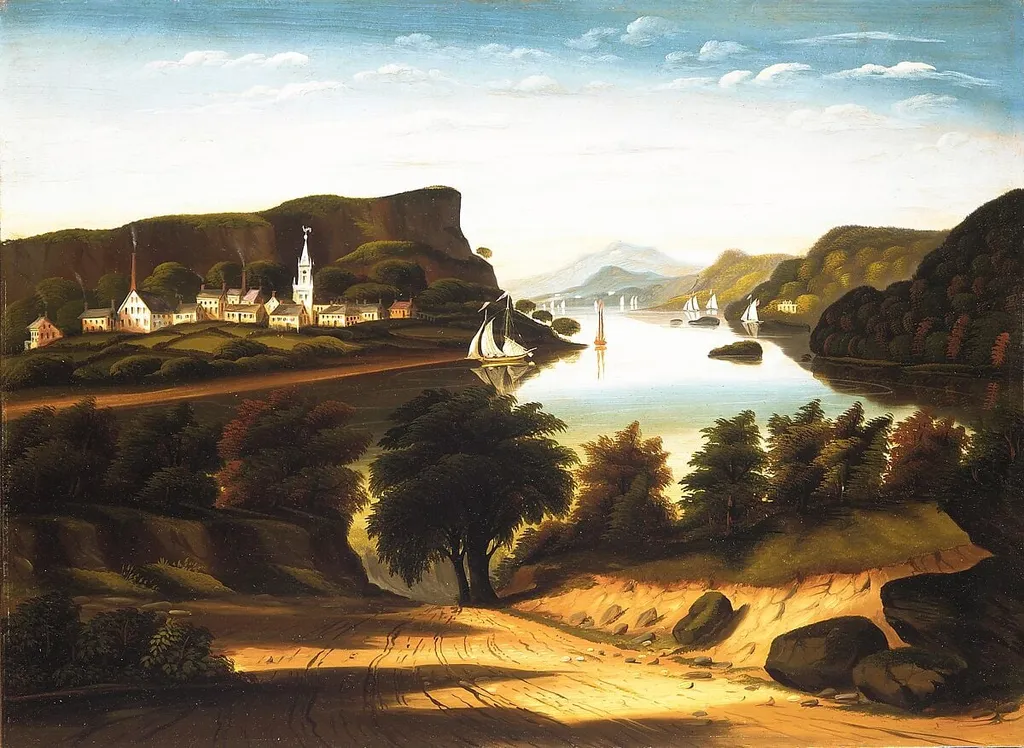
Lake George and the Village of Caldwell is an oil painting by the American Folk Art artist Thomas Chambers. It dates from 1854 and is held in the collection of the Metropolitan Museum of Art.
About this work
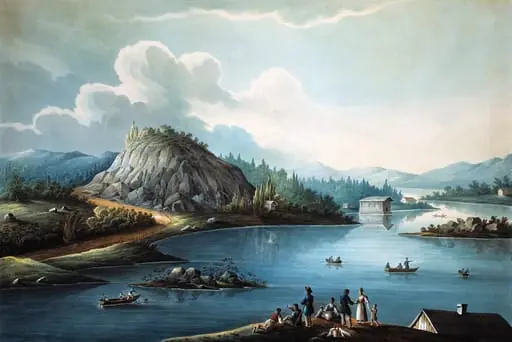
The English-born Thomas Chambers painted it in 1854, translating a lithograph by Jacques Milbert into a boldly colored view of upstate New York.
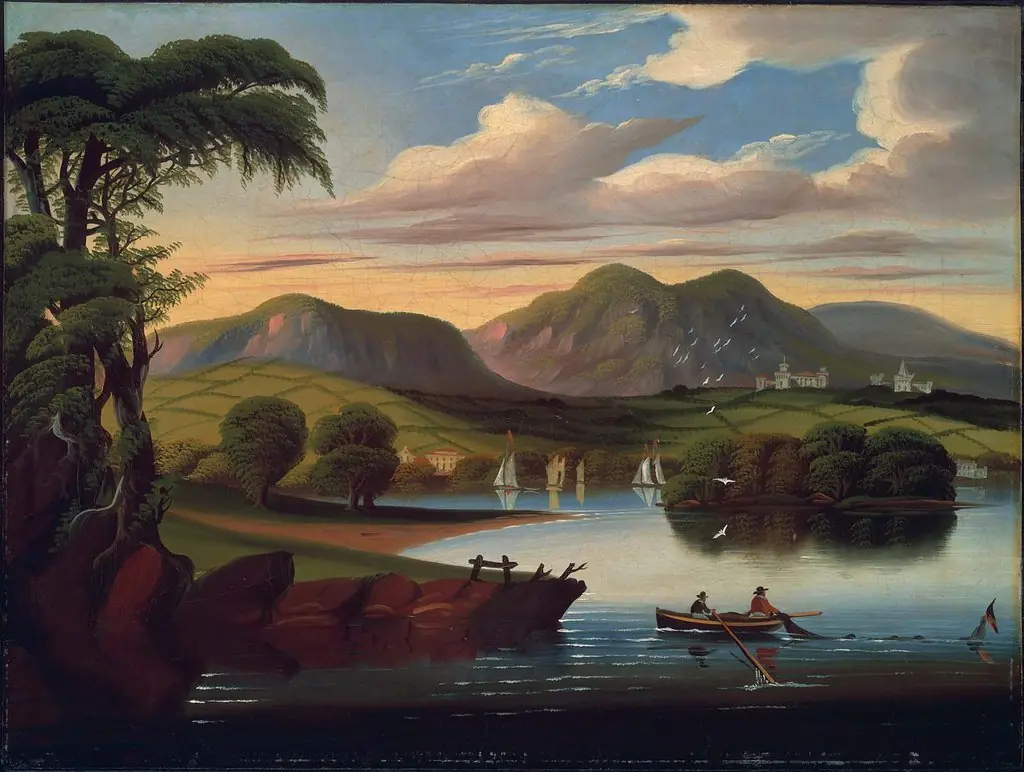
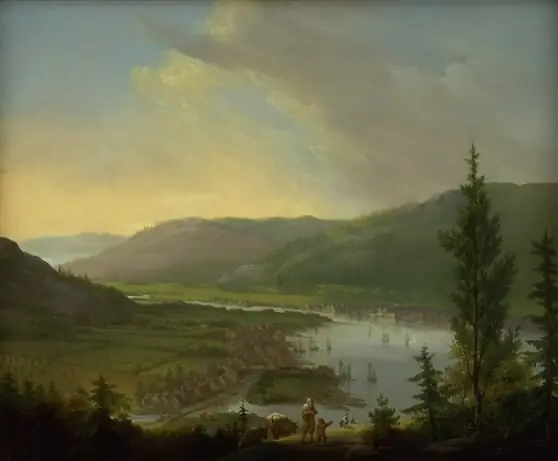
A flushed sunset spills over Lake George, lighting the village of Caldwell, its church spire, and sailboats on the water. The English-born Thomas Chambers painted it in 1854, translating a lithograph by Jacques Milbert into a boldly colored view of upstate New York. His flat perspective and vivid palette set him apart from the Hudson River School. The work is now at the Metropolitan Museum of Art.
Overview
Thomas Chambers, an English immigrant who settled in the United States in 1832, painted this oil on canvas around the 1850s. "Lake George and the Village of Caldwell" presents a vibrant interpretation of a well-known upstate New York vista. Chambers's distinctive approach, marked by a flattened perspective, bold forms, and intense colors, defines his unique folk art style, setting it apart from academic traditions of his era.
Subject & Meaning
The painting depicts Caldwell, a burgeoning resort town nestled on the shores of Lake George in the Adirondacks. A prominent church spire rises above the treeline, while sailboats glide across the water under a dramatic sunset. This idyllic portrayal reflects the mid-19th century's vision of progress, illustrating the transformation of wilderness into a leisure destination and embodying the era's aspirations for both development and recreation.
Technique & Style
Chambers developed his compositions from existing prints, such as a lithograph by Jacques Milbert for this work, yet he transformed them through his individual style. Eschewing the detailed naturalism favored by the Hudson River School, he employed flattened perspectives, bold outlines, and rhythmic, decorative patterns. This approach, characterized by saturated colors and broad shapes, created an imaginative landscape that appealed to urban middle-class patrons for their home parlors.
History & Provenance
This particular rendition is one of at least eight known versions of the Lake George view produced by Chambers, indicating its popularity. The canvas was acquired by the Metropolitan Museum of Art in 1966, entering the collection as object number 66.242.17. Its acquisition was made possible through the generous gift of collectors Edgar William and Bernice Chrysler Garbisch, securing its place in a major public institution.
Legacy
For many years, Chambers's artistic contributions remained largely unacknowledged, primarily because he seldom signed his works. It was not until 1942 that art historians definitively identified him as a distinct painter, separating his unique hand from the broader category of anonymous folk art. This recognition has since brought his vibrant, unconventional landscapes into scholarly discourse and public appreciation.
Artist & collection