Portrait of John Clark by William M. S. Doyle
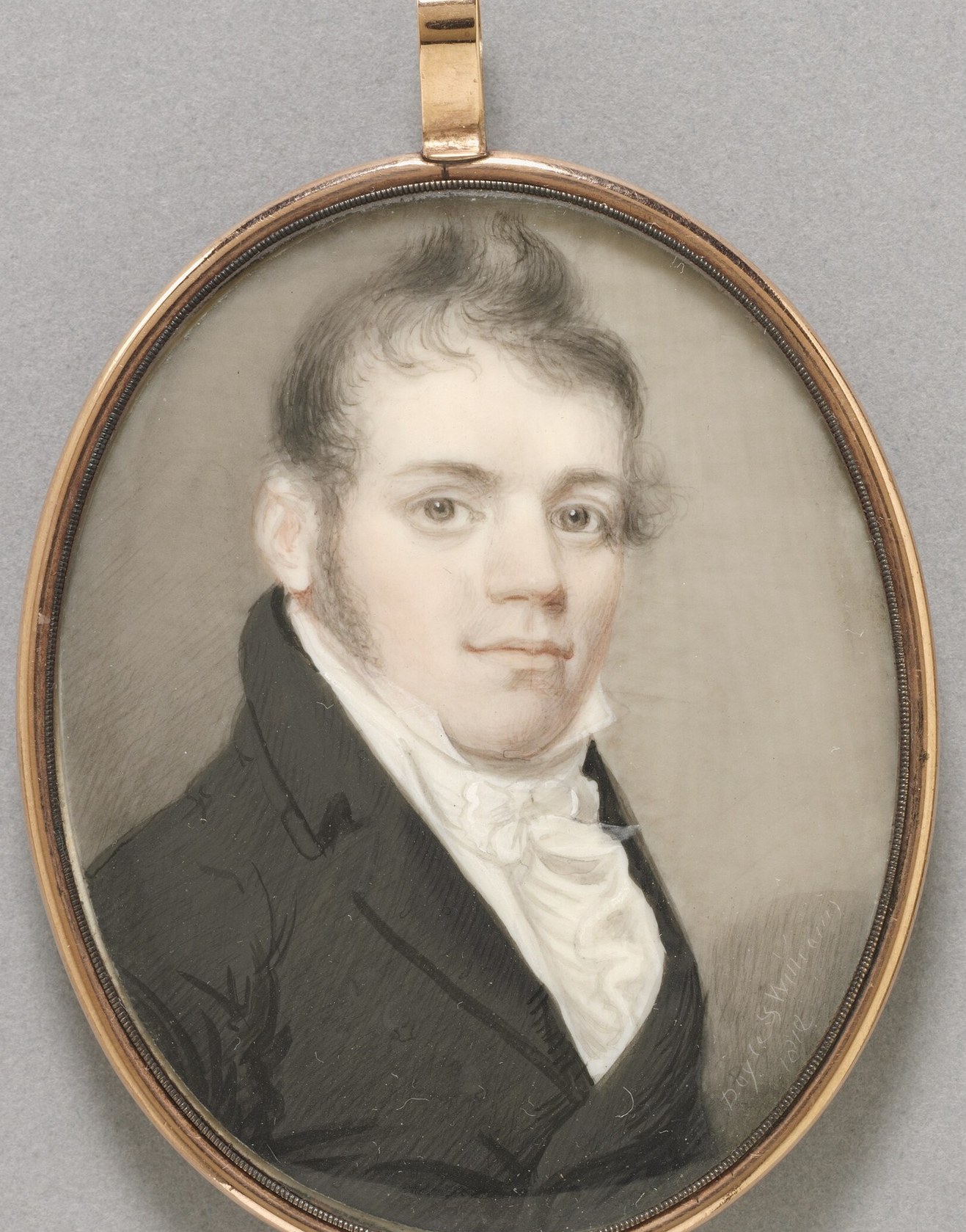
This miniature, "Portrait of John Clark" by William M. S. Doyle, painted in 1814 and held at The Cleveland Museum of Art, offers a fascinating glimpse into early 19th-century fashion and personal presentation. Painted on ivory, it was likely intended as a piece of wearable jewelry.
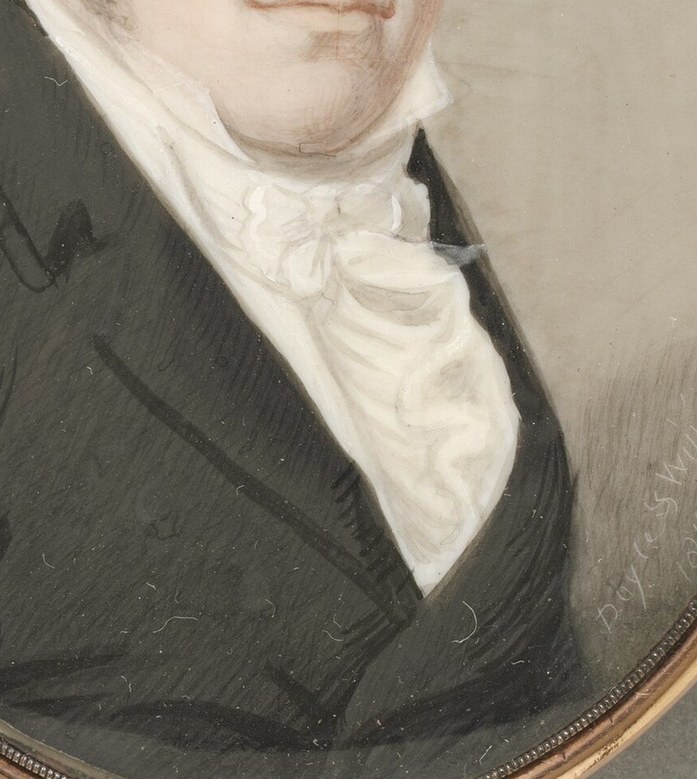
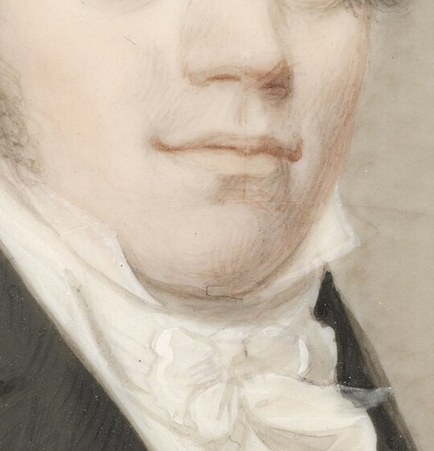
Look closely at John Clark's attire. His dark jacket and finely ruffled cravat were hallmarks of a fashionable gentleman during this period, signaling status and attention to detail. His direct and composed gaze was also a common convention, projecting self-assurance.
Doyle's meticulous craftsmanship on the delicate ivory surface allowed for precise details, from Clark's curly hair to the subtle folds of his cravat. Such miniature portraits were popular before photography, serving as treasured personal mementos.
What do you think such a portrait might have meant to its owner?
Details
Transcript
Meet John Clark, painted in 1814. This was the height of fashion for a gentleman. His ruffled cravat was a key status symbol. Notice his direct gaze, meant to convey composure. This miniature was painted on ivory, not canvas. And meant to be worn, perhaps as a necklace.