Fish Market by Joachim Beuckelaer
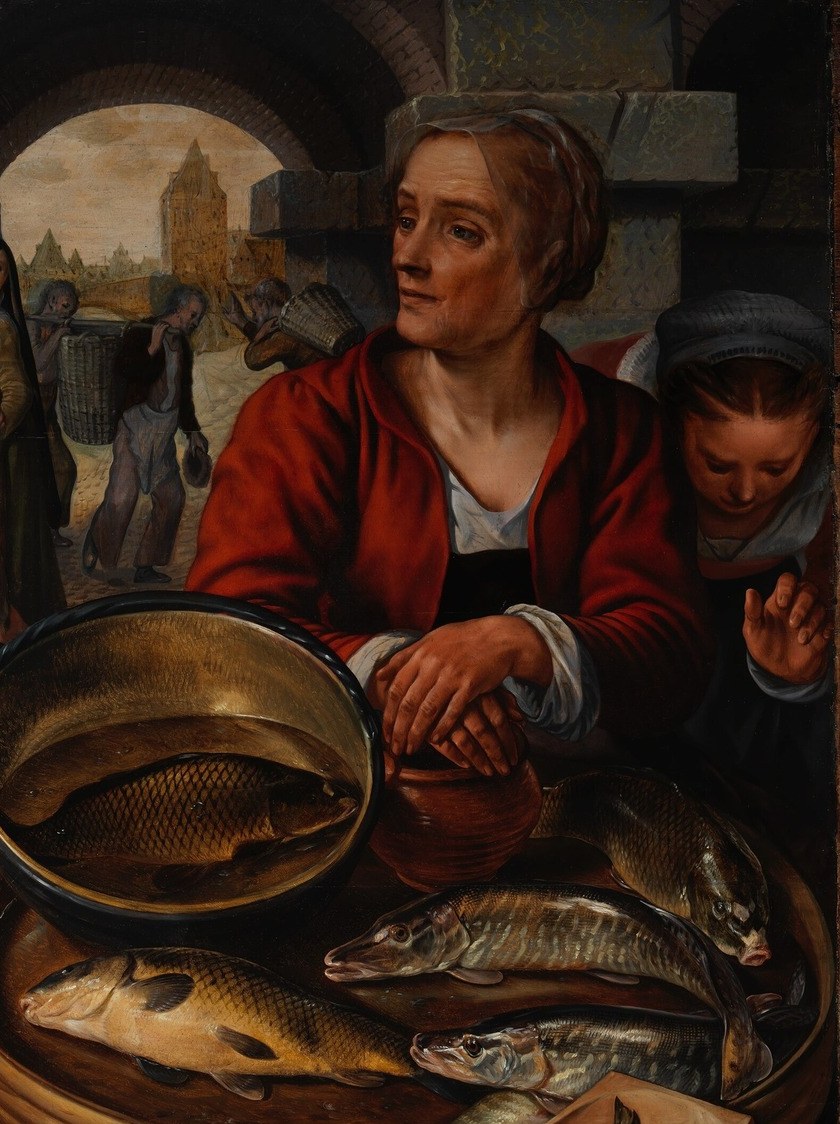
Joachim Beuckelaer's 'Fish Market' (1568) is a masterwork of misdirection, now in the collection of the Metropolitan Museum of Art. Painted in oil on Baltic oak, it delivers everything a Flemish market scene promises: gleaming fish, busy hands, and the raw abundance of a 16th-century harbor town.
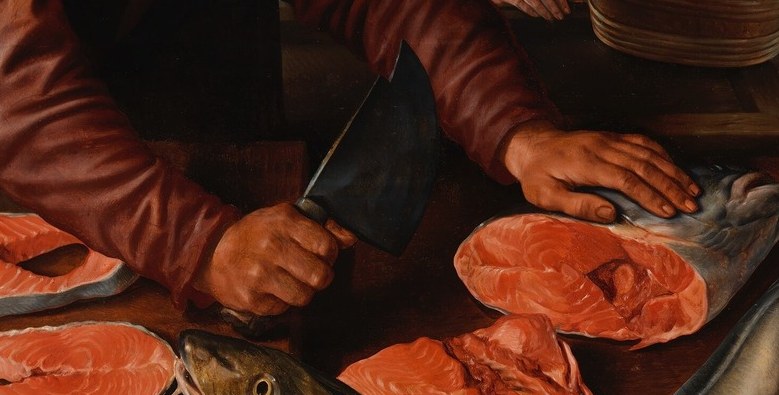
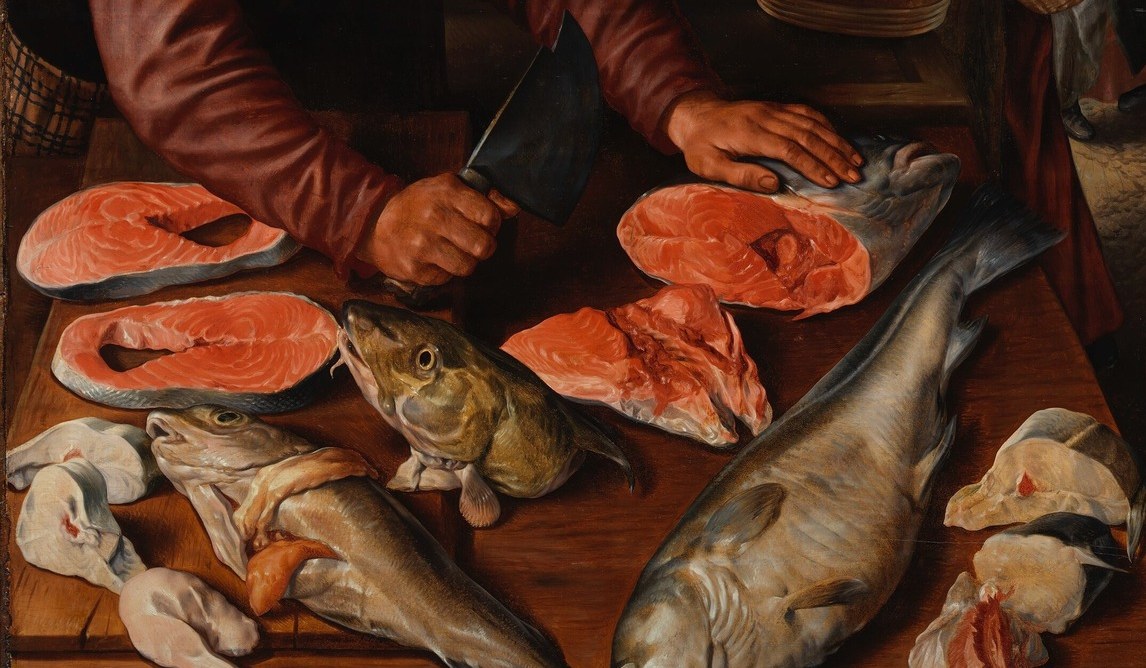
Sweep your eye across the foreground. You are meant to get lost in the texture, the wet sheen on a ray's wing, the sculptural cross-sections of salmon, the deep crimson of the seller's robe. Beuckelaer was a virtuoso of surfaces, and every scale and copper gleam here is a dare.
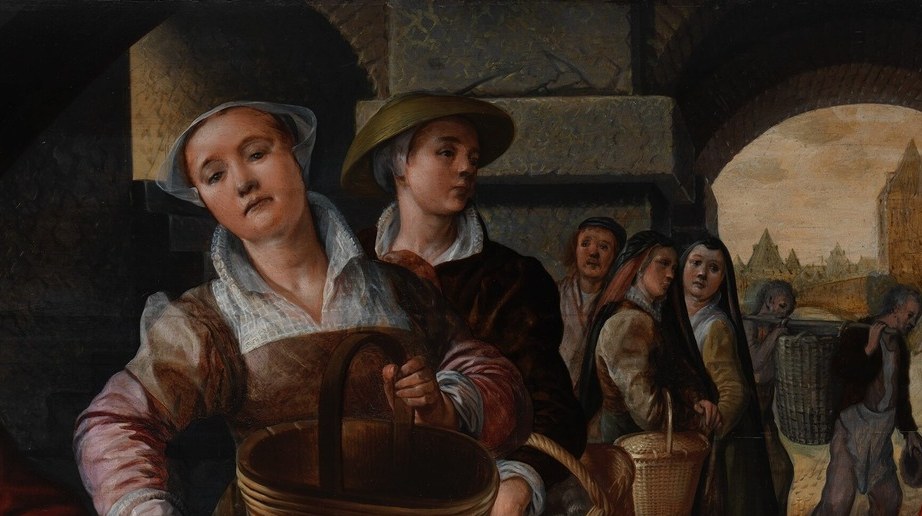
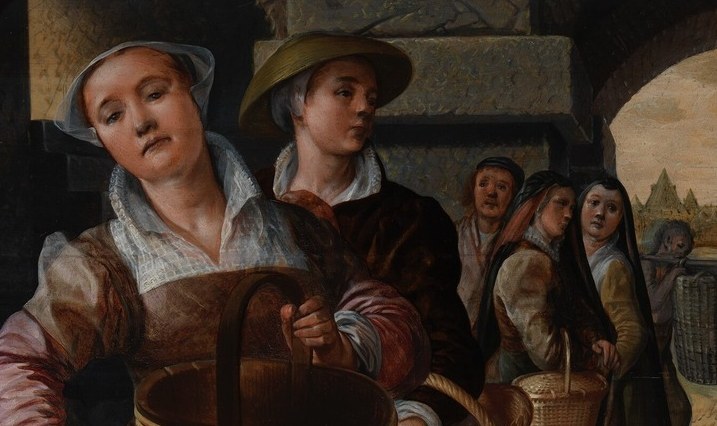
But the painting's secret sits deep in the background. Through a luminous window or doorway, a tiny narrative unfolds: small figures move toward a church. This is not accidental decoration. Beuckelaer was working in the aftermath of the Beeldenstorm, a wave of religious iconoclasm that swept the Low Countries and forbade overt sacred imagery in many public spaces. Artists began to embed biblical scenes inside secular compositions, a devotional painting wearing a market's clothes.
The divine was not erased. It was just placed behind the fish stall.
Details
Transcript
Antwerp, 1568. The fish market is in full swing. A bearded seller's hands work a fish, practiced and sure. The foreground is a symphony of scales, flesh, and slick copper. But painters like Beuckelaer often hid a second, smaller scene. Look past the commerce, through the luminous gap at the back. Tiny figures walk toward a church. A biblical episode, nested inside a market. After the Beeldenstorm iconoclasm, sacred art learned to hide in plain sight. The divine, tucked behind a fresh salmon steak.