Corn Husking by David Gilmour Blythe
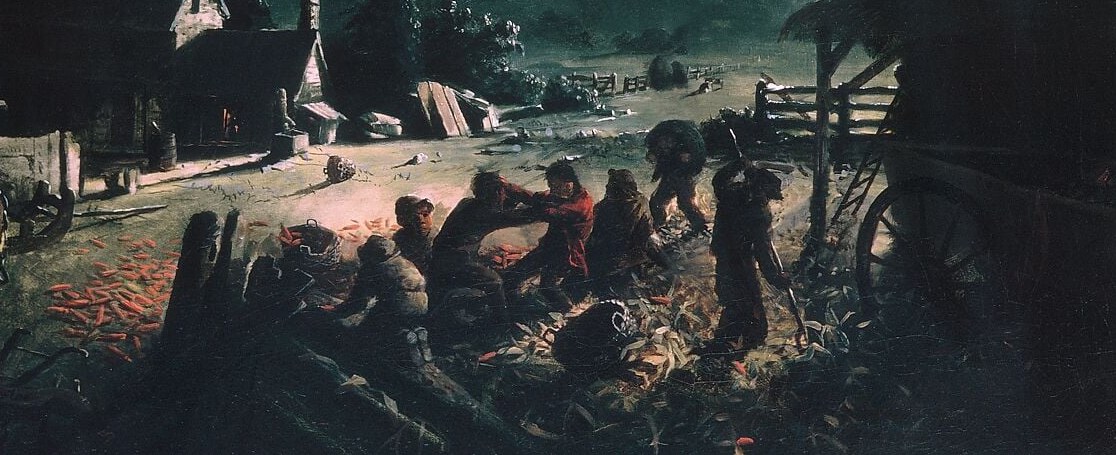
David Gilmour Blythe painted Corn Husking around 1863-64, in the grinding final year of the American Civil War. It hangs today as a rare, unvarnished record of the northern farm labor that fed the Union. Blythe was self-taught, a satirist and a poet who died at fifty, just months after completing this canvas.
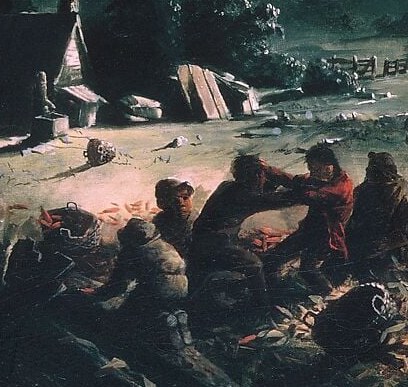
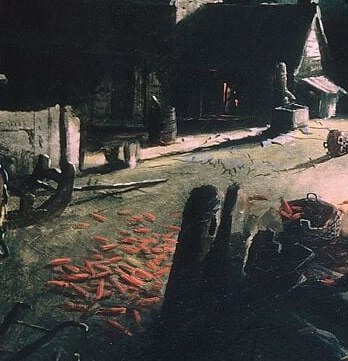
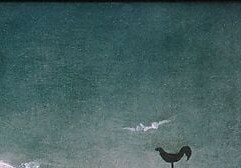
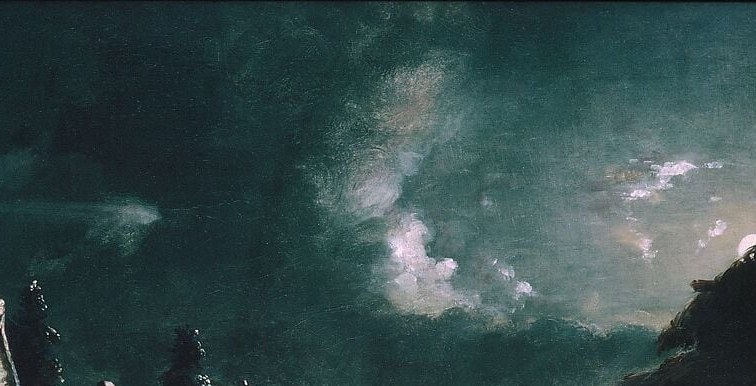
The first thing you feel is the sky. A theatrical, luminous glow pushes down on a circle of bent figures working in near darkness. No oil lamp, no moon. Your eye lands on the most prominent husker in the foreground, his face caught in that strange light. Move left and one figure separates from the mass, hunched alone. At the far right, beside the dark fence, another worker is barely visible, almost swallowed by shadow. Look high: a tiny rooster silhouette on a post, the watchman of the coming dawn.
Blythe lived and worked in Pittsburgh, painting political satire, portraits, and raw genre scenes that refused the period’s taste for idealized pastoralism. Corn Husking came at the end of his life, when the nation was turning toward reconstruction. The painting remembers what that rebuilding rested on: ordinary people working past exhaustion, together but each alone in the task.
What do you see when you sit with the central figure’s face? Not exhaustion as an idea, but a specific man, holding a specific posture, in a specific night that really happened.
Details
Transcript
No moon, no lamp. Just this strange glowing sky. Northern farms fed the Union through the Civil War. Work did not stop at dark. It pushed into the night. Look at his face. Not a type, a specific tired man. Beside him a figure hunches alone inside the group. The artist died just months after painting this. That small bird on the post marks the hour before dawn.