Saint Benedict's Vision of the Globe and the three Angels by Alonso Cano
Alonso Cano's "Saint Benedict's Vision of the Globe and the three Angels," painted in 1658, is a powerful depiction of spiritual revelation. Housed at the Museo del Prado, it showcases Cano's mastery of conveying profound religious moments.
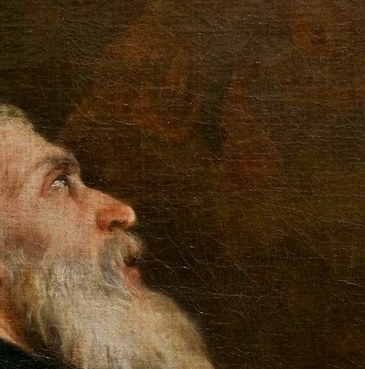
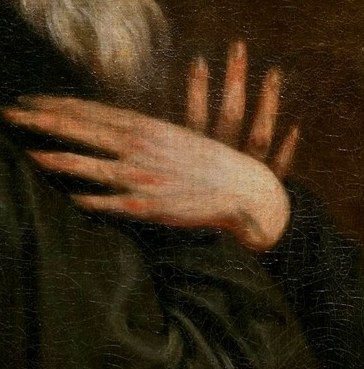
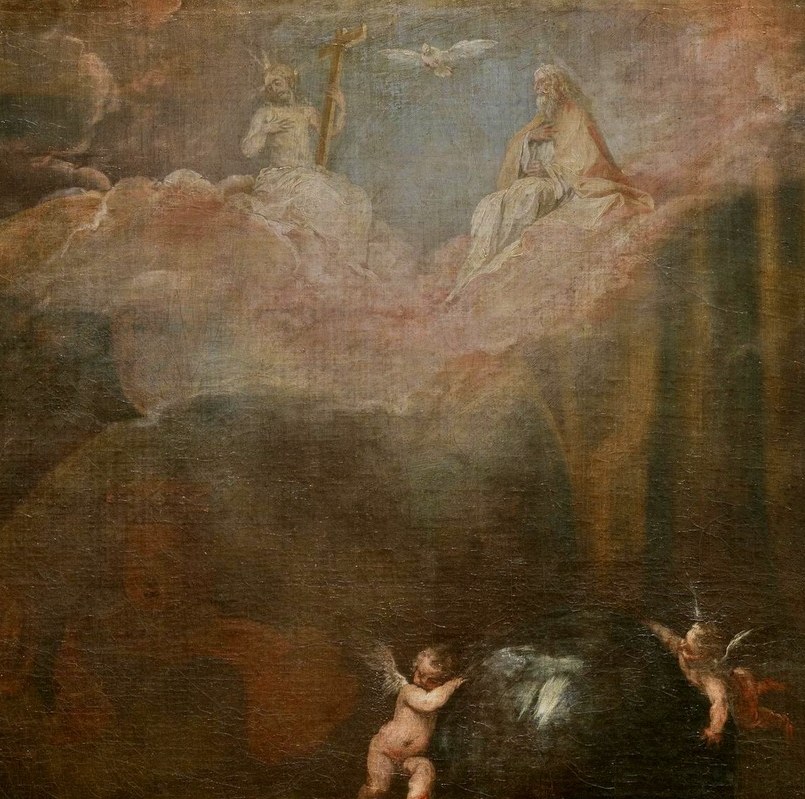
The painting invites us to witness Saint Benedict receiving a divine vision. Observe his clasped hands and upward gaze, conveying deep awe and supplication. An angel holds a globus cruciger, an orb symbolizing Christ's dominion over the world, a central element of the vision.
Cano, a prominent Spanish artist, was known for his religious commissions, particularly for monastic patrons. His use of chiaroscuro, contrasting deep shadows with illuminated forms, heightens the spiritual drama, drawing the viewer into the sacred scene. The open book and crucifix on the table further emphasize Benedict's scholarly and devotional life.
This work is a testament to the artist's ability to blend intense spiritual narrative with masterful technique, inviting contemplation on faith and divine encounter. What emotions does this scene evoke for you?
Details
Transcript
This Spanish painter worked for kings, and for monasteries. Here, he shows Saint Benedict in a divine vision. Benedict clasps his hands, looking up in awe. An angel presents an orb, symbolizing Christ's rule. X-rays show the painter first tried other arrangements. The crucifix and open book recall his scholarly life. This painter was a master of dramatic light and shadow.