Battle of Poitiers, 25 October 732 by Charles de Steuben
Charles de Steuben's *Battle of Poitiers, 25 October 732*, painted in 1834, vividly portrays a pivotal moment in European history: the Battle of Tours in 732 CE, which halted the Umayyad Caliphate's advance into Western Europe. This significant work of French Romanticism is held at The Cleveland Museum of Art.
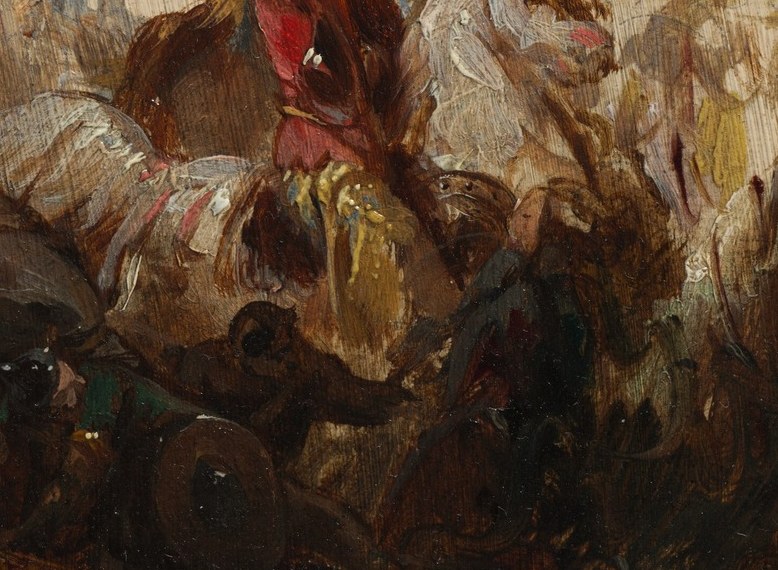
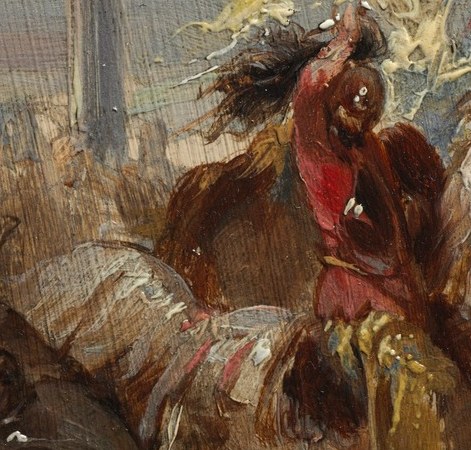
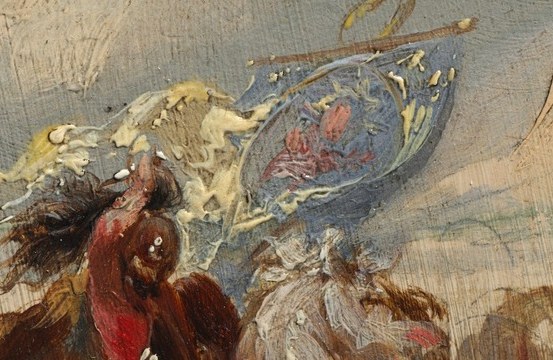
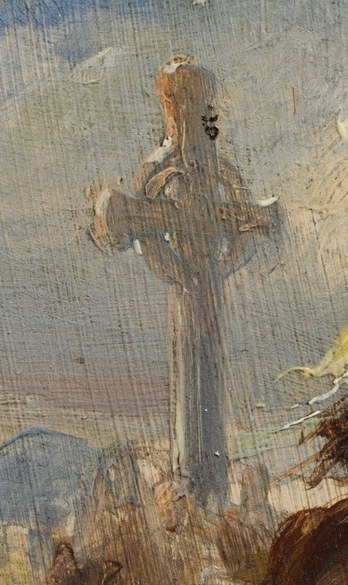
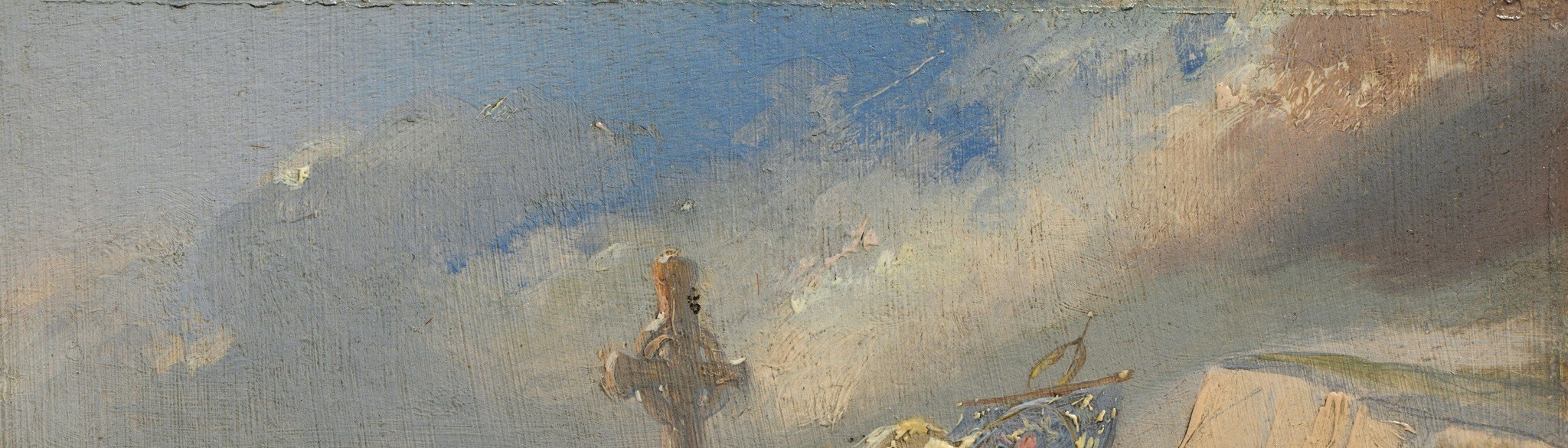
Look closely at the painting's dramatic composition, from the charging horses in the foreground to the central figure on horseback, brandishing a battle standard with a cross. This detail, along with the Celtic cross monument, emphasizes the historical and religious dimensions attributed to the conflict.
Steuben, a German-born French artist, employed a vigorous painterly approach, using thick, visible brushstrokes to convey the chaos and intensity of the battle. The tumultuous sky further enhances the sense of rapid movement and disarray.
This 19th-century interpretation offers a fascinating glimpse into how past events were understood and depicted during the Napoleonic and Second Empire eras. It serves as a visual record, a witness to a moment that shaped a continent.
Details
Transcript
This battle, in 732 CE, halted a great empire. The Umayyad Caliphate's advance into Western Europe was stopped here. The artist shows cavalry charges and close combat. This central figure, on horseback, leads the charge. His battle standard with a cross signals the conflict's religious dimension. A Celtic cross monument anchors the scene, a symbol of history. The painter used thick, fast brushstrokes to capture this chaos.