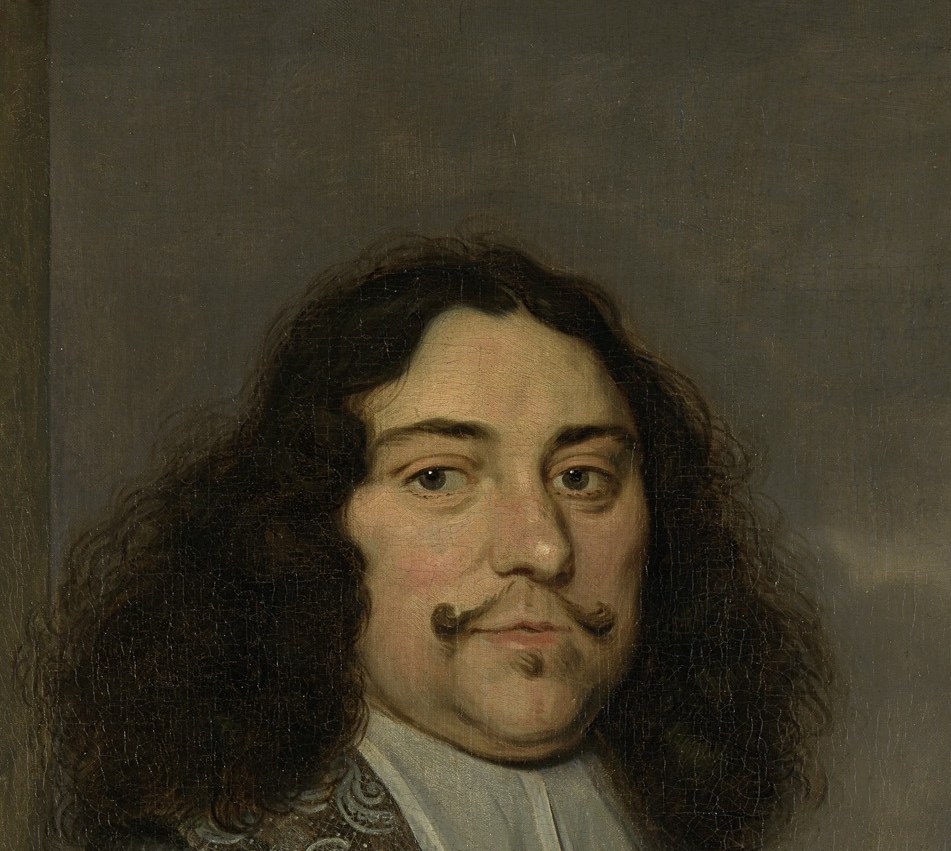
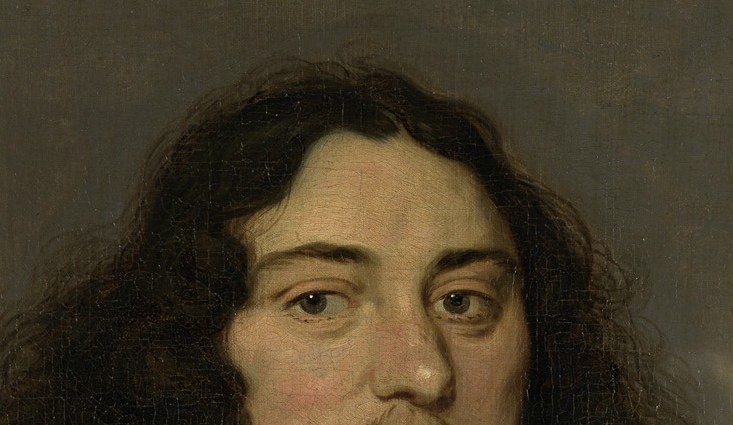
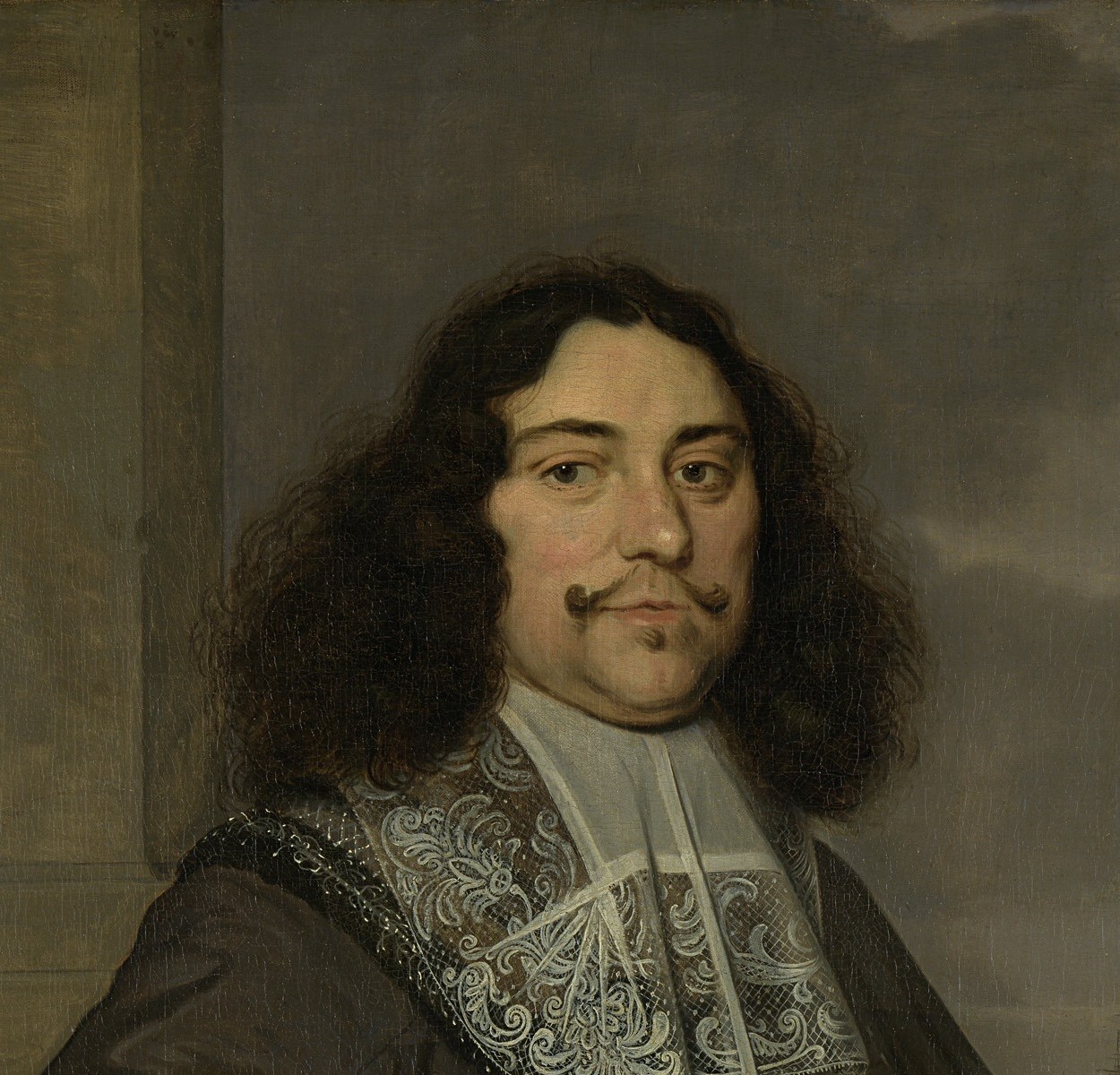
Portrait of Jan van Nes (1631-80). Vice admiral of Holland and West-Friesland by Ludolf de Jongh
View the artwork: Portrait of Jan van Nes (1631-80). Vice admiral of Holland and West-Friesland →
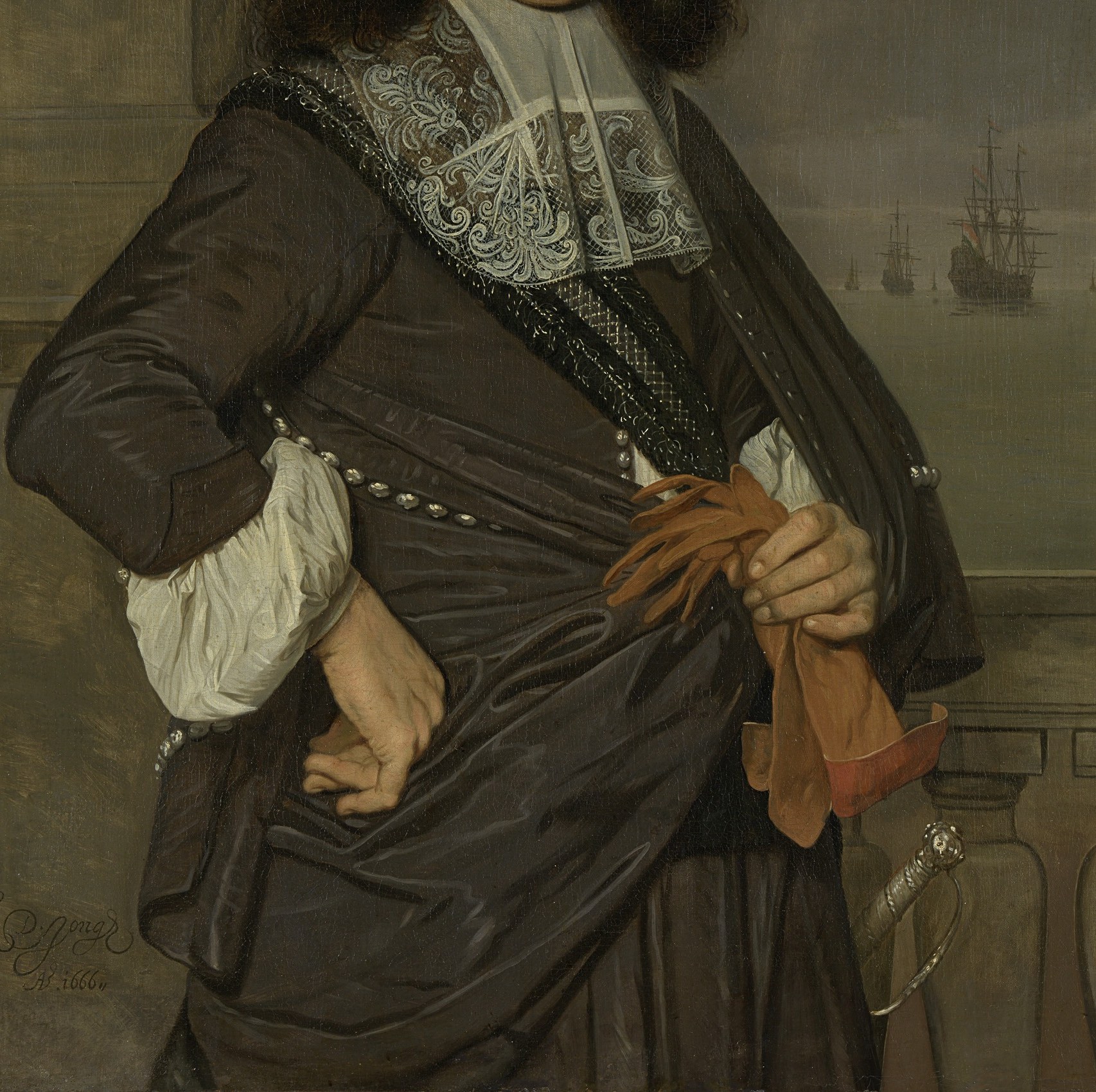
Ludolf de Jongh painted this portrait of Jan van Nes in 1666, the exact year Van Nes was promoted to Vice Admiral of Holland and West-Friesland during the Second Anglo-Dutch War. It hangs in the Rijksmuseum, paired since 1885 with the matching portrait of his wife, Aletta van Ravensberg.
Look at the background. De Jongh placed a naval seascape with Dutch men-of-war behind Van Nes, a rhetorical shorthand that announces his profession without a uniform. In the foreground, Van Nes holds a brown leather glove rather than wearing it, a codified status signal in 17th-century Dutch portraiture. His right hand rests on his hip, the universal posture of military command.
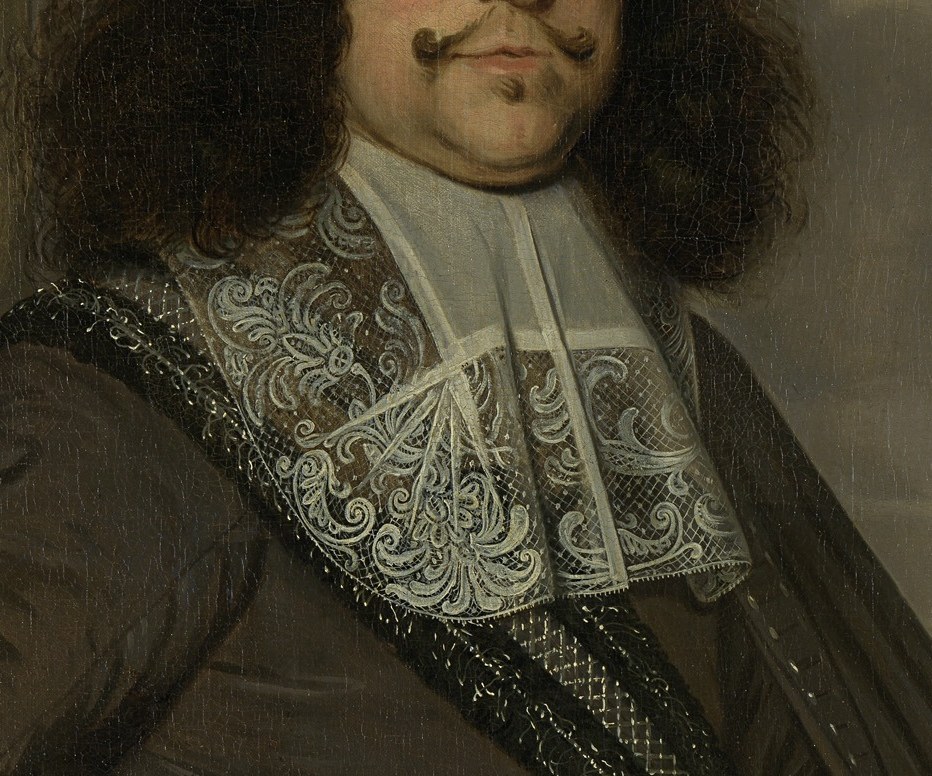
Van Nes had already served under Michiel de Ruyter on expeditions to the Mediterranean and West Africa. After this portrait was painted, he fought in the Four Days' Battle and the Raid on the Medway. The lace at his throat, rendered with wet-on-wet transparency, cost more than most Dutch citizens earned in a year.
A portrait of a man at the hinge of his life, standing in a Rotterdam studio while his ships wait in the haze behind him.
#arthistory #dutchgoldenage #rijksmuseum
Details
Transcript
1666. England and Holland are at war. In Rotterdam, a man stands for his portrait. Jan van Nes was just promoted to Vice Admiral. His hand rests on his hip like a man used to command. The glove is not for his hand. It is for show. Behind him, the reason for the promotion. The painter, Ludolf de Jongh, was Rotterdam's best. Van Nes would soon fight in the Four Days' Battle.