Artwork
Portrait of Jan van Nes (1631-80). Vice admiral of Holland and West-Friesland
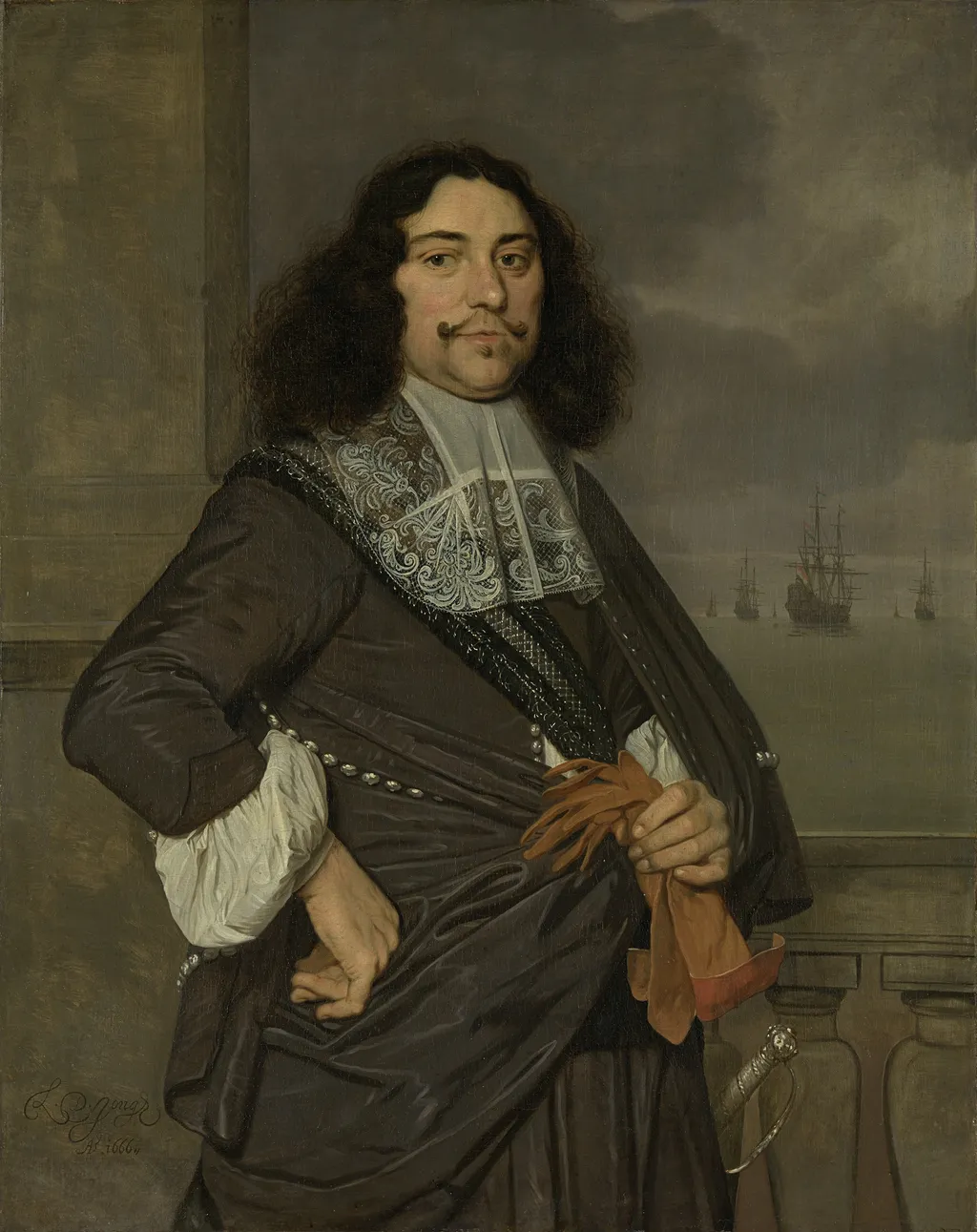
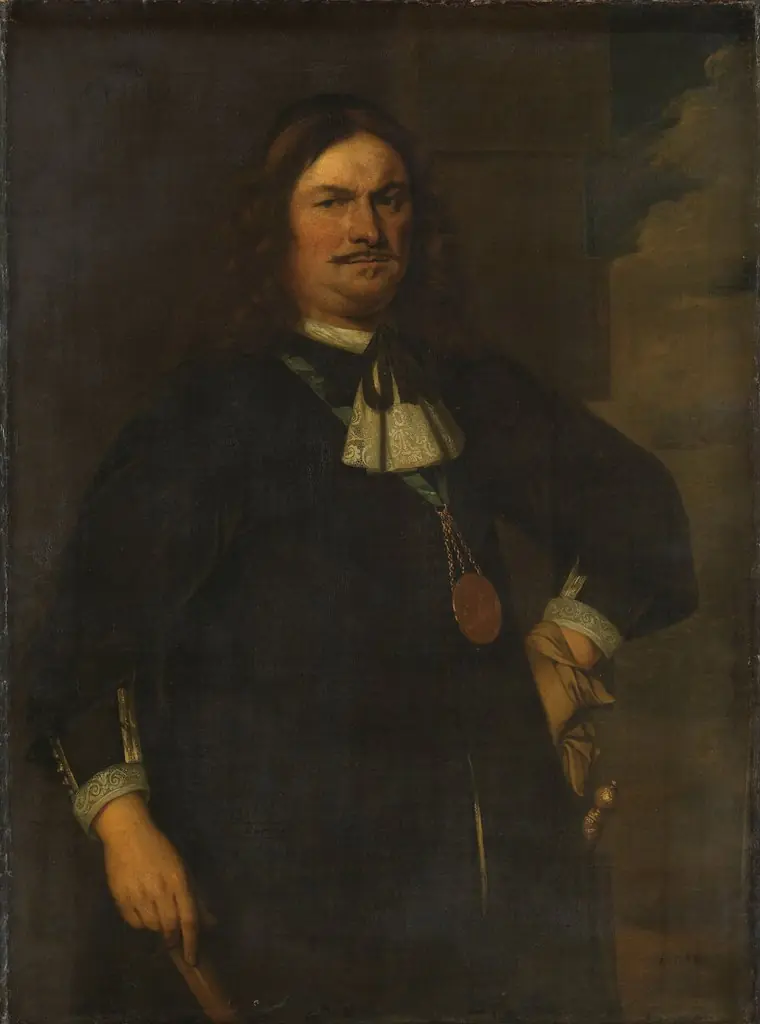
Portrait of Jan van Nes (1631-80). Vice admiral of Holland and West-Friesland is an oil painting by the Dutch Golden Age artist Ludolf de Jongh. It dates from 1666 and is held in the collection of the Rijksmuseum.
About this work
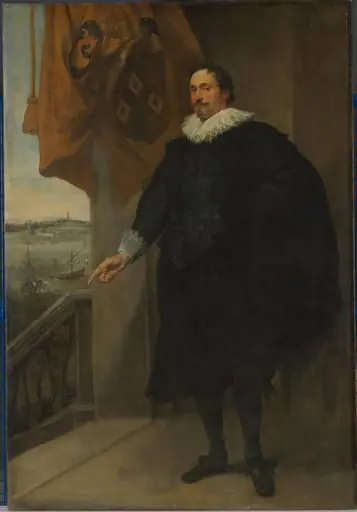
Gloves in his left hand, his right planted on his hip, Jan van Nes stands before a stone balustrade with warships drifting on still water behind him.
Gloves in his left hand, his right planted on his hip, Jan van Nes stands before a stone balustrade with warships drifting on still water behind him. Ludolf de Jongh painted the half-length portrait in 1666, marking the Rotterdam admiral's promotion to vice-admiral of Holland and West-Friesland during the Second Anglo-Dutch War. It hangs in the Rijksmuseum as the pendant to a 1668 portrait of his wife.
Subject & Meaning
The portrait depicts Jan Janszoon van Nes (1631–80), Vice Admiral of Holland and West-Friesland, in a formal standing pose with his hand on his hip (akimbo), a gesture of authority. He wears a sash and a sword, along with a lace collar and cuffs, signaling his high military rank. The background includes a window and balustrade overlooking a seascape with a three-masted sailing ship, directly referencing his naval command.
These iconographic elements, the sash, sword, maritime setting, and commanding posture, serve to symbolize van Nes's status and professional identity as a senior officer in the Dutch fleet. The composition thus functions as a public declaration of his career achievement and social standing within the Republic's naval hierarchy.
Technique & Style
Executed in oil on canvas in 1666, this portrait presents Vice Admiral Jan van Nes in a three-quarter-length standing pose, akimbo, wearing a sash, sword, and lace-trimmed collar and cuffs. The composition places the sitter before a window with a balustrade, opening to a view of the sea with sailing ships, a backdrop that underscores his naval rank. The painting attends to textures of lace, hair, and gleaming metal, typical of Dutch portraiture of the period. No information on condition is provided in the sources.
Overview
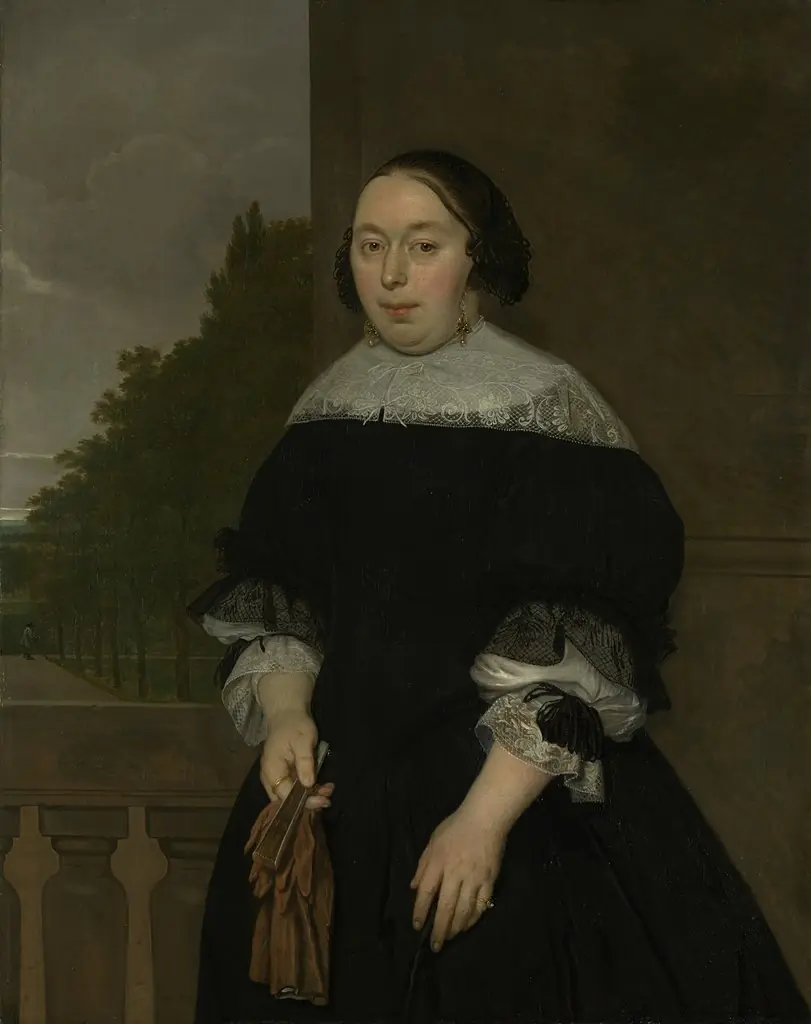
Ludolf de Jongh completed this oil portrait of Jan van Nes in 1666, the year of the sitter's promotion to vice-admiral of Holland and West-Friesland. The half-length depiction shows Van Nes standing before a stone balustrade, with a naval scene featuring warships visible in the background. This painting, measuring 111.5 by 88.5 centimetres, serves as a companion piece to a portrait of his wife, Aletta van Ravensberg, also by De Jongh.
Context
Jan van Nes's career was marked by significant naval engagements, including expeditions with Michiel de Ruyter and participation in major conflicts like the Four Days' Battle. Ludolf de Jongh, the artist, was a key figure in Rotterdam's art scene, returning to the city in 1642 after training abroad. He became a leading genre painter before taking on civic duties as schout of Hillegersberg, establishing a prominent local workshop.
History & Provenance
Jan van Nes commissioned this portrait, along with a companion piece depicting his wife, Aletta van Ravensberg, which De Jongh completed two years later in 1668. These two paintings have been preserved together since their acquisition by the city of Amsterdam in 1885. They are now part of the Rijksmuseum's collection, where they continue to be exhibited as a pair.
Own this work as a print
Artist & collection

Artist
Ludolf de Jongh or Ludolf Leendertsz. de Jongh (Overschie, 1616 – Hillegersberg, 1679) was a Dutch painter, known for his genre scenes, hunting scenes, history paintings, landscapes, cityscapes, and portraits. He was…