In the Connecticut Hills by Ben Foster
This is Ben Foster's landscape "In the Connecticut Hills," painted in 1914 and held by The Metropolitan Museum of Art. It illustrates a single, teachable compositional trick: using a screen of dark foreground elements to push a bright background impossibly deep into the picture plane.
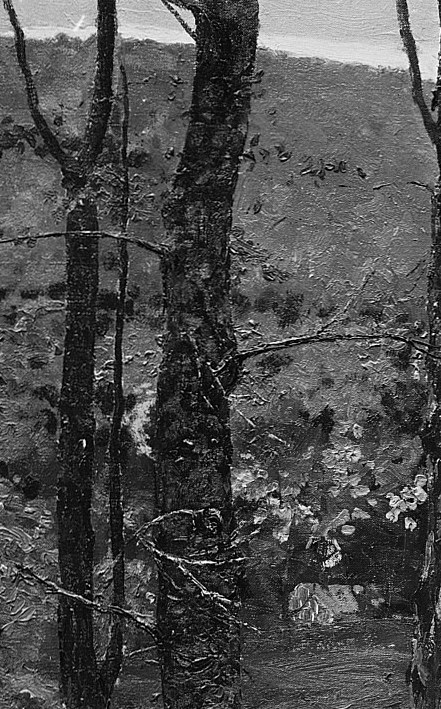
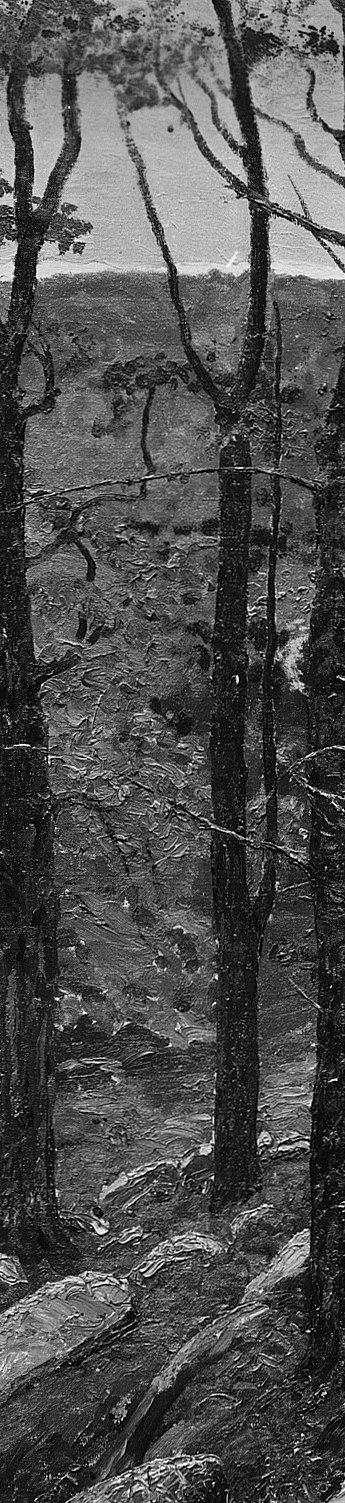
Foster plants two heavy tree trunks just off center like architectural pillars. They don't just anchor the composition, they create a window. Your eye punches straight through the gap in the middle, skips across a sunlit rock ledge, and lands on the pale blue hills in the far distance. He's built a three-stage depth charge out of nothing but tonal contrast.
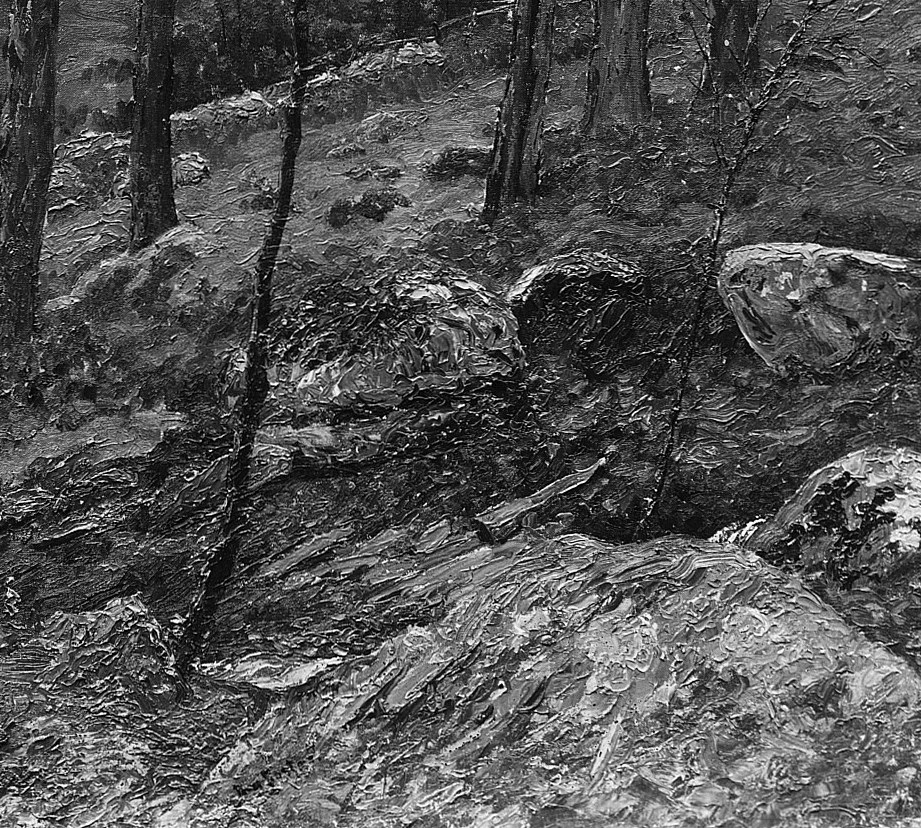
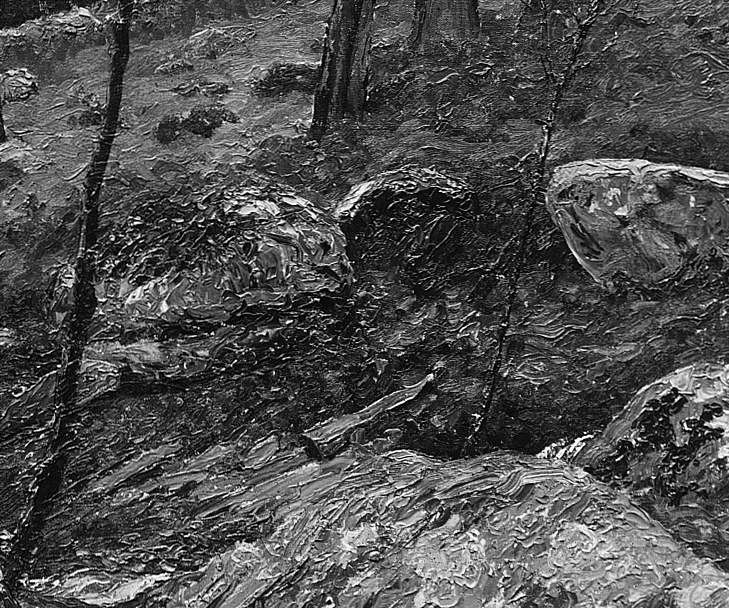
Now pull close on the right foreground boulder. This is the technique laid bare. Foster used heavy impasto, thick, unmixed paint laid down in single strokes. Each facet of the rock is one brush mark, so the physical texture of the paint mirrors the rough stone it depicts. The mossy passages are drier, scrubbed strokes over a dark ground. He doesn't blend; he stacks.
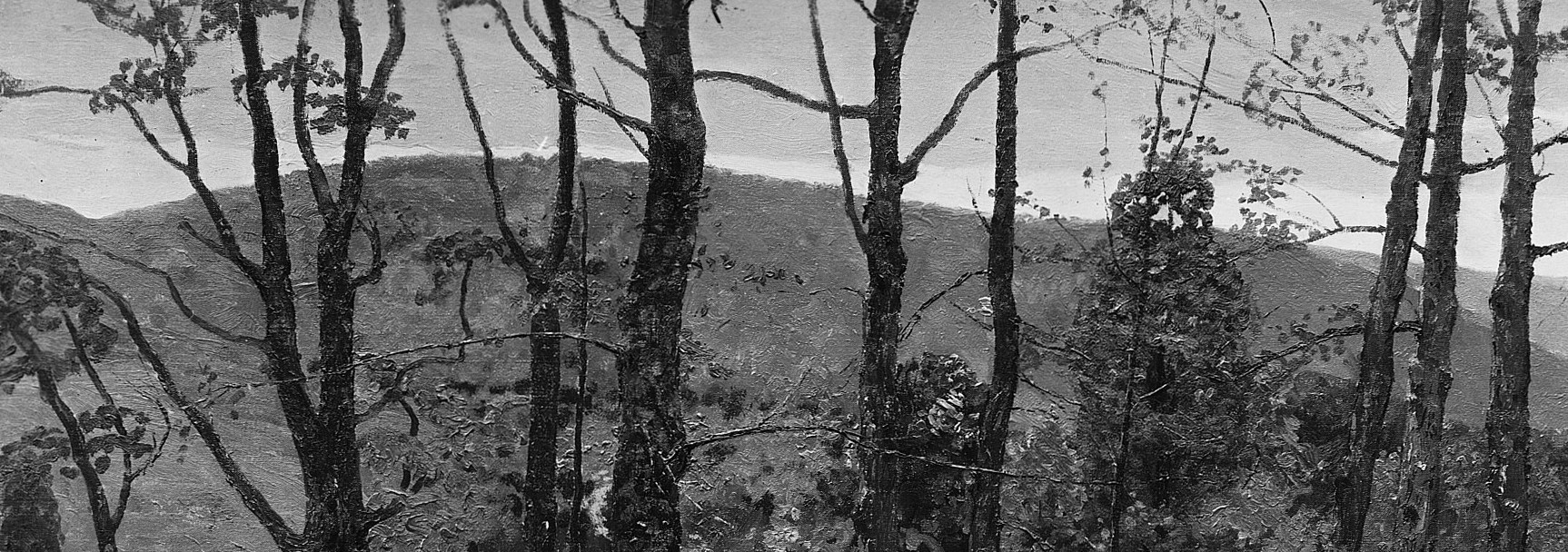
He also knows when to stop. The canopy leaves in the upper right dissolve into mere flicks of a dry brush, and the distant hills are softened into a pale, atmospheric blur. That haze is not fog, it's distance painted as a color shift. The trick is the same one the Hudson River School taught him: warm darks advance, cool lights recede.
Details
Transcript
At first glance, just a dark stand of trees. But look at the light beyond them. Foster splits the forest with two dark trunks. They make a window. Through it: the hills. He carves depth with paint that pulls the eye in steps: dark rock, brighter rock, then hazy sky. That haze softens the mountain. It is not mist he painted, it is distance. Now pull close on the rocks. Every facet is a single loaded brushstroke. The raw paint is the rock.