The Pond (La Mare) by Théodore Rousseau
Théodore Rousseau's The Pond (La Mare), painted around 1855 and housed at The Metropolitan Museum of Art, is a prime example of the Barbizon school's commitment to naturalism. This landscape captures a serene moment in rural France, moving away from idealized scenes toward direct observation.
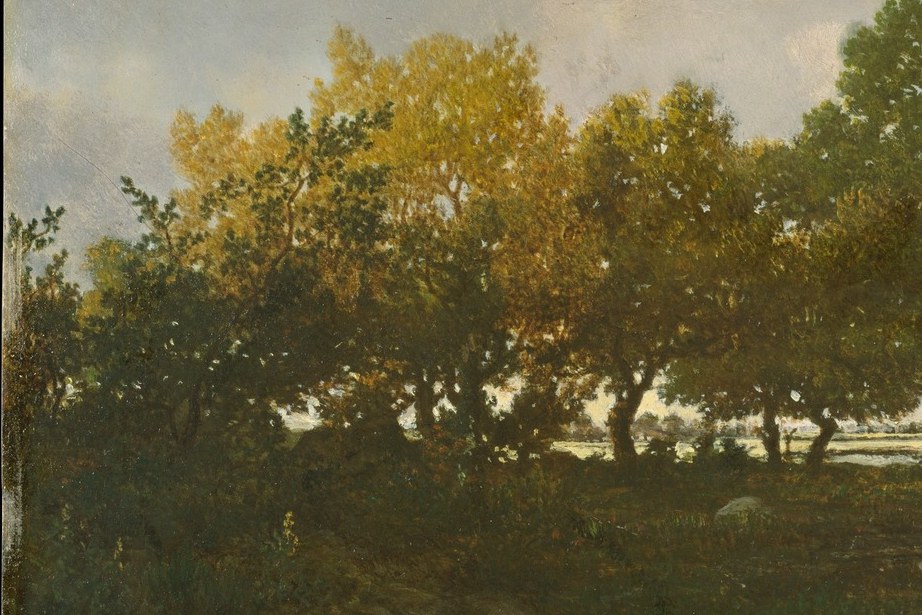
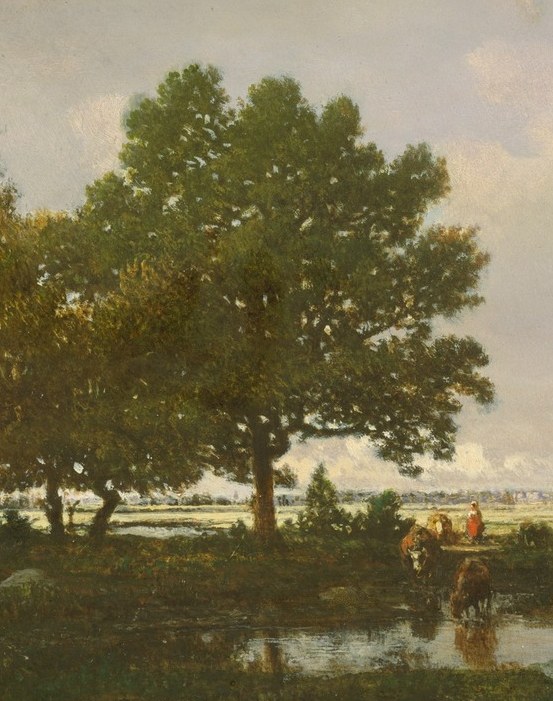
Notice the warm autumn tones of the trees on the left, contrasting with the central oak. Rousseau's technique involved thick brushstrokes, especially visible in the foliage, creating a tactile quality. The play of light on the water and leaves adds a luminous depth, enhanced by the subtle reflection in the pond. Even the small figures by the water emphasize the human presence within this observed nature.
Rousseau, a leading figure of the Barbizon school, championed painting directly from nature. This shift from historical or mythological landscapes to unembellished, truthful depictions of the countryside was revolutionary for its time. The Pond embodies this ethos, offering a deeply observed and contemplative view of the rural environment.
This painting invites us to pause and appreciate the quiet beauty of the observed world. It represents a pivotal moment in landscape painting, emphasizing truth and direct experience.
Details

Transcript
This quiet pond scene hides a revolution. Look at the autumn trees on the left. Rousseau painted these trees with thick strokes. He captured light on leaves and water. These figures observe the natural world. Barbizon painters rejected idealized landscapes. They focused on direct, truthful observation. A serene, unembellished portrayal of rural life.