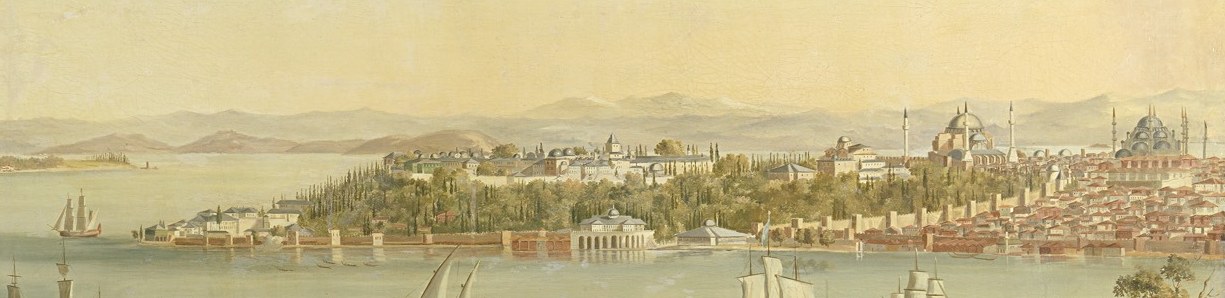
View of Constantinople (Istanbul) and the Seraglio from the Swedish Legation in Pera by Jan van der Steen
Jan van der Steen’s "View of Constantinople (Istanbul) and the Seraglio from the Swedish Legation in Pera", painted in 1775, offers a serene yet bustling vista of the Ottoman capital, now Istanbul. This oil painting, housed at the Rijksmuseum, captures the city's unique blend of cultural identity and economic power.
Observe the distinct minarets and domes that punctuate the skyline, particularly on the right bank. These architectural features are not merely decorative but symbolize the profound religious and cultural heritage of the Ottoman Empire. The soft, hazy light, created by the artist’s delicate use of transparent pigments, enhances the tranquil atmosphere.
The foreground and middle ground are alive with numerous ships of varying sizes. These vessels are a clear indication of Constantinople's historical role as a vital trading hub, connecting Europe and Asia. The painting likely served to document the view from the Swedish diplomatic mission in Pera, reflecting a broader European fascination with the exotic locales of the Ottoman Empire.
This work beautifully balances precise architectural detail with an atmospheric softness, inviting viewers to ponder the city's enduring legacy as a crossroads of civilizations. What aspect of this vibrant scene captivates you most?
Details


Transcript
This painting from 1775 shows Constantinople, now called Istanbul. Its many minarets and domes define the city's unique skyline. These structures symbolize its rich religious and cultural heritage. The painter used transparent layers to create a hazy, soft light. Many ships of all sizes fill the water, signaling a busy trade hub. It captures the strategic gateway between Europe and Asia.