Untitled by Nainsukh
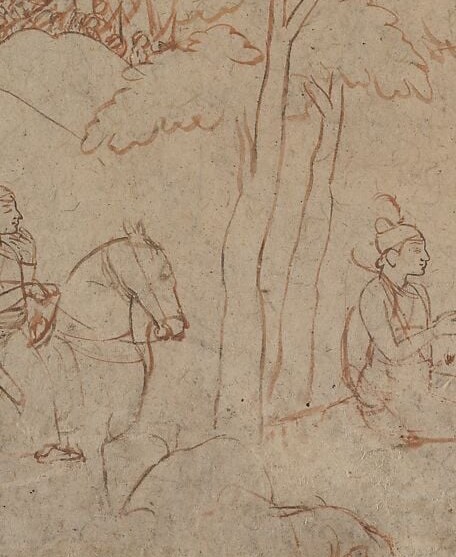
Nainsukh’s untitled drawing of a horse and attendants was made around 1775-80. Painted in red ochre and wash on paper, it captures a scene from a royal hunting party in the Pahari hills of northern India. The artist worked for a small court, and his style reflects that world: refined, efficient, and quietly precise.
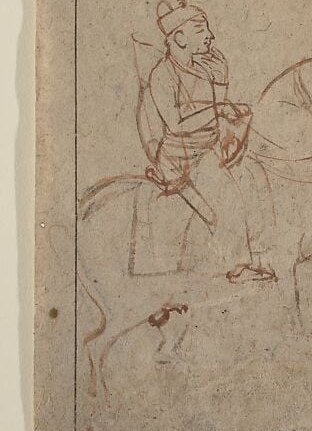
Look first at the white horse. Its body is barely painted, left mostly as open paper. That blankness makes it the brightest thing in the composition. Follow the rein from the bit to the crouching attendant’s hand. Nainsukh drew it in one confident, unbroken stroke. That single line carries the whole structure of command.
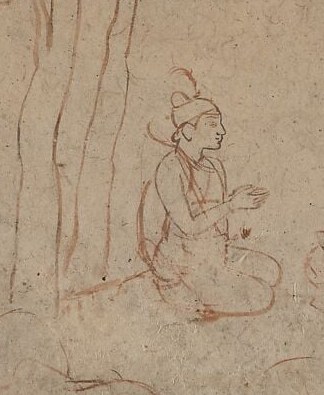
Two men wear red ochre turbans. In Pahari court conventions, turbans signal rank. The seated figure gestures; he is the patron, the man who has dismounted. The crouching figure tends the horse. His posture tells you everything about who serves and who commands.
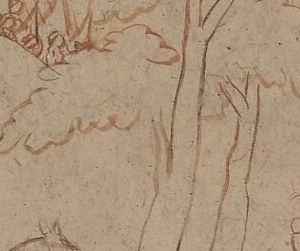
The setting is barely there: a few trees, a line for the ground. Every mark has work to do, and nothing is wasted. That economy was a value at court. Nainsukh could tell a story without wasting ink, paper, or a patron’s time.
What detail holds your eye the longest: the horse’s stillness, or the invisible chain of command running through that single line?
Details
Transcript
A white horse dominates the page, its body left almost entirely open. In Pahari painting, a riderless horse signals something specific. It means the rider has dismounted. The hunt is underway. Red ochre turbans mark rank. Two men wear them. The seated man gestures. He is the patron, directing the action. The crouching figure tends the horse. His posture is service, not command. A single, unbroken line carries the rein from hand to bit. In one stroke, Nainsukh draws the entire chain of authority.