Oak Tree in a Mountainous Landscape by http://www.wikidata.org/.well-known/genid/17ef8ffd7ec924639d23405c179ee1ac
When Heinrich Hermanns painted this in 1900, Europe was sprinting toward modernity. Radios were in development, the first Zeppelin had just flown, and cities were swelling. This painting is a quiet counter-argument: a pocket of land the railroads had not yet reached. The Düsseldorf school where Hermanns trained emphasized direct observation of nature, and you can see it in every square inch here.
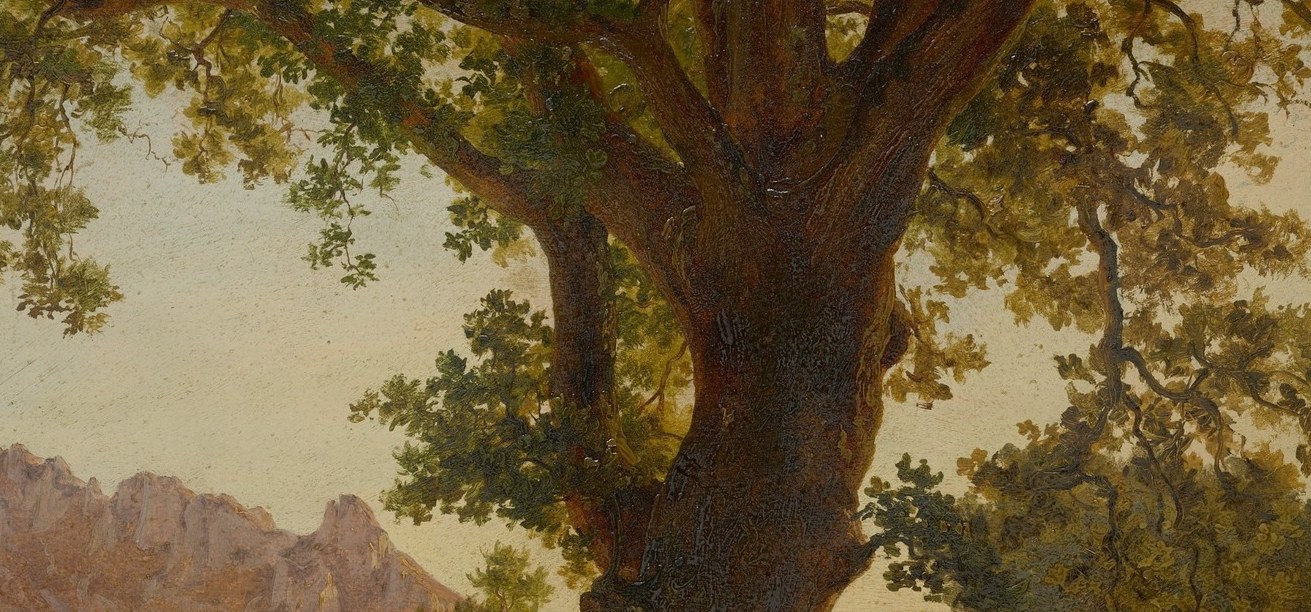
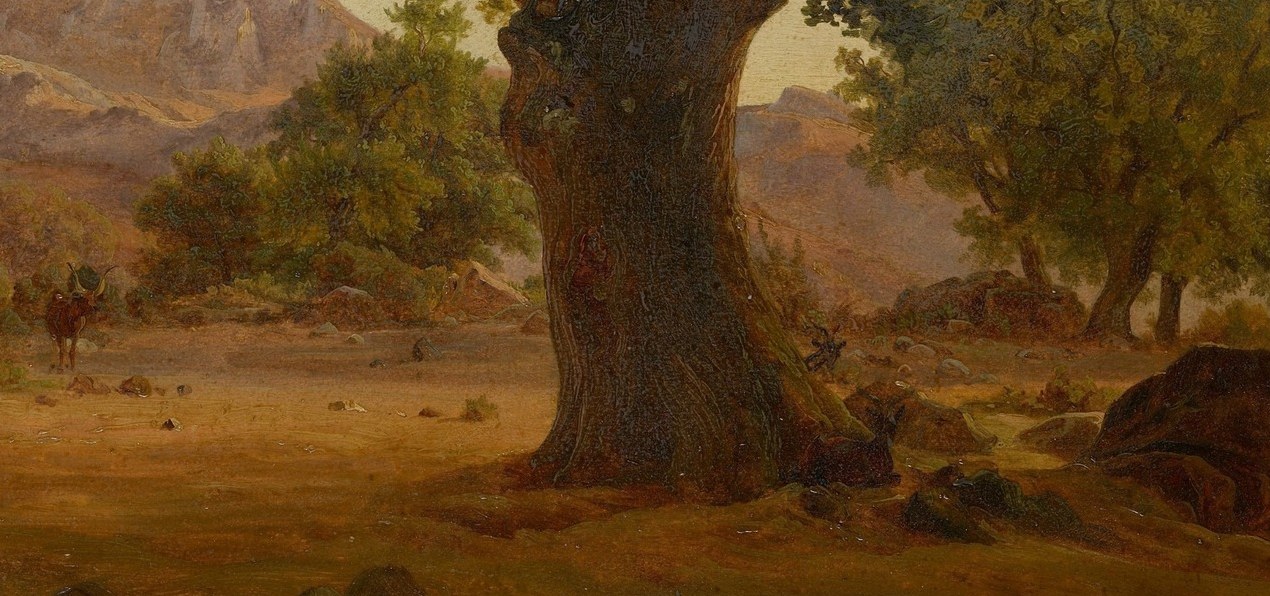
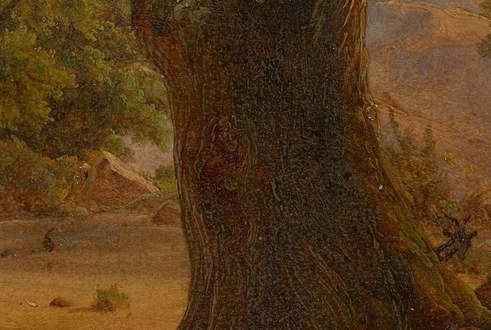
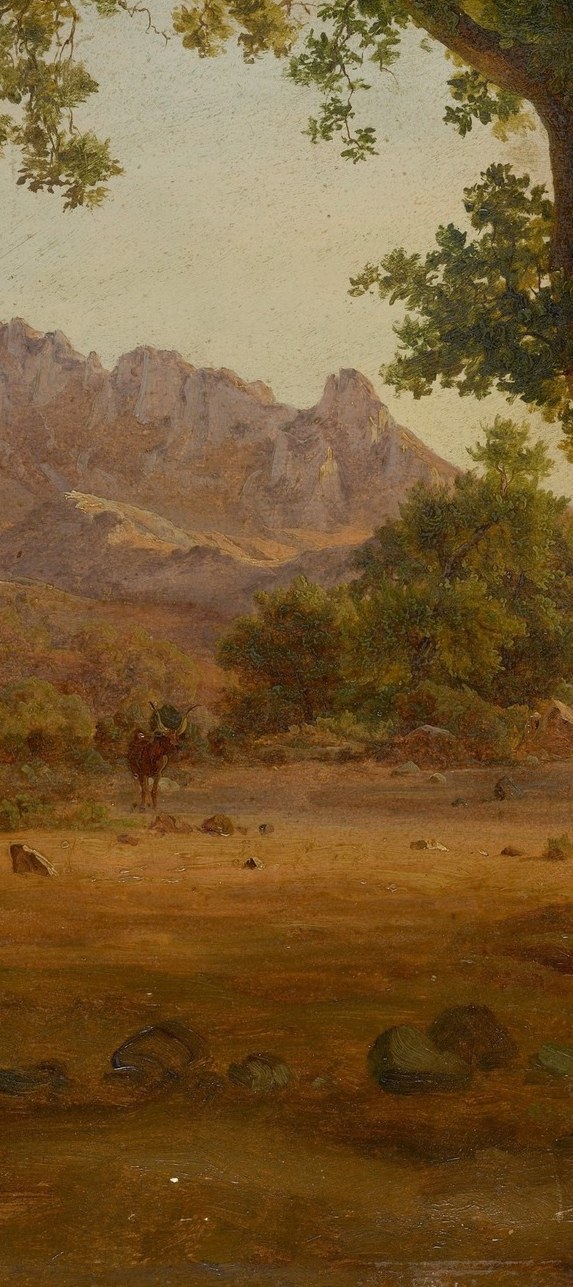
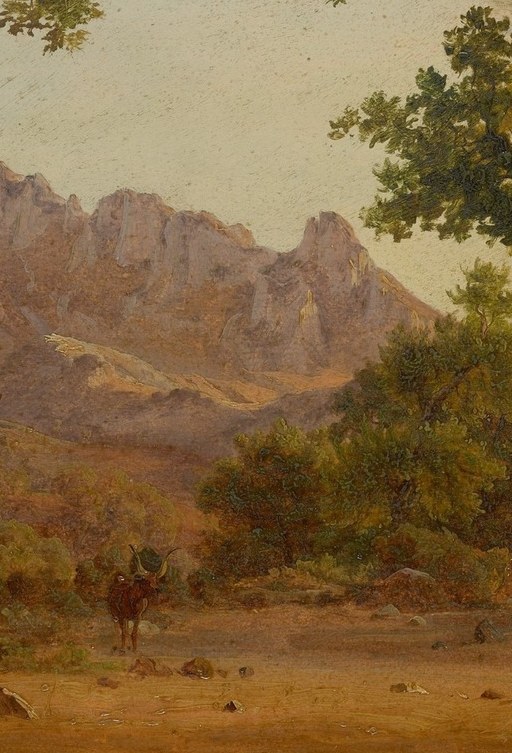
Let your eye travel from the shaded foreground rocks up through the massive oak trunk. The bark is not a generic texture; it is a portrait of a specific, ancient tree with ridges, lichens, and weathered hollows. The real reward is the solitary deer in the sunlit meadow. It is small enough to miss, but once you find it, the entire painting shifts from a still landscape to a living habitat.
Hermanns was part of a generation of German landscape painters who walked a line between Romanticism and a more sober naturalism. They went out into the hills not to dramatize them, but to witness them. The distant treeline on the right does crucial work here: those smaller trees are what make the foreground oak feel monumental. This is not a fable. It is a record.
Oak Tree in a Mountainous Landscape lives now at the Museum Kunstpalast in Düsseldorf. A century and a quarter later, that oak is almost certainly gone. But the light filtering through its canopy is still caught here, exactly as it fell one afternoon.
Details
Transcript
1900. Europe is racing into a new century. Factories, railways, telegraphs. And then, this. A landscape without a single human figure. The only inhabitant is this deer, grazing alone. All of it framed by a monument that outlived empires. The painter recorded every ridge in this bark. As if to say: look closely. This still exists.