The Triumph of Fame by Giovanni di ser Giovanni Guidi
View the artwork: The Triumph of Fame →
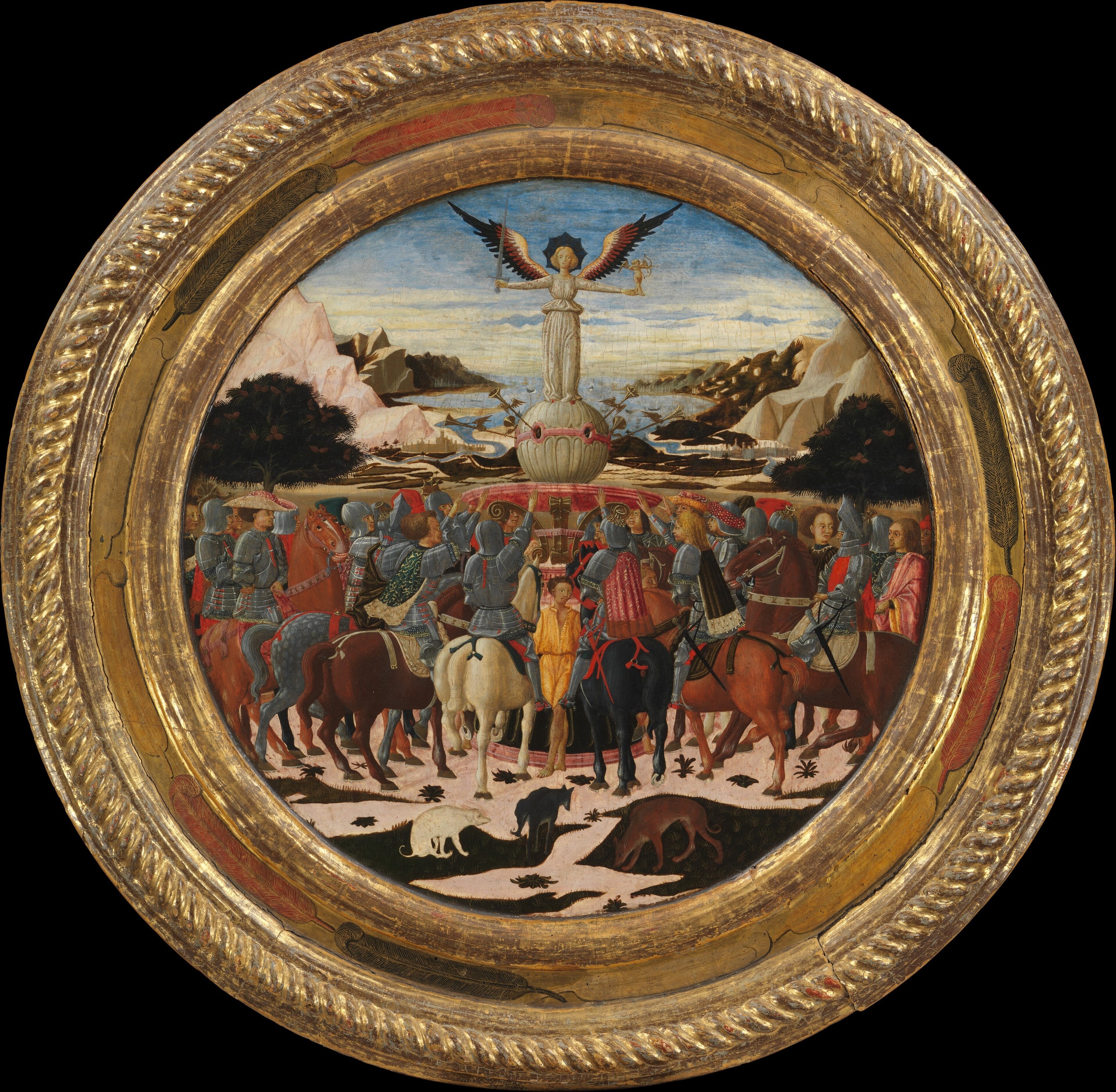
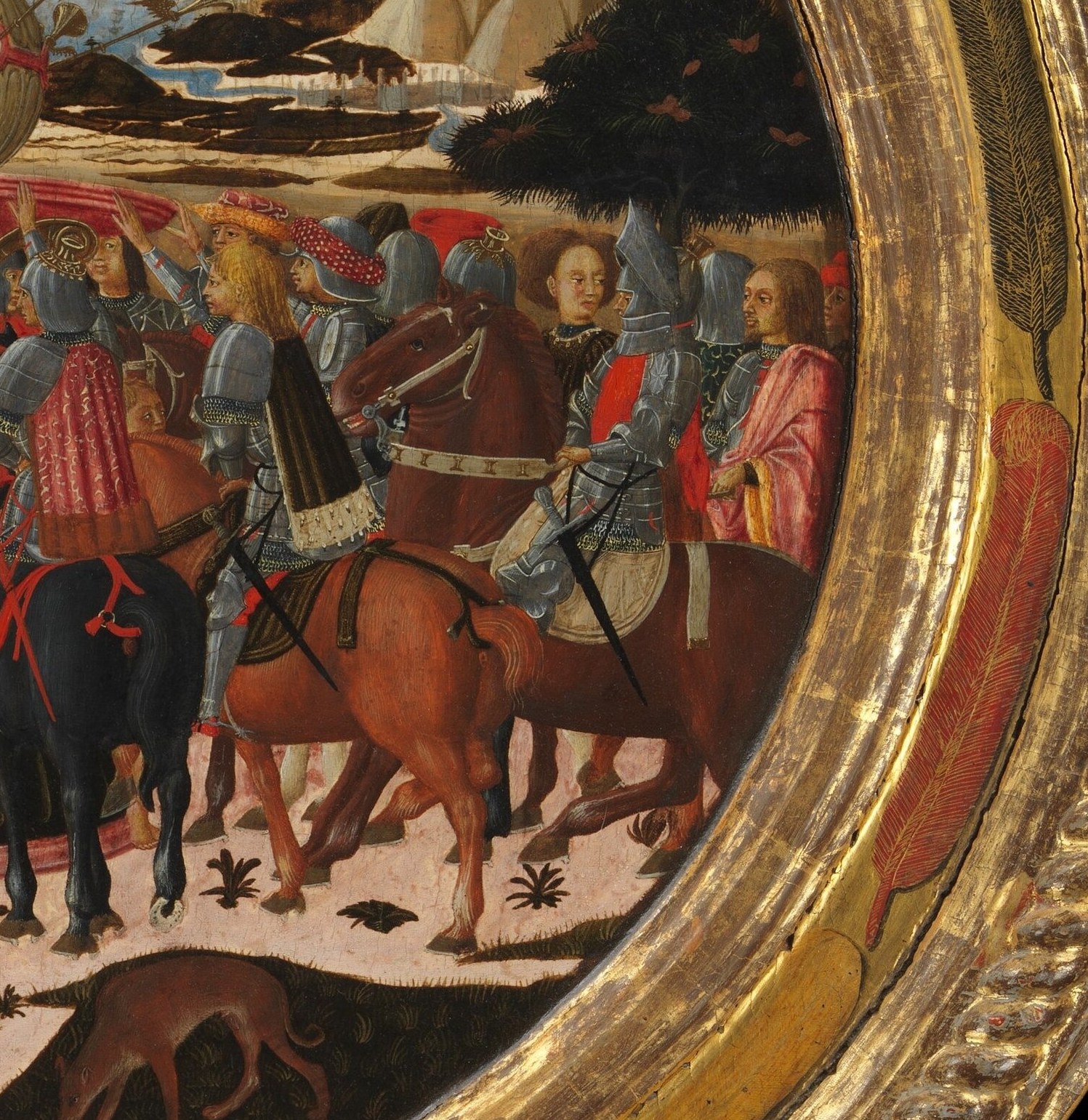
This is The Triumph of Fame, painted in 1448 by Giovanni di ser Giovanni Guidi, known as Lo Scheggia, the younger brother of the revolutionary Masaccio. It was never meant to hang on a wall. It was a panel from the front of a cassone, a decorated wedding chest made for a wealthy Florentine family.
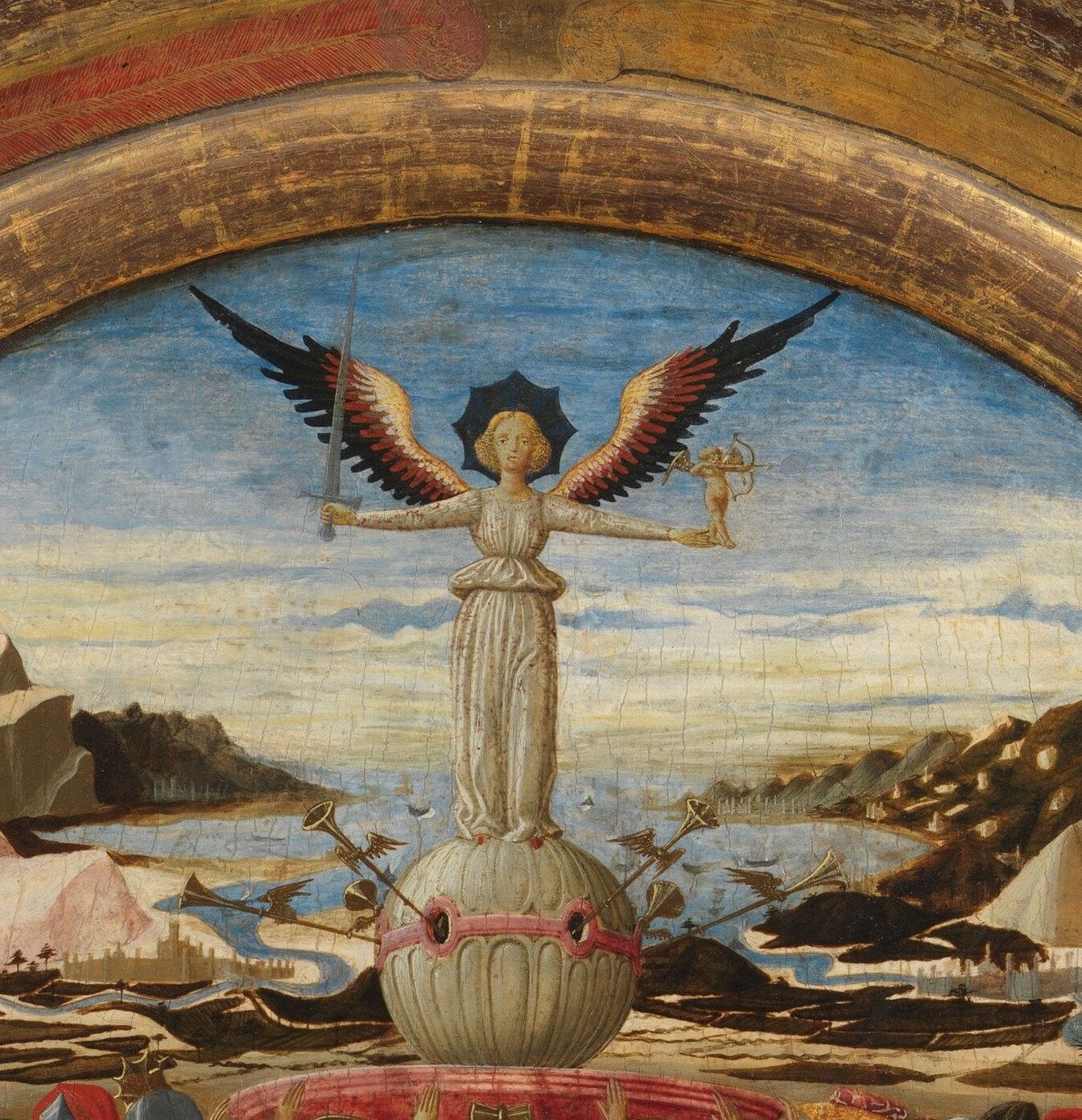
Look at the ornate pedestal beneath the winged figure of Fame. The gilded rope-twist frame is original, a deliberate Florentine decorative choice for luxury domestic furniture. Now look closely at the empty space on that plinth. Fame's lower body has been severed. The wood panel itself was cut apart, likely in the 19th century, when Renaissance cassoni were routinely broken up and sold as individual pictures by dealers who could make more money that way.
The missing fragment, the lower portion of the plinth with a group of kneeling knights, survives. It hangs today in the Musée des Beaux-Arts in Chambéry, France, four hundred miles from its upper half. Two museums, one wedding chest. The elder brother Masaccio died young and changed painting forever. Scheggia, 'the Splinter,' outlived him by decades and spent his career making objects for people's homes, objects later torn apart for profit.
A painting cut in two. A family story split across countries. What does it mean for Fame to be physically severed from the knights she was meant to crown?
#arthistory #earlyrenaissance #loScheggia
Details
Transcript
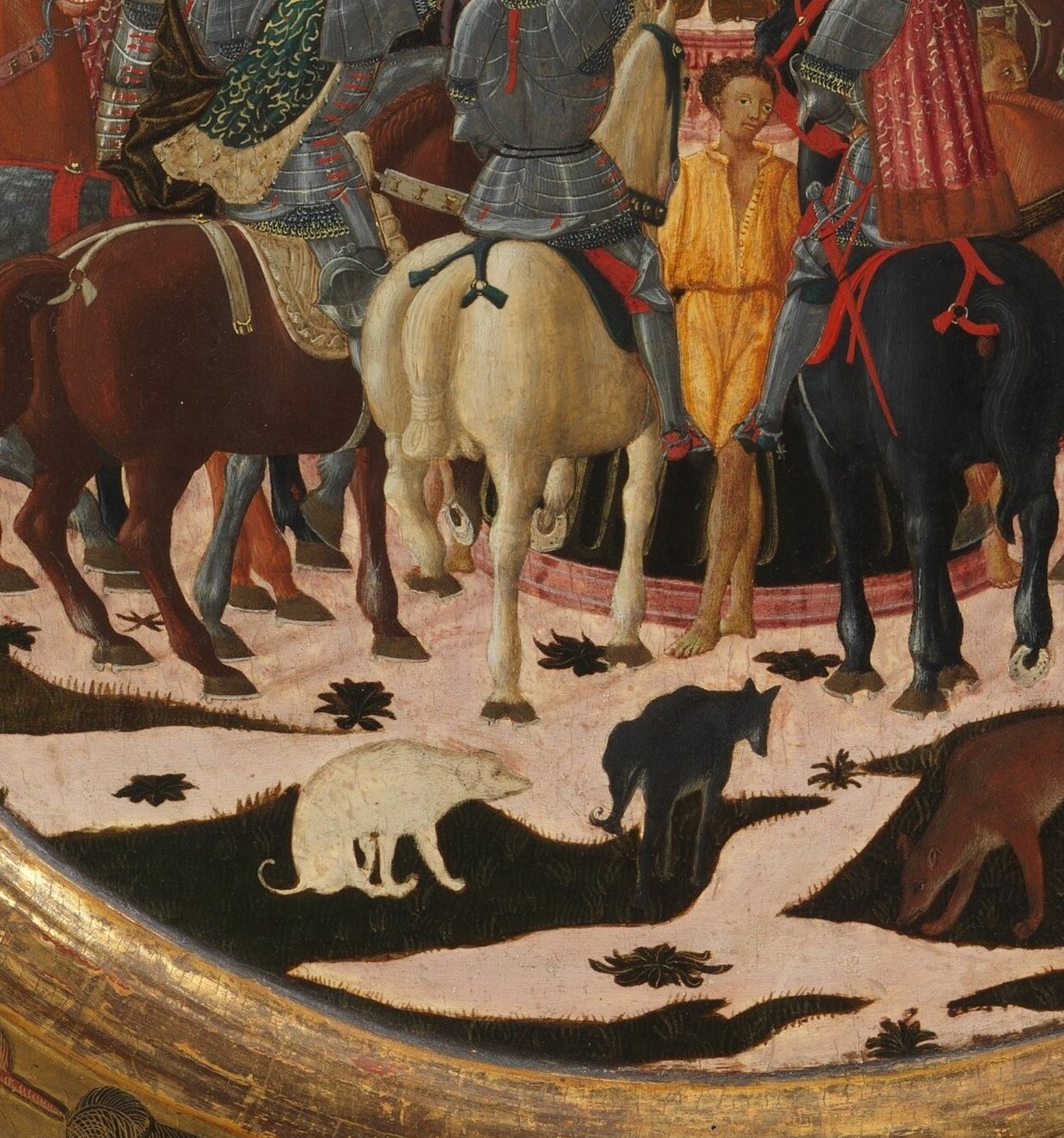
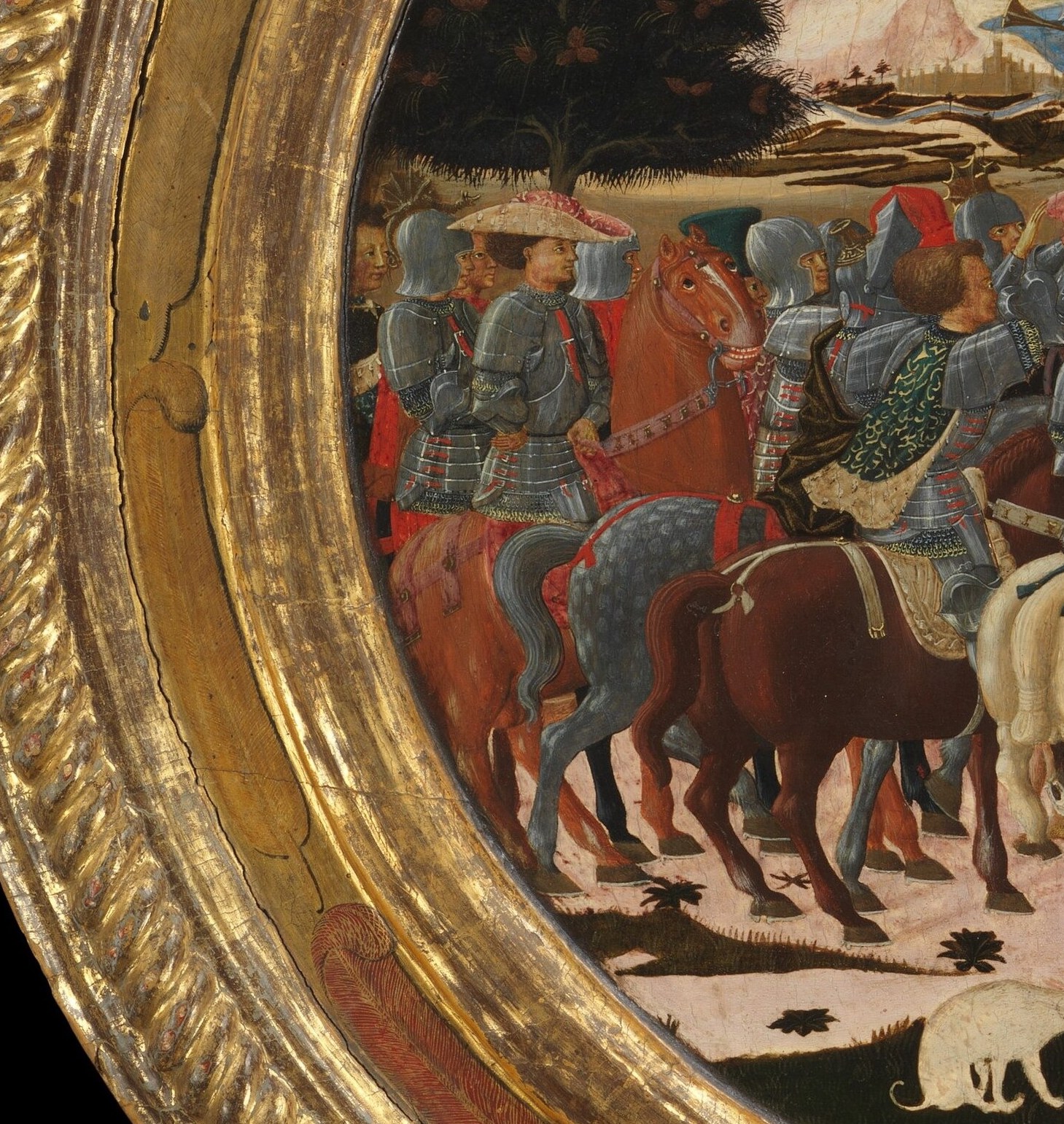
A triumphant procession circles a grand pedestal. Fame herself stands above it all, sounding her trumpet. But she was not always alone on that plinth. A gilded rope-twist frame still holds the panel together. This was not a single painting. It was cut from a wedding chest. Where Fame's lower body should be, the wood is simply gone. The missing piece is a group of kneeling knights, now in a museum in France.