Artwork
The Triumph of Fame
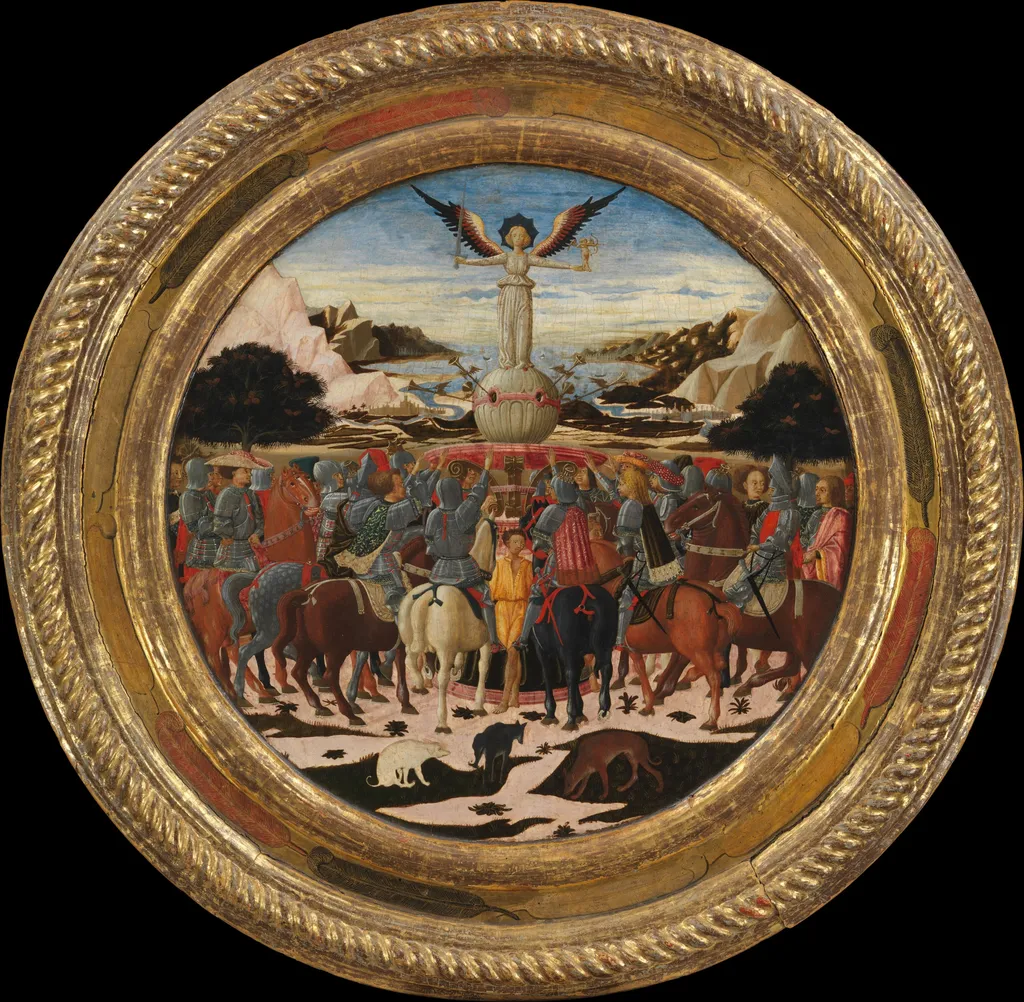
The Triumph of Fame is a tempera painting by the Early Renaissance artist Giovanni di ser Giovanni Guidi. It dates from 1448 and is held in the collection of the Metropolitan Museum of Art.
About this work
Subject & Meaning
The composition is anchored by a symmetrical landscape and three dogs of different colors at the bottom, which carry various auspicious allegorical meanings.
Created as a desco da parto, a birthing tray used to bring broth to a new mother, this allegorical painting offers auspicious wishes for the newborn, specifically Lorenzo il Magnifico. Its subject derives from Petrarch’s I Trionfi, enriched by citations from Boccaccio’s L'Amorosa. At the center, Fame stands on a globe with openings emitting trumpets, symbolizing worldly success.
She holds a sword and a small cupid, representing victory achieved through arms and love, respectively. A crowd of knights reaches toward her, desiring her favor. The composition is anchored by a symmetrical landscape and three dogs of different colors at the bottom, which carry various auspicious allegorical meanings. Overall, the iconography blends late Gothic decorative detail with Renaissance spatial complexity to convey its celebratory message.
Technique & Style
Executed in 1448, The Triumph of Fame is a circular birth tray (desco da parto) painted in tempera on wood, measuring 62.5 cm in diameter. The artist employs a tempera medium enriched with silver and gold leaf, applied to a wooden support prepared with gesso. The composition centers on an allegorical figure of Fame, depicted as an angelic being with outstretched wings and arms, holding a sword and a small winged Cupid.
She stands atop a globe punctured by trumpet-shaped openings, symbolizing worldly renown, while a symmetrical landscape unfolds behind her, featuring a lake fed by winding streams within a mountainous valley. The scene is framed by a dense assembly of knights reaching upward, their armor and garments rendered with meticulous linear detail and decorative flourishes that reflect late Gothic sensibilities. Spatial complexity is introduced through foreshortened horses, indicative of early Renaissance spatial experimentation. The overall handling balances courtly naturalism with a structured, axial arrangement, underscoring the work’s dual stylistic inheritance.
History & Provenance
Created in 1448 by Giovanni di ser Giovanni Guidi, known as Scheggia, this tempera and gold-on-wood painting was commissioned to celebrate the birth of Lorenzo de' Medici on January 1, 1449. Functioning as a desco da parto (birth tray), the work was produced by Scheggia's Florentine workshop, which specialized in such allegorical commissions for wealthy families. The piece remained in private hands, specifically associated with the collection of Thomas Jefferson Bryan, before entering the institutional sphere.
It was subsequently acquired by the Metropolitan Museum of Art in New York in 1995 as a memorial to John Pope-Hennessy. The artwork measures 62.5 cm in diameter and depicts the Triumph of Fame, drawing iconographic inspiration from Petrarch's Trionfi and Boccaccio's Amorosa Visione.
The Triumph of Fame is housed in the Metropolitan Museum of Art, New York, specifically within the Bryan Gallery of Christian Art. The panel entered the Met’s collection in 1995, acquired in memory of John Pope‑Hennessy, having formerly belonged to the Thomas Jefferson Bryan collection. While the sources confirm its current location and acquisition provenance, they do not detail any specific exhibition history beyond its ongoing presence in the museum’s holdings.
Context
Created in 1448 by Giovanni di ser Giovanni Guidi, known as Lo Scheggia, The Triumph of Fame is a desco da parto, a painted birth tray used to present broth to new mothers in wealthy Florentine families. Commissioned to celebrate the birth of Lorenzo il Magnifico, the artwork reflects the era's custom of presenting allegorical imagery as a good omen for the newborn. Scheggia, the brother of Masaccio, operated a workshop highly specialized in such decorative domestic objects and painted cassoni.
Art historically, the piece bridges late Gothic and Renaissance styles; it retains a Gothic emphasis on line and decorative detail in armor and attire, yet incorporates Renaissance spatial complexity, notably through foreshortened horses reminiscent of Paolo Uccello's battle scenes. Its iconography derives from Petrarch's Triumphs and Boccaccio's L'Amorosa. Acquired by the Metropolitan Museum of Art in 1995 in memory of John Pope-Hennessy, the work remains a key example of 15th-century domestic art.
Legacy
The Triumph of Fame (1448) by Giovanni di ser Giovanni Guidi is housed in the Metropolitan Museum of Art, acquired in 1995 as a memorial to John Pope‑Hennessy. The painting exemplifies a transitional style, retaining late Gothic decorative detail while introducing Renaissance spatial complexity, as described in scholarly accounts. Its allegory of Fame, featuring the sword, cupid, and trumpet, is highlighted in catalog entries that note its symbolic program.
The work is regularly referenced in museum guides and art‑historical literature, securing its reputation as a key example of early Renaissance domestic painting and influencing subsequent studies of allegorical imagery.
Overview
Created in 1448 by Giovanni di ser Giovanni Guidi, known as Scheggia, 'The Triumph of Fame' is a tondo depicting an allegorical procession. The composition centers on a winged figure of Fame standing atop a tall, decorated pedestal, blowing a trumpet to announce the arrival of the triumphant. In the foreground, a group of armored figures on horseback, draped in bright red robes, advances across the scene.
The background features a light blue sky with scattered clouds and a distant landscape of rolling hills. Executed on wood, this work exemplifies the Florentine tradition of painted tondi during the mid-15th century. Scheggia, the elder brother of Masaccio, produced this piece during a period when he was active in Florence, often creating works that blended classical themes with contemporary stylistic elements.
The painting reflects the humanist interest in allegory and the celebration of virtue prevalent in Renaissance Florence. Its circular format was popular for domestic settings, serving both decorative and moralizing functions. The work remains a significant example of Scheggia's independent output, distinct from his brother's more revolutionary contributions to early Renaissance art.
Own this work as a print
Artist & collection
Artist
Giovanni di ser Giovanni Guidi
Giovanni di Ser Giovanni, (1406 – 1486) also known as Lo Scheggia, or "the Splinter" was an Italian Renaissance painter in Florence who was born in San Giovanni Valdarno and was the younger brother of the famous Masaccio.

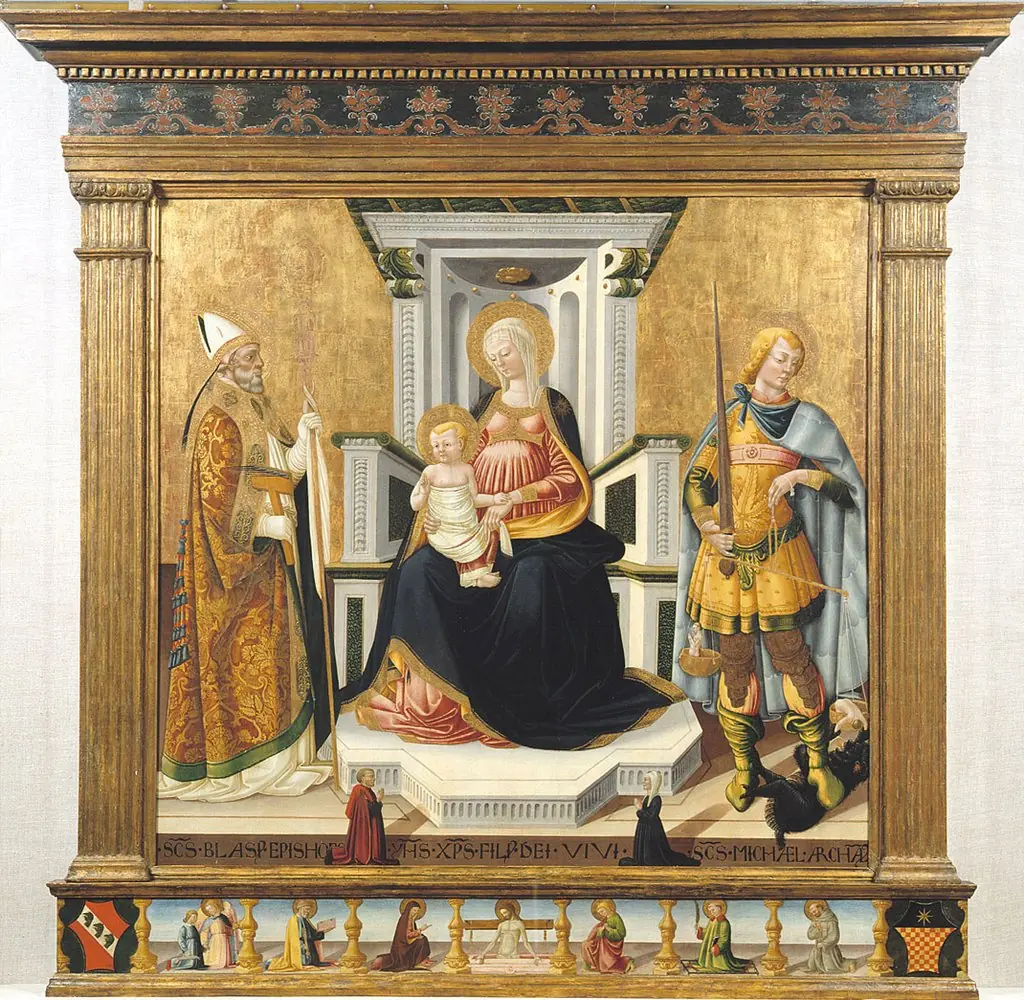
- Madonna and Child with Two Saints (Bicci)
 The Meeting of Solomon and the Queen of Sheba
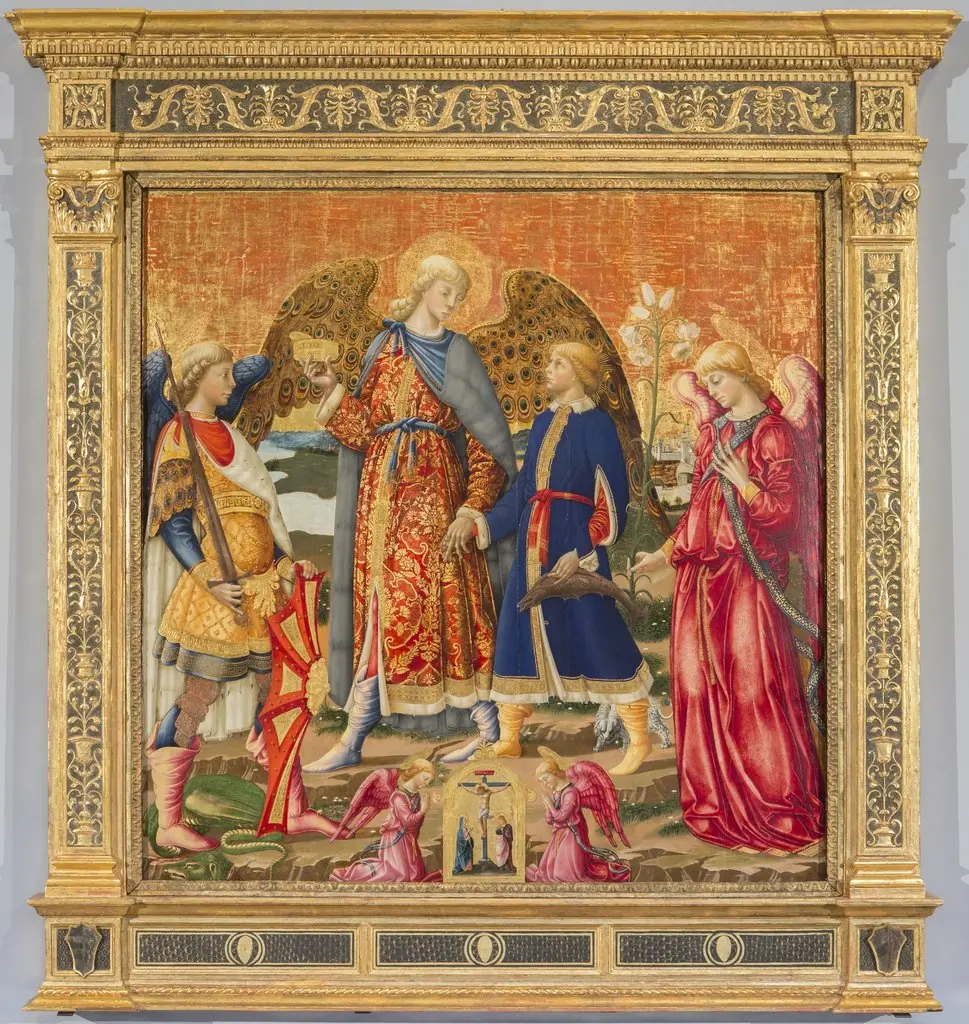 Tobias and Three Archangels
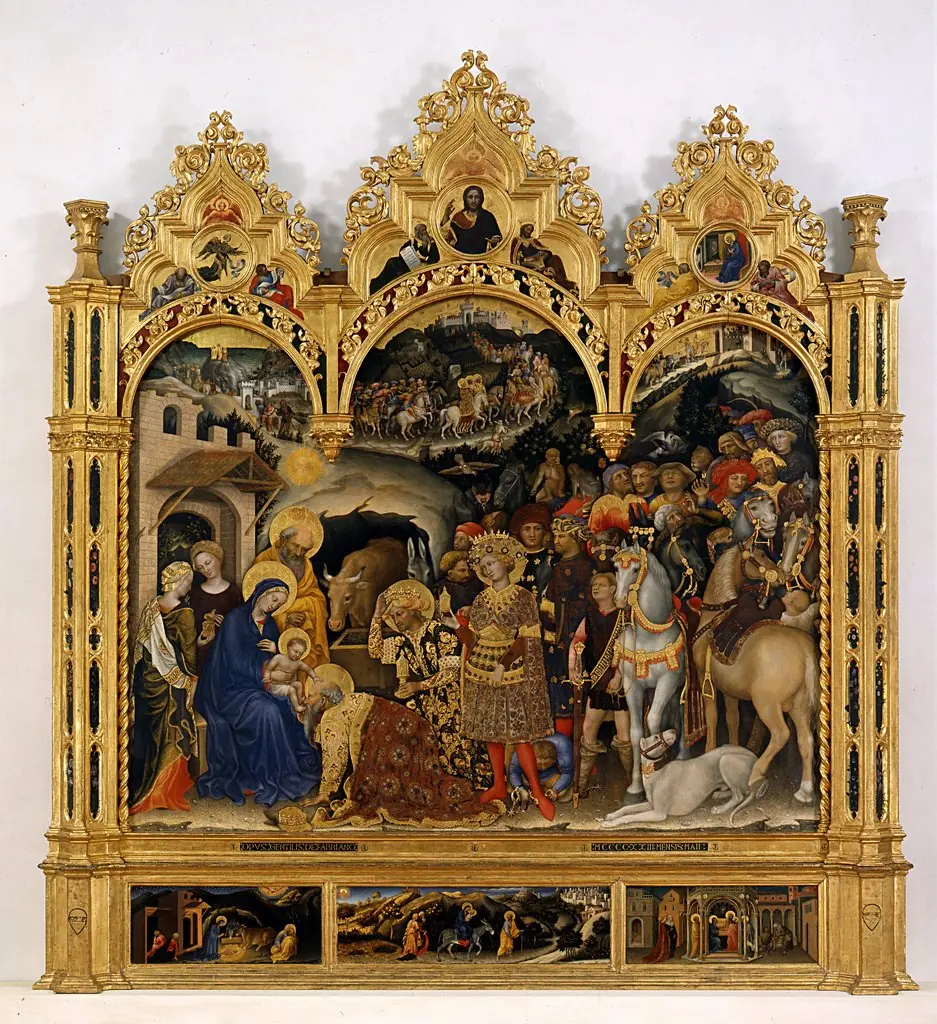 Adoration of the Magi
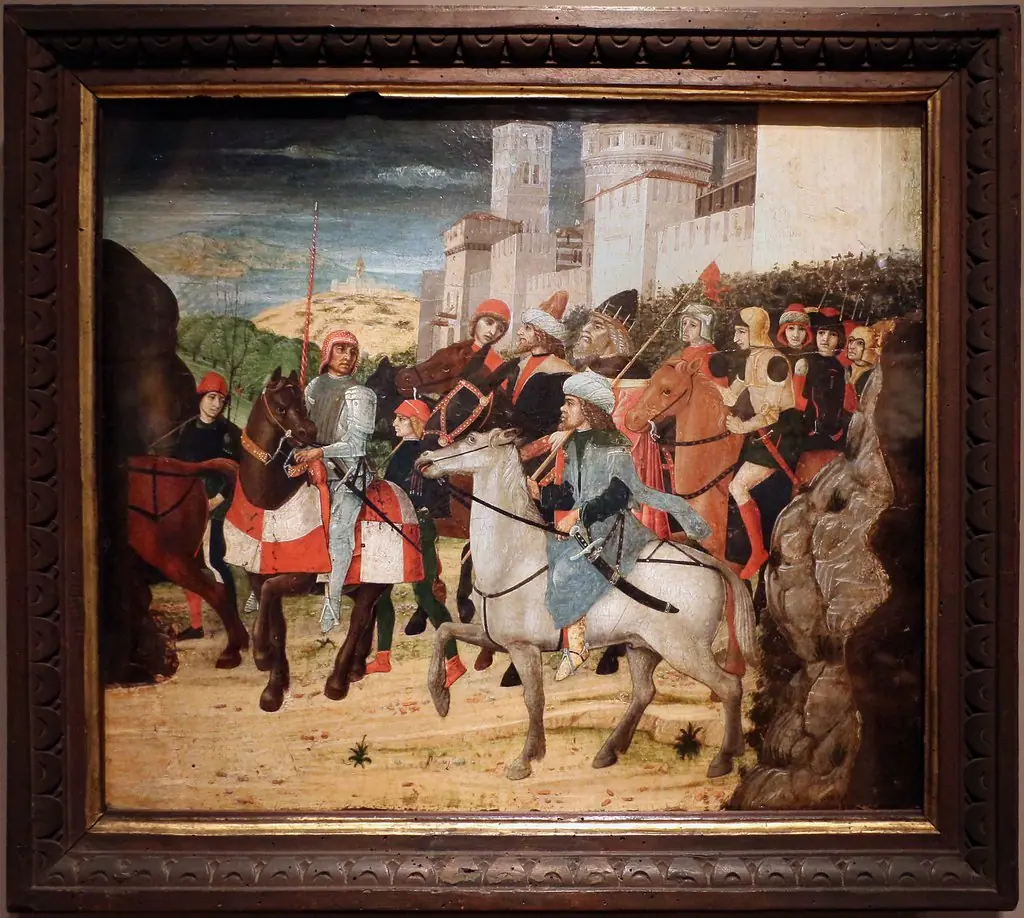 processione dei magi
 Maria mit dem Kind und Engeln
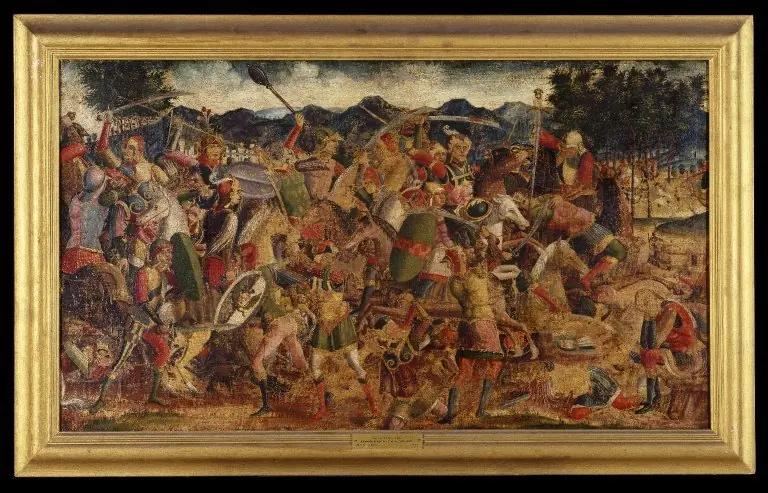 A Battle Scene
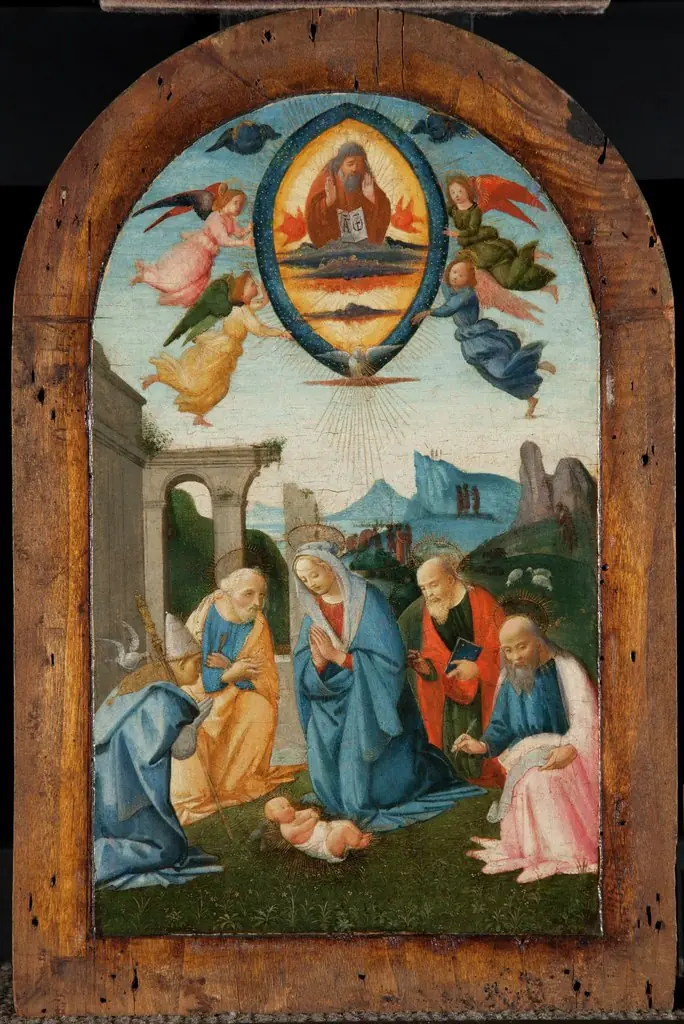 The Madonna and Four Saints Adoring the Infant Jesus
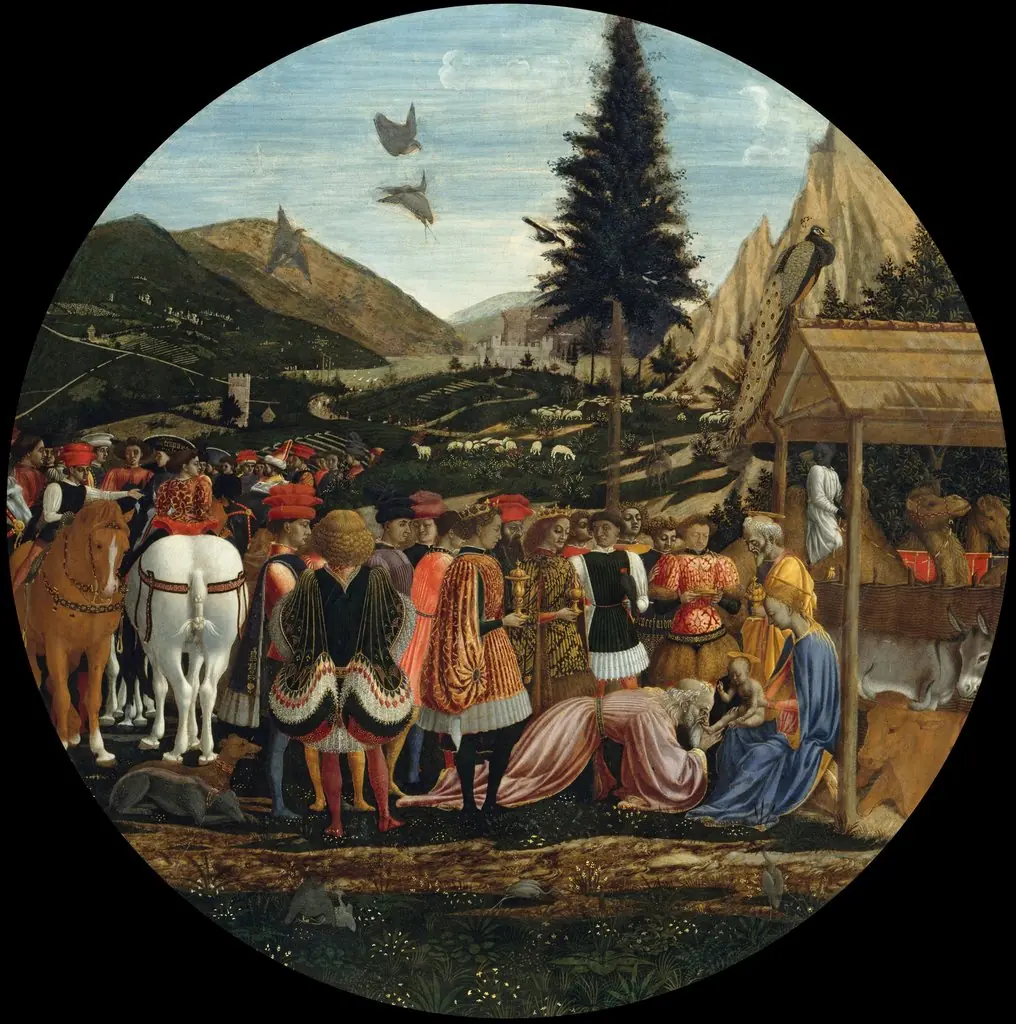 Adoration of the Magi
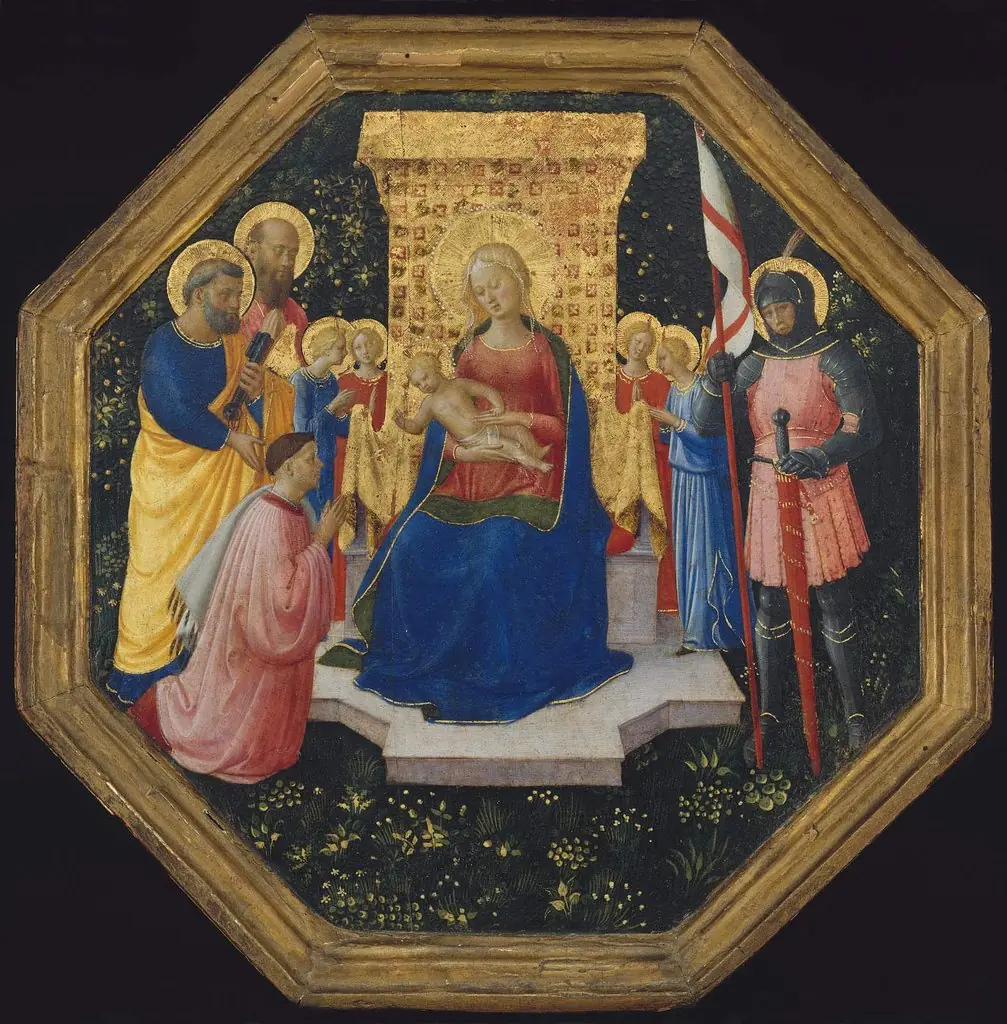 Virgin and Child Enthroned with Saints Peter, Paul and George (?), Four Angels, and a Donor
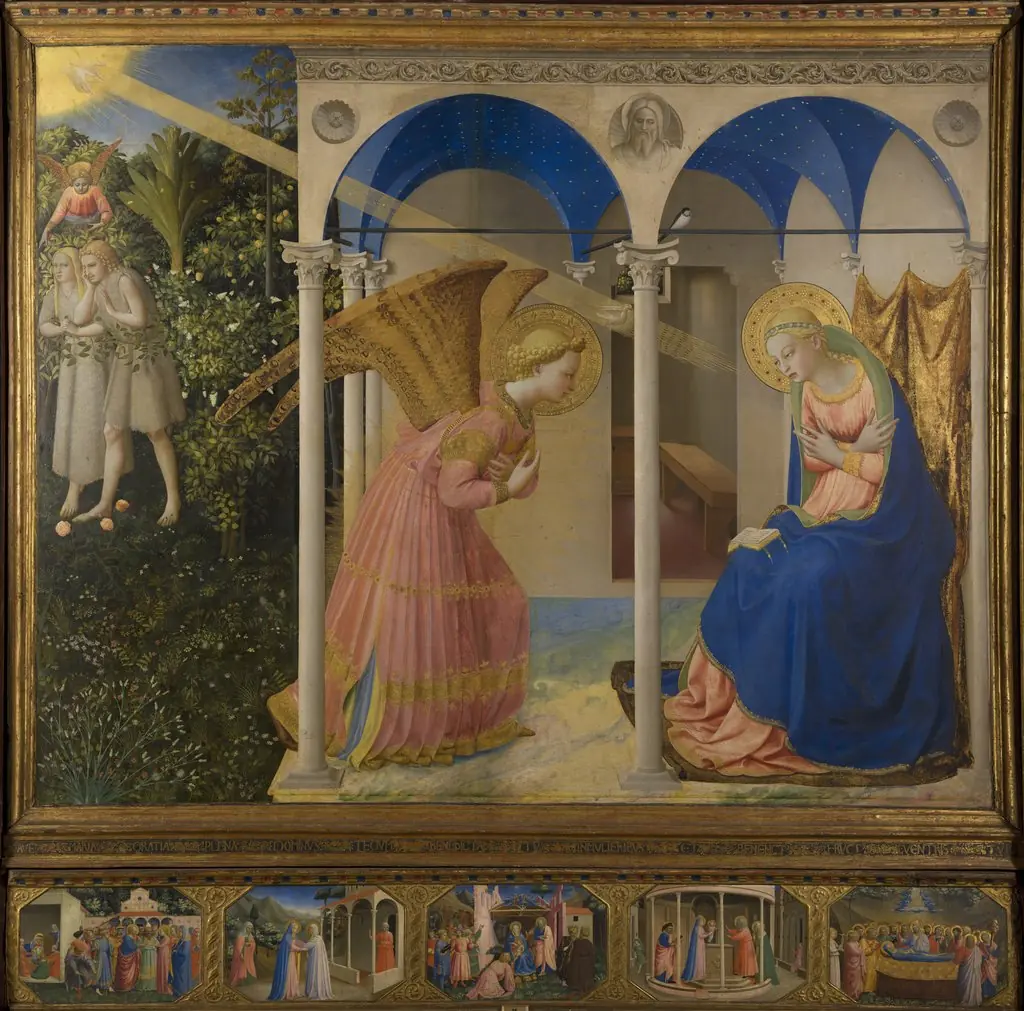 Annunciation
 Nativity of Christ