Wooded View near Barbizon by Johan Hendrik Weissenbruch
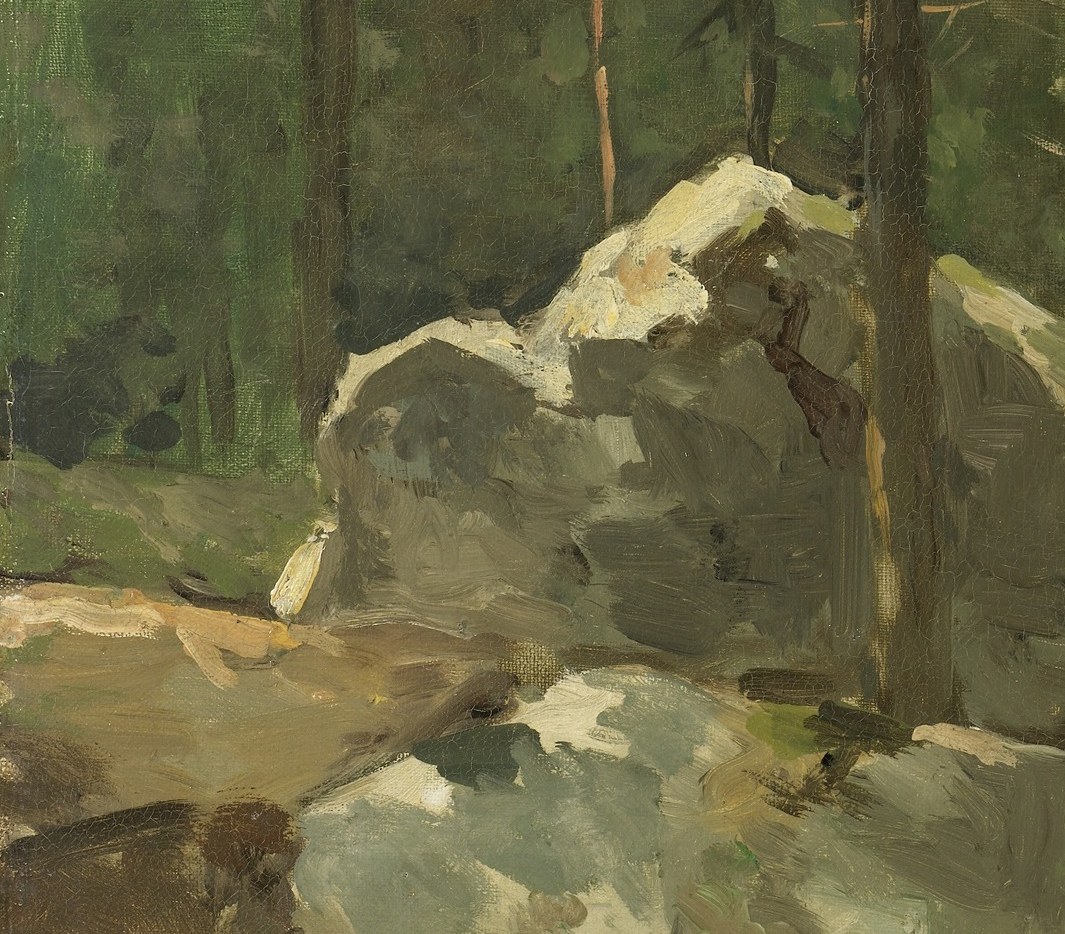
Johan Hendrik Weissenbruch's "Wooded View near Barbizon," painted in 1900, is a masterful oil landscape from the Rijksmuseum collection that invites contemplation of nature's subtle drama.
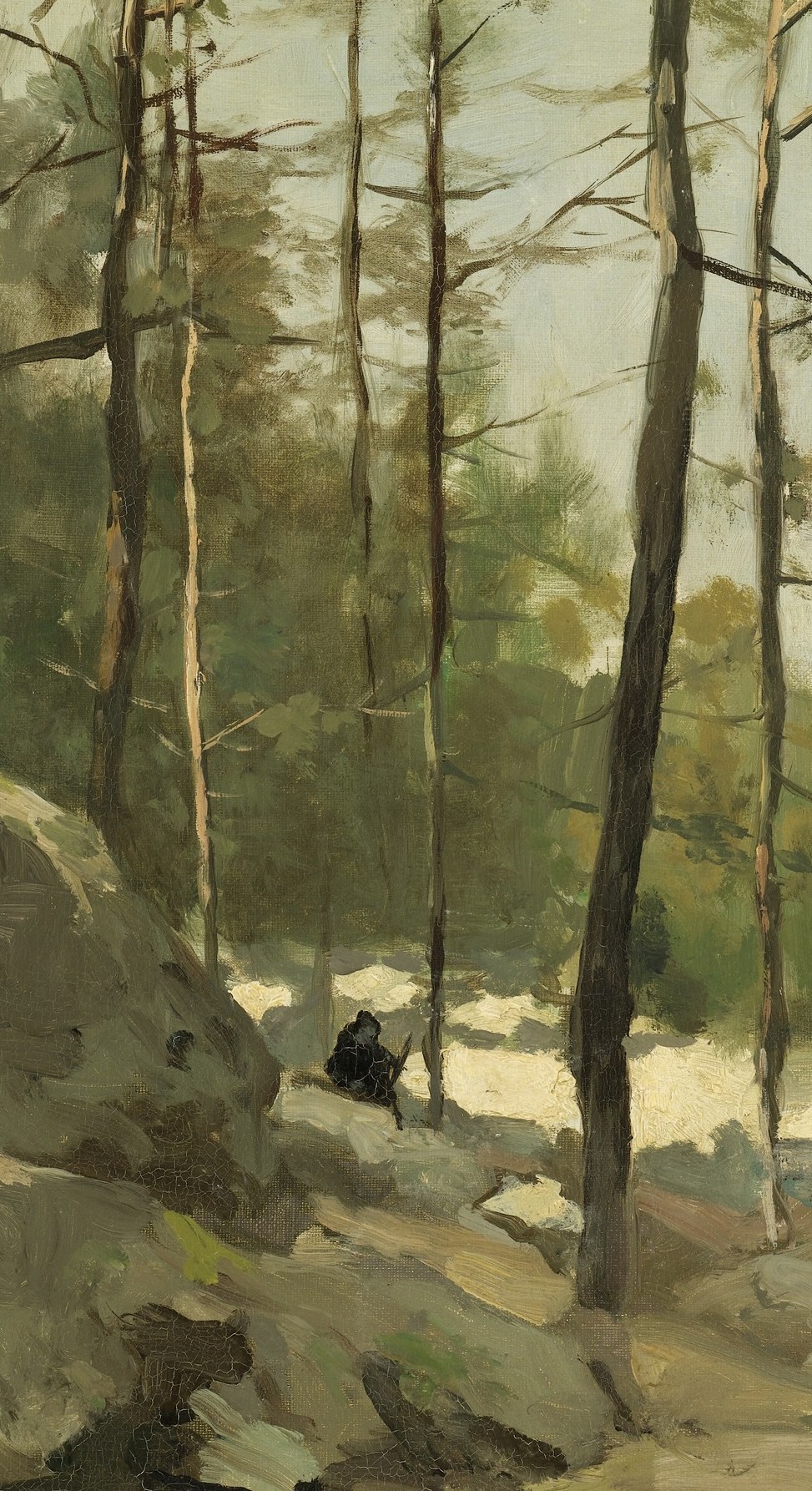
While seemingly a serene forest, a closer look reveals a small, solitary figure nestled within the dark undergrowth. This human element, often a feature in Weissenbruch's work, adds a layer of depth to the scene, highlighting the interplay between presence and solitude.
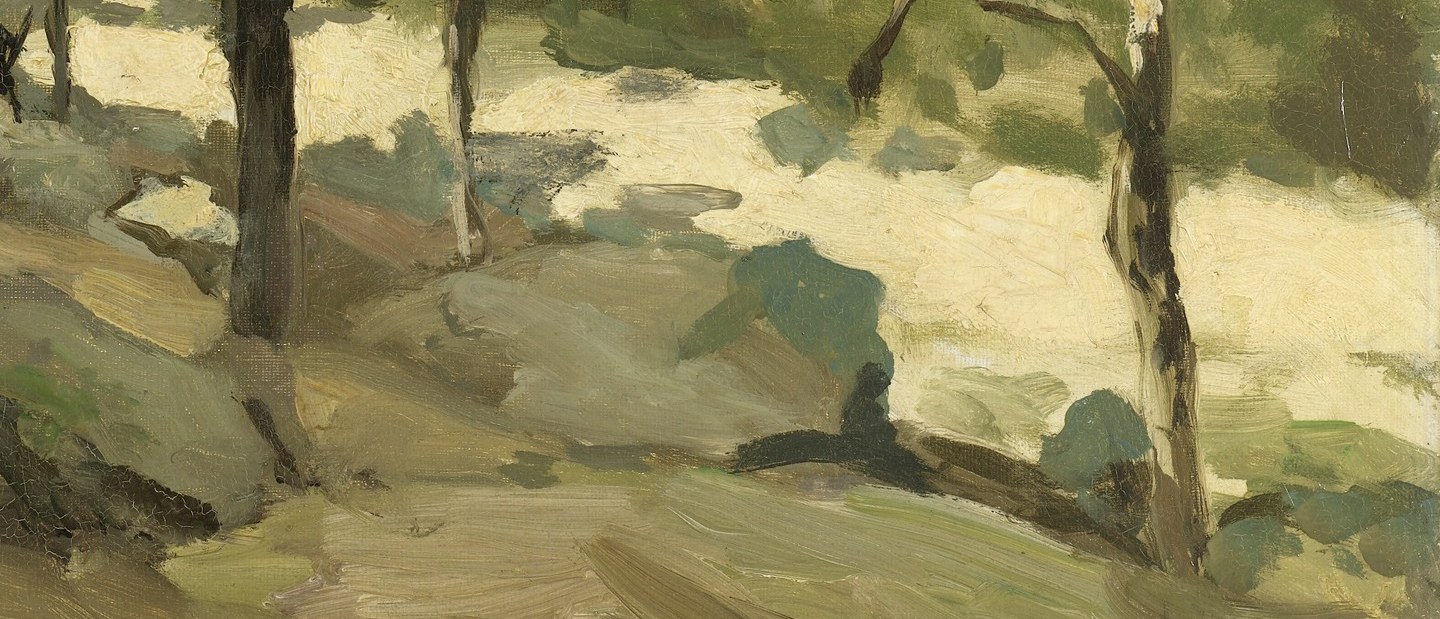
Weissenbruch, primarily known for his watercolors, produced this oil painting towards the end of his career. It exemplifies the atmospheric tendencies of the Hague School, blending realism with an impressionistic sense of light through delicate brushstrokes and a subdued palette. The striking contrast between the sunlit ground and the deep shadows creates a profound sense of depth and mystery.
What details do you notice first in this quiet woodland scene?
Details
Transcript
This painting seems like a tranquil forest scene. But look closer at the dark undergrowth. A small, lone figure stands hidden in shadow. The artist often explored human presence within nature. Notice how the light breaks through the canopy. This patch of sunlit ground contrasts with the deep shadows. Created in 1900, it shows his mastery of atmosphere.