El jardín de Armida by David Teniers the Younger
Painted in 1628 by David Teniers the Younger, "El jardín de Armida" (Armida's Garden) is an early and ambitious work by an artist who would become famous for his genre scenes of peasant life. This oil on canvas is held at the Museo del Prado.
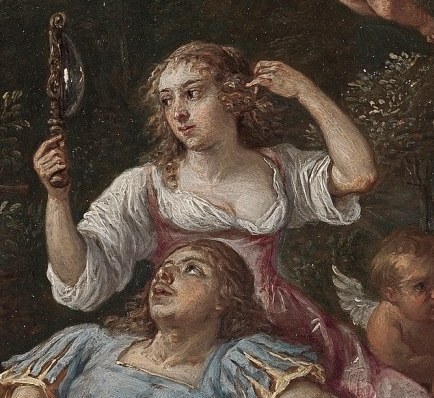
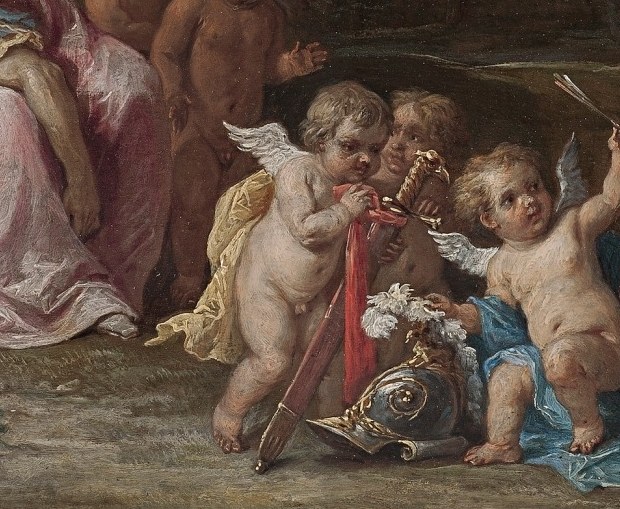
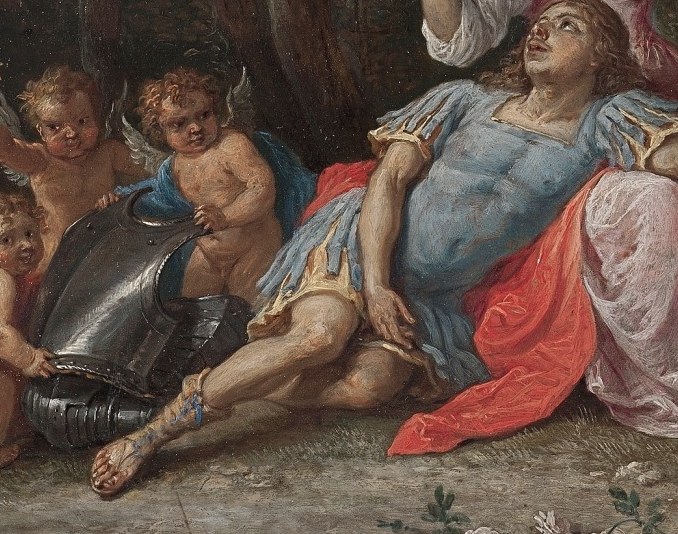
The painting depicts Armida, a sorceress from Torquato Tasso's epic poem "Gerusalemme liberata" (Jerusalem Delivered). She is shown with a hand mirror, while another woman nearby also holds one, reinforcing themes of vanity and enchantment. Around them, putti play with the discarded armor of a fallen knight, symbolizing the disarming power of Armida's allure.
Teniers was only eighteen when he created this piece, showcasing his developing skill in rendering figures and textures within a mythological context. It’s a fascinating glimpse into his early career, before his style shifted toward the intimate domestic scenes for which he is best remembered.
What do you find most surprising about this early work by Teniers?
Details
Transcript
This early painting depicts a sorceress from an epic poem. She is Armida, and her beauty enchants knights. Look closely, and you'll see a second woman, also with a mirror. These playful putti handle the knight's discarded armor. The artist was only eighteen when he painted this complex scene. He became famous for painting everyday village life.