The Supper at Emmaus by Giovanni Battista Piazzetta
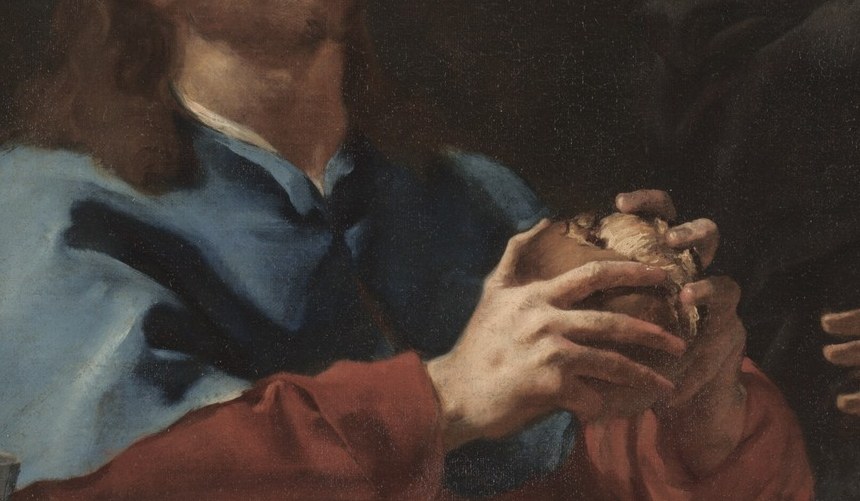
A traveler breaks bread at an inn, and two men realize they are sitting across from a risen Christ. Giovanni Battista Piazzetta’s The Supper at Emmaus (1720, The Cleveland Museum of Art) captures the exact instant of recognition from the Gospel of Luke. The younger disciple’s mouth falls open, the older one points and leans forward, and the whole scene orbits a pair of hands breaking a loaf of bread.
Piazzetta’s Venetian tenebrism puts most of the room in deep shadow, so your eye stays on the faces and the bread. The younger disciple’s vivid blue robe is the brightest passage in the painting, anchoring the left side, while Christ’s cool blue-grey and warm red drapery set him apart without a literal halo.
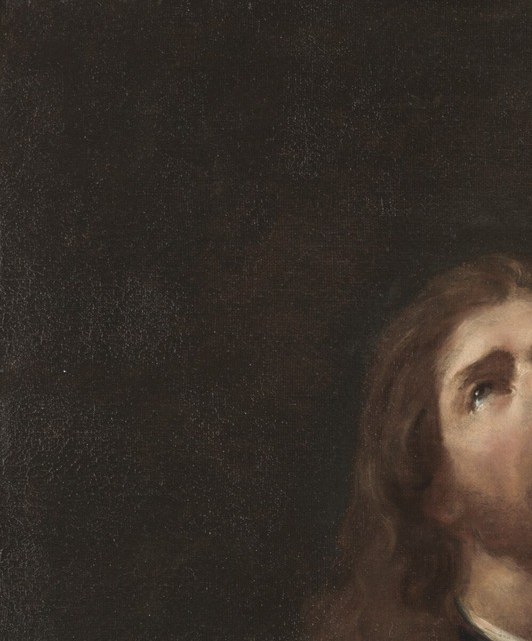
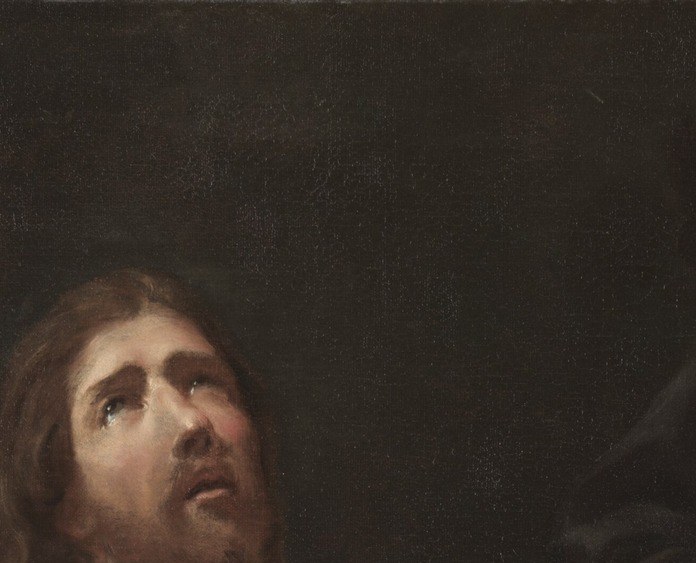
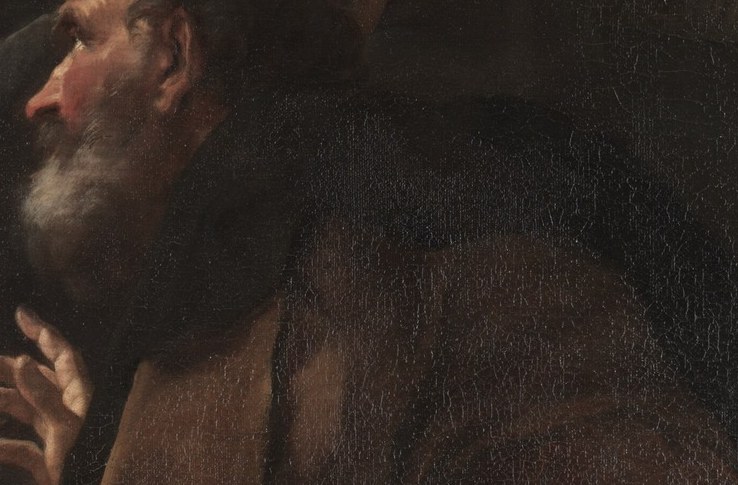
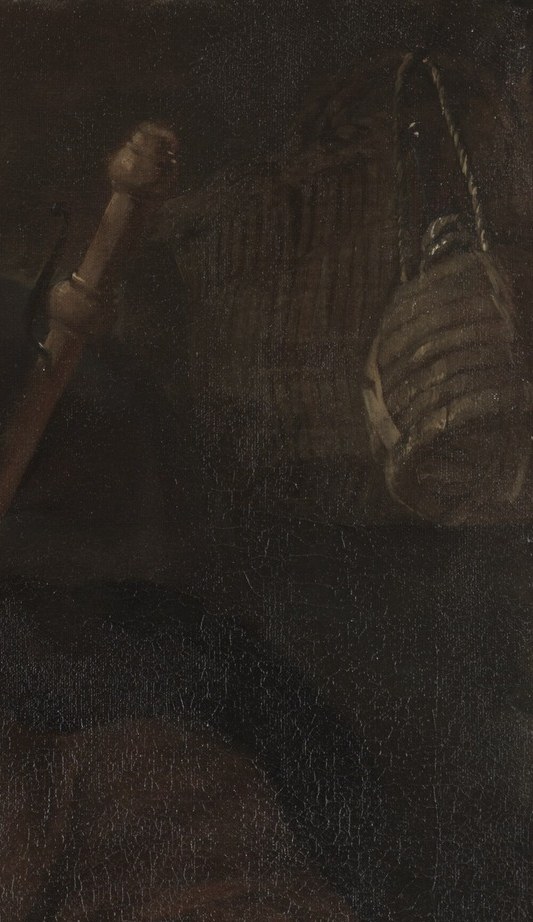
But the real hidden detail is nearly invisible on a phone screen. In the upper right corner, above the older disciple’s shoulder, the darkness resolves into a third face, a servant or an innkeeper, barely lit, silently watching the miracle unfold. He has been in the room the whole time, and almost nobody scrolling past notices him.
Piazzetta was a Venetian Rococo painter who specialized in religious subjects and genre scenes, and this painting shows his gift for making theology intimate. Look into the shadow in the upper right corner. Who is watching?
Details
Transcript
A traveler breaks bread at an inn. The younger man’s mouth falls open. He has just understood who sits across the table. The older disciple points, straining forward. Now look into the darkness above his shoulder. A third face emerges from the shadow. A servant, or perhaps an innkeeper, witnessing the miracle.