Muleteers at an Inn by Karel Dujardin
Karel Dujardin, a Dutch Golden Age painter, created *Muleteers at an Inn* in 1659. This small painting, executed on a copper support, perfectly illustrates his love for Italianate landscapes and genre scenes, even though he was Dutch. It is housed in the Rijksmuseum collection.
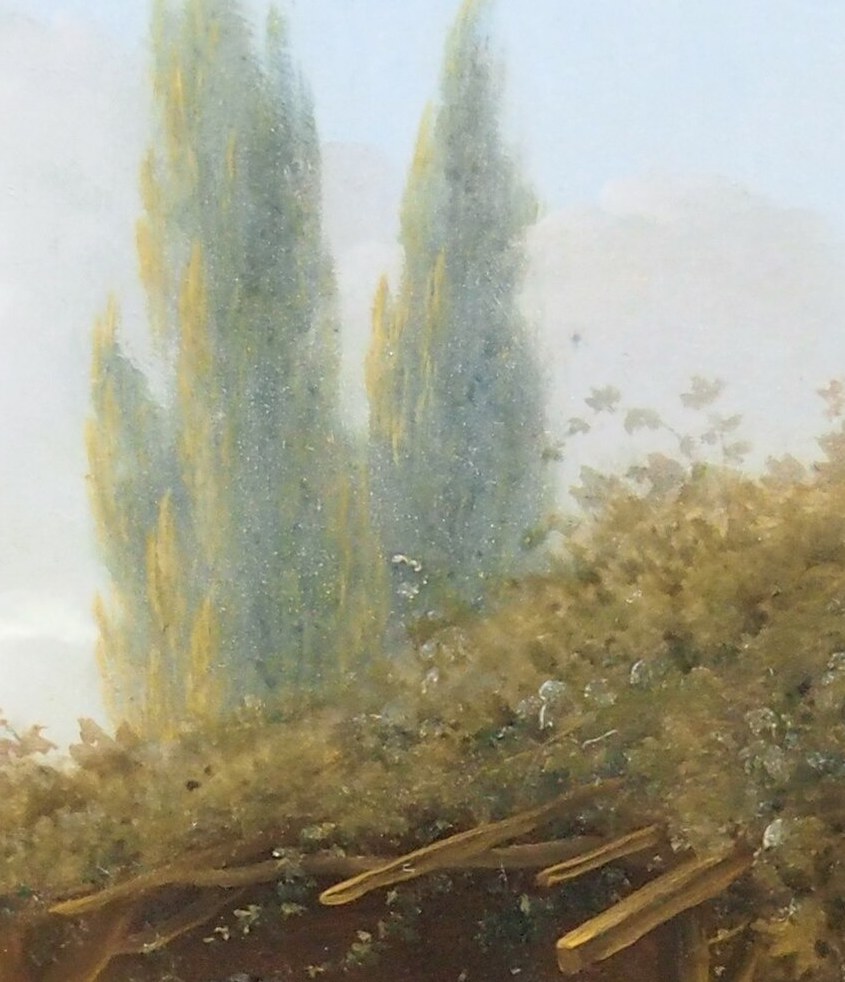
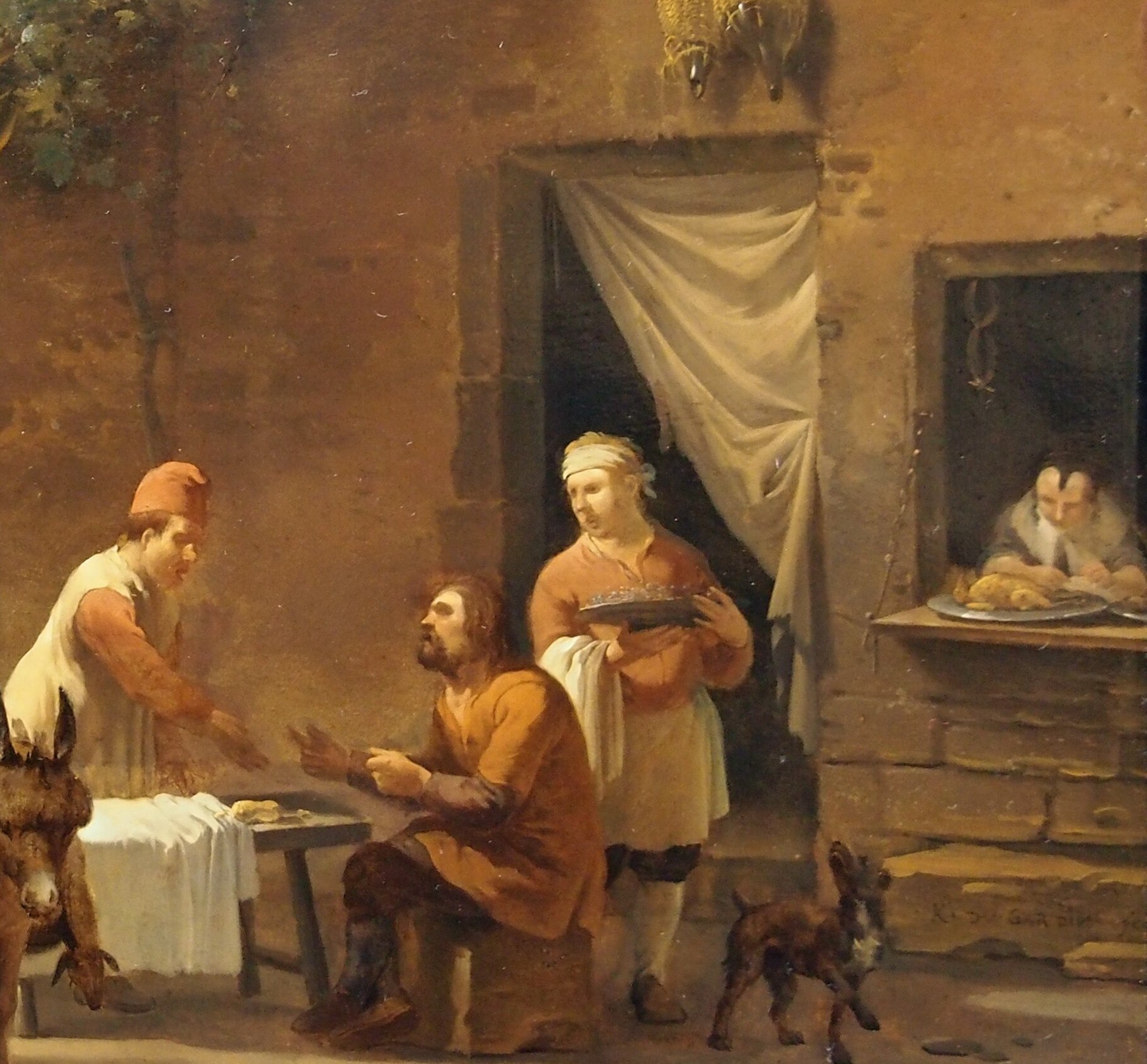
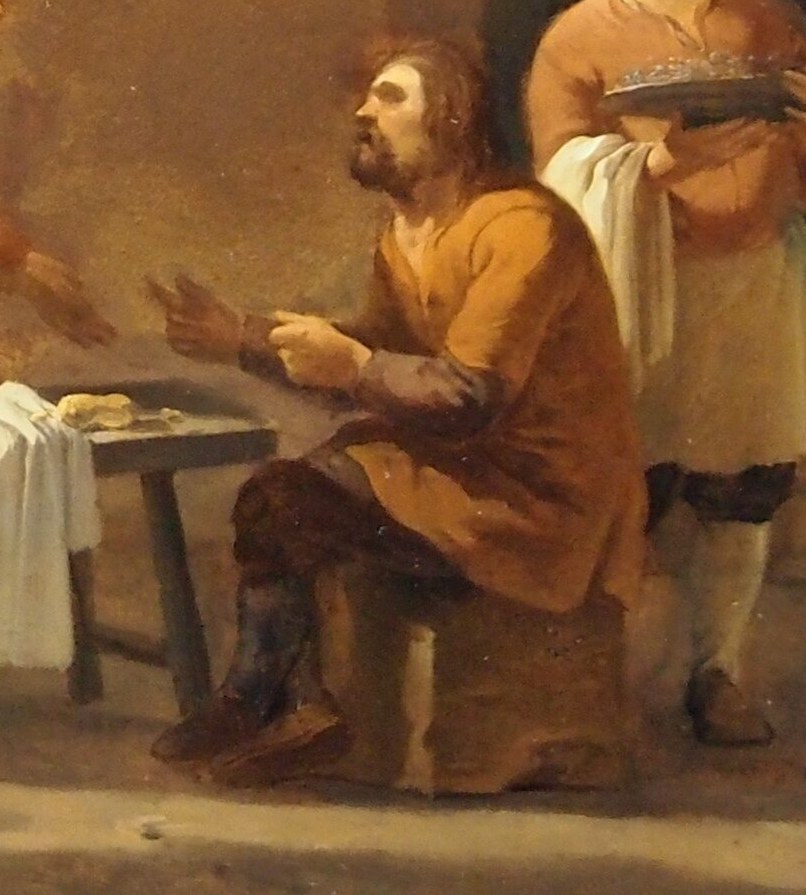
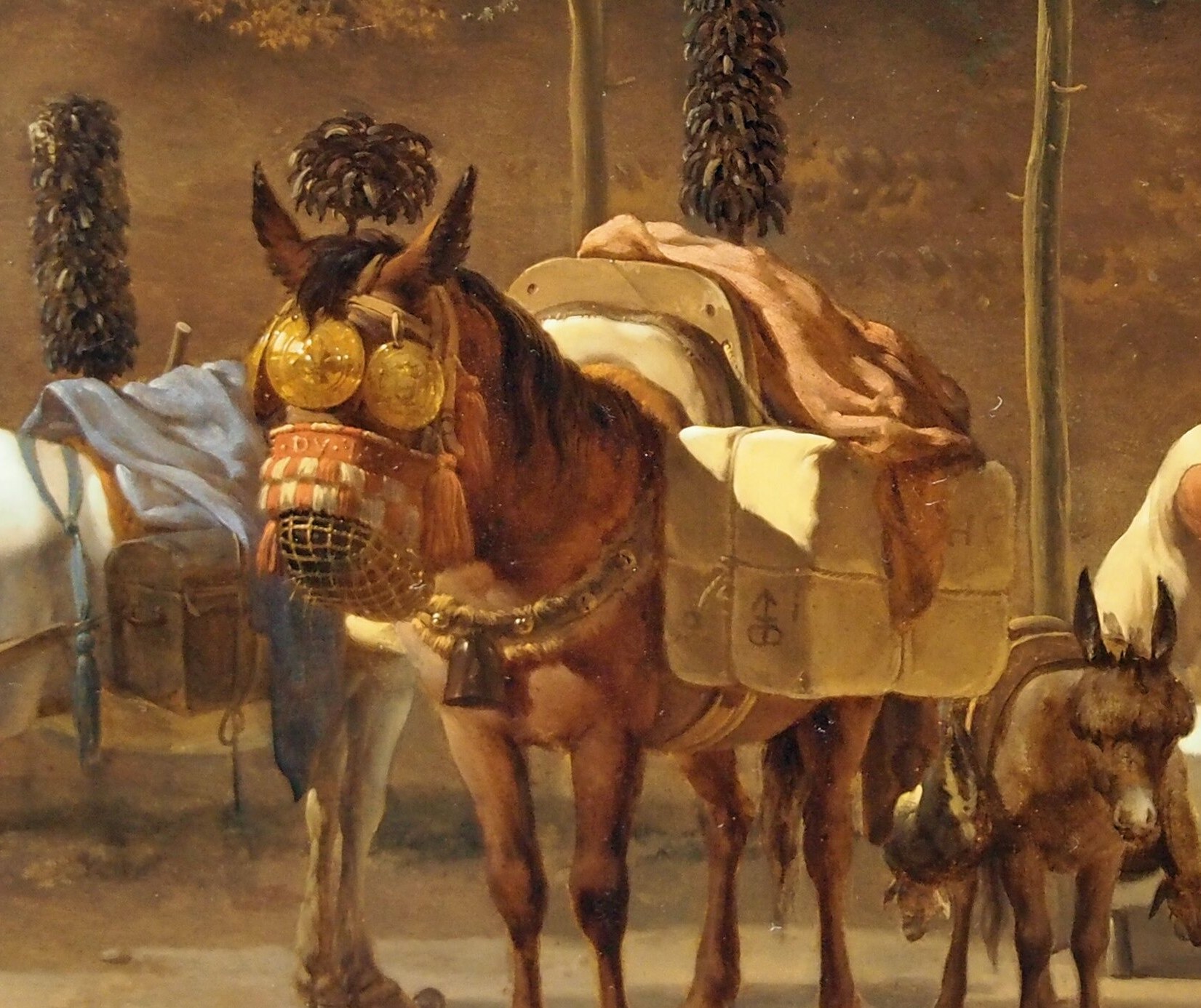
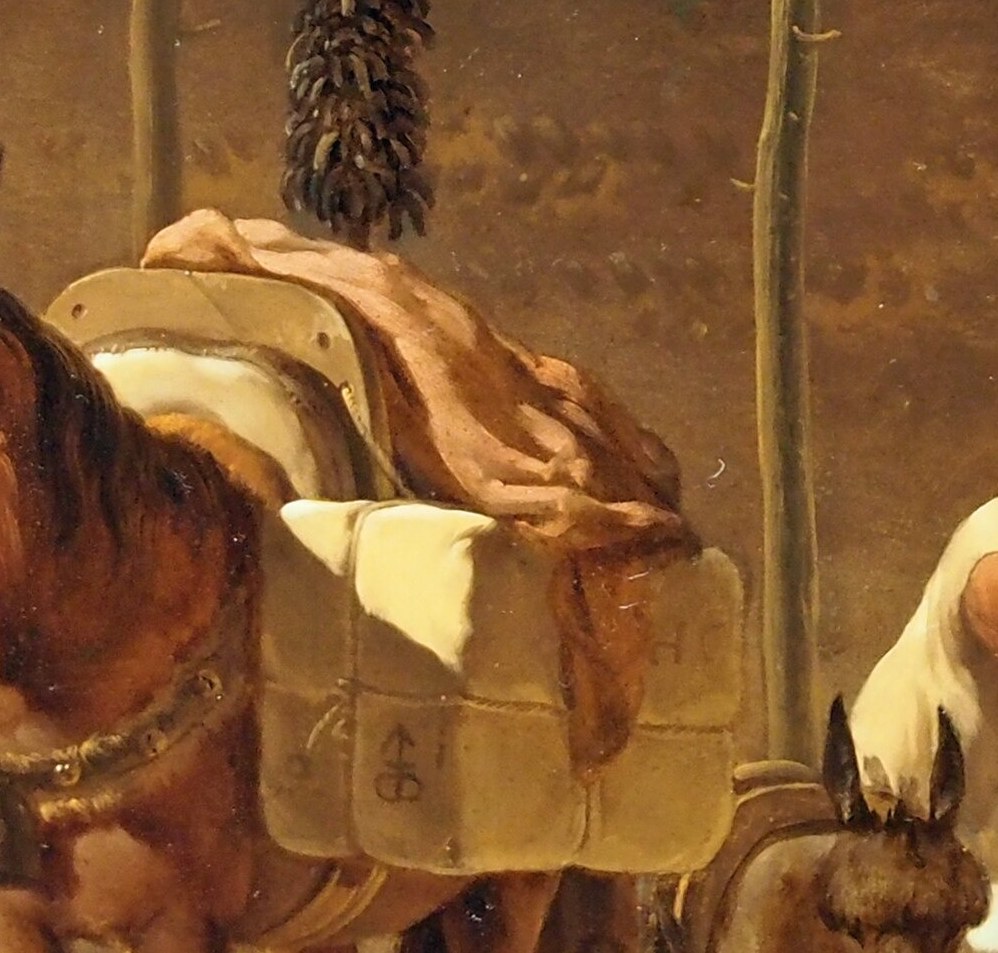
Dujardin specialized in these charming, detailed works. Look closely at the scene: two muleteers and their animals rest at a rustic inn. One mule even wears golden goggles, a practical yet peculiar detail for protection from sun or dust. The heavy bundles on its back hint at a long journey, emphasizing the theme of travel and respite.
This painting offers a glimpse into everyday life during the Dutch Golden Age, reflecting the importance of such inns for travelers. Dujardin's use of chiaroscuro, or strong contrasts between light and shadow, creates a powerful sense of depth and realism, making this quiet moment feel remarkably vivid.
What details do you notice that bring this historical scene to life?
Details
Transcript
This isn't Italy, but Holland's painters loved Italian landscapes. This artist, Karel Dujardin, specialized in them. He painted this scene on a copper plate in 1659. These travelers are muleteers, resting at a rustic inn. Notice the mule's golden goggles, protecting its eyes. The heavy bundles show they've traveled a long way. It's a quiet moment, a common scene in an age of travel.