Interior of a Synagogue by Alessandro Magnasco
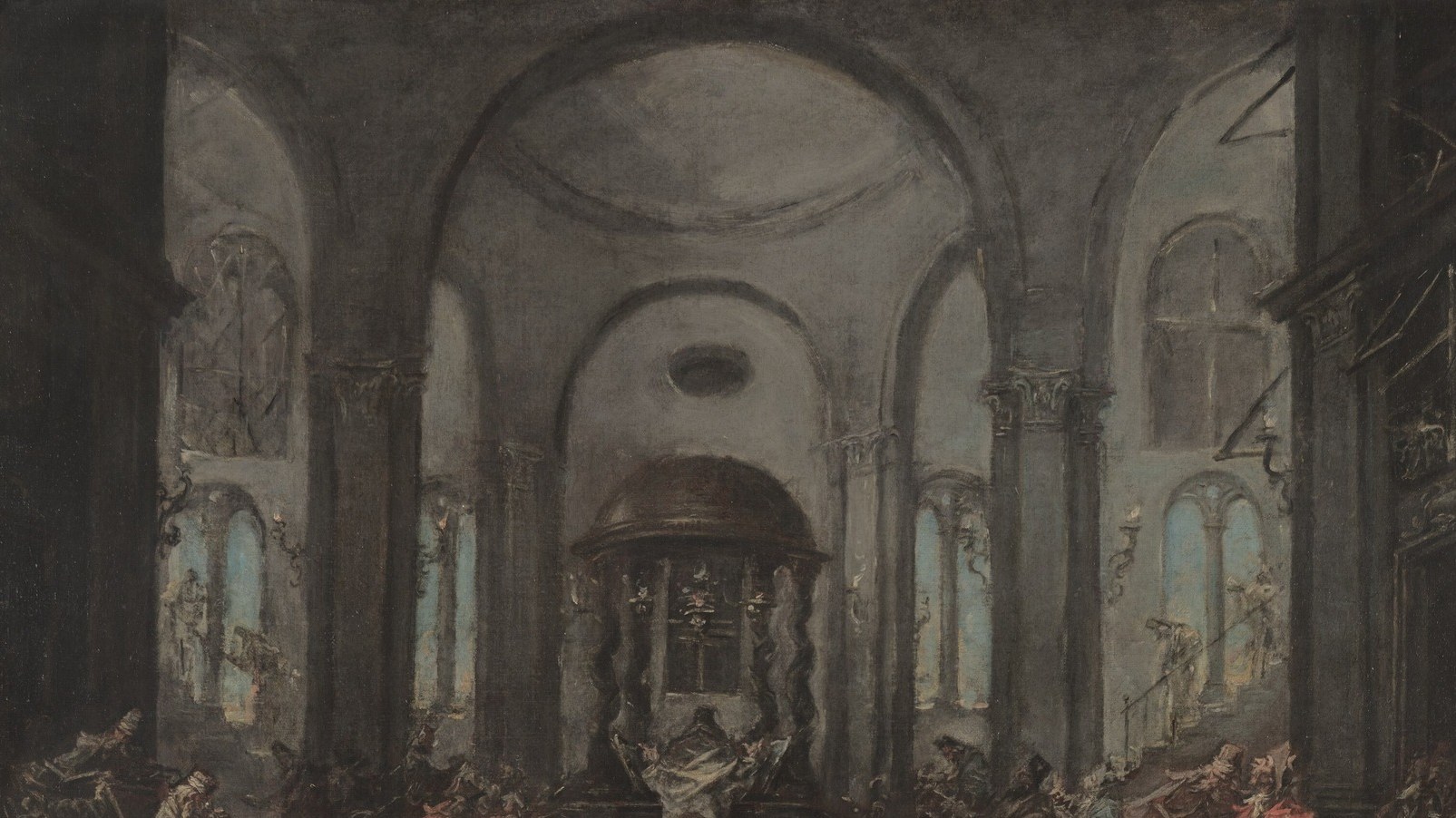
Alessandro Magnasco's *Interior of a Synagogue*, painted around 1725, is a masterful example of late Baroque and early Rococo style, housed at The Cleveland Museum of Art. The painting showcases a bustling synagogue interior, filled with figures engaged in intense devotional acts. Magnasco, known for his dramatic chiaroscuro and expressive brushwork, uses light and shadow to create a sense of spiritual atmosphere and volume.
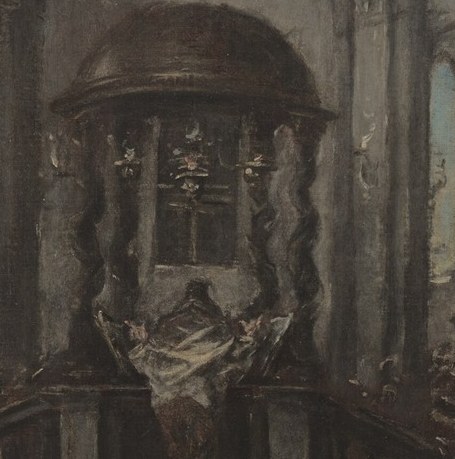
Observe the scattered pile of books in the foreground, suggesting the importance of religious texts and study. The central altar structure serves as the focal point of this communal gathering. Notice the diverse postures of the worshippers, from kneeling figures to those lying prostrate, conveying a range of spiritual intensity.
This work exemplifies Magnasco's later period, where his style began to incorporate Rococo sensibilities. The unusual subject matter, a synagogue, painted by a Catholic artist, reflects a broader curiosity in cosmopolitan early 18th-century Italy. The vibrant red robe of one figure is thought to symbolize passion or sacrifice, adding another layer to the painting's symbolic depth.
Magnasco captures the chaotic energy of collective ritual, moving beyond a formal liturgical depiction to focus on the human experience of faith.
Details
Transcript
This painter uses light to guide our eyes. Look at the pile of books on the floor. These suggest study and religious texts. The central altar is the spiritual core. Figures here show intense devotion. He painted this in 1725. The red robe symbolizes passion or sacrifice. Magnasco painted collective ritual.