The Writing Master by Thomas Eakins
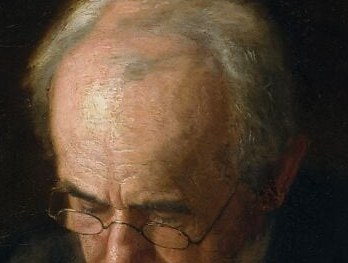
A son painted his father at work, and in doing so preserved an entire profession. Thomas Eakins' The Writing Master (1882, oil on canvas) hangs in Gallery 764 of the Metropolitan Museum of Art, and it is one of the most intimate portraits in the American Wing.
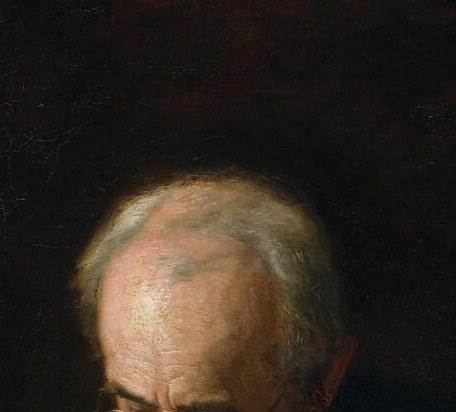
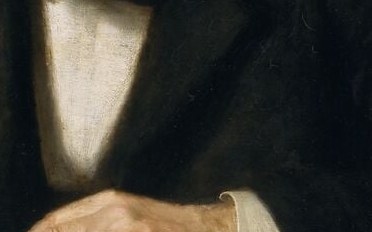
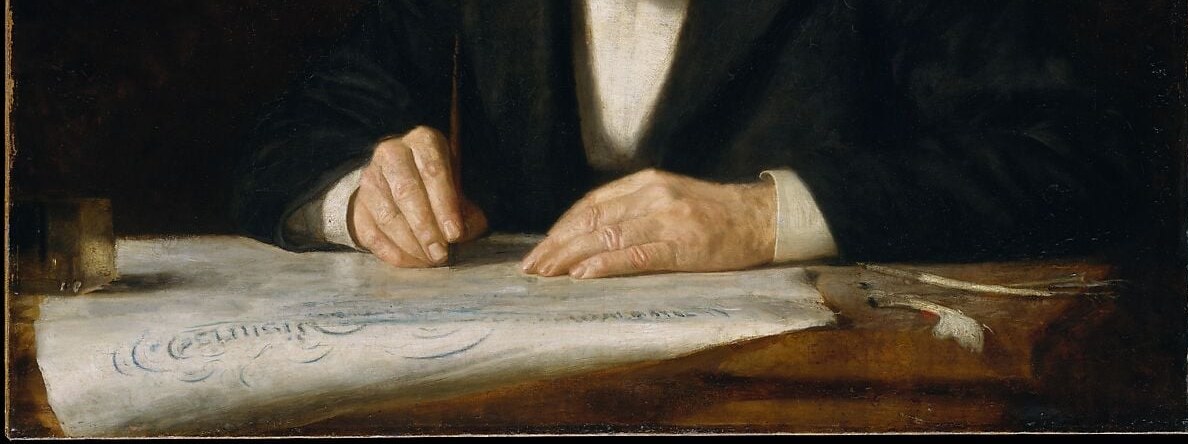
The subject is Benjamin Eakins, a professional calligrapher. Watch his right hand. Eakins froze it at the exact moment of inscription, the pen held in the specific grip of someone who has done this for decades. The left hand steadies the paper. Below the face, the cream sheet throws light upward, reversing the usual shadows and pulling your eye toward the act of writing itself.
This was a real profession in 1882, before typewriters had conquered the office. Important documents, certificates, and formal correspondence still passed through the hands of masters like Benjamin Eakins. The painting is a record of a bourgeois interior, but also of a kind of labor that has nearly vanished: the hand as a precision instrument.
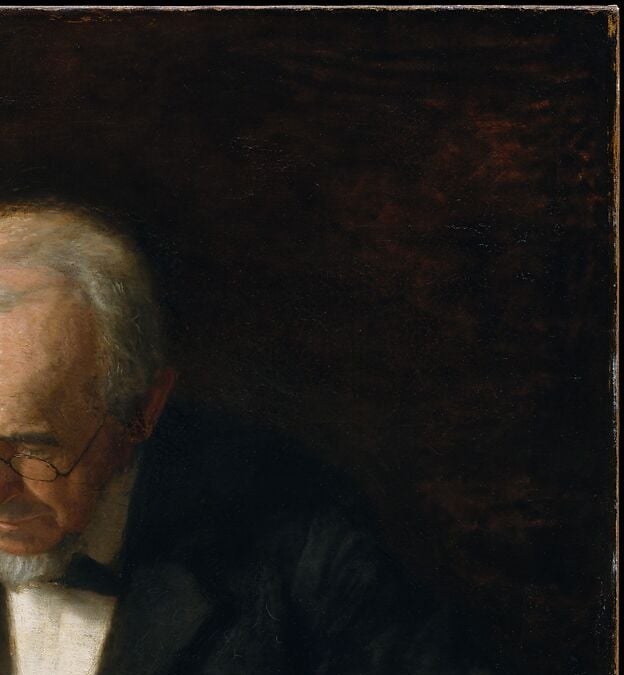
Thomas Eakins was one of the great American realists, and he painted almost exclusively from life, friends, family, the intellectual circles of Philadelphia. Here the subject was his own father. You can feel the quiet in the room. What do you think he is writing?
Details
Transcript
Philadelphia, 1882. The age of the professional calligrapher. This is the artist's father. He earned his living by this hand. His eyes never meet ours. He is still working. The pen grip is exact, a master's hand mid-stroke. The paper itself lights the scene from below, like a desk lamp. Eakins studied Rembrandt in Europe and brought that darkness home to a Philadelphia study.