Hound and Hunter by Homer, Winslow
Winslow Homer's 1892 oil painting, *Hound and Hunter*, at the National Gallery of Art, plunges us into a dramatic nocturnal scene in the American wilderness. It's a powerful depiction of pursuit and survival, a subject Homer often revisited after his trips to the Adirondack Mountains.
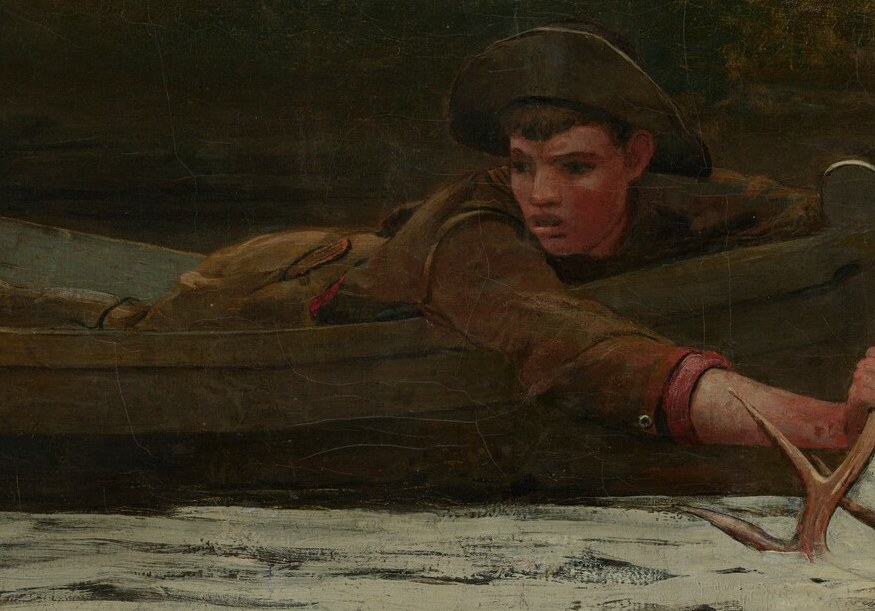
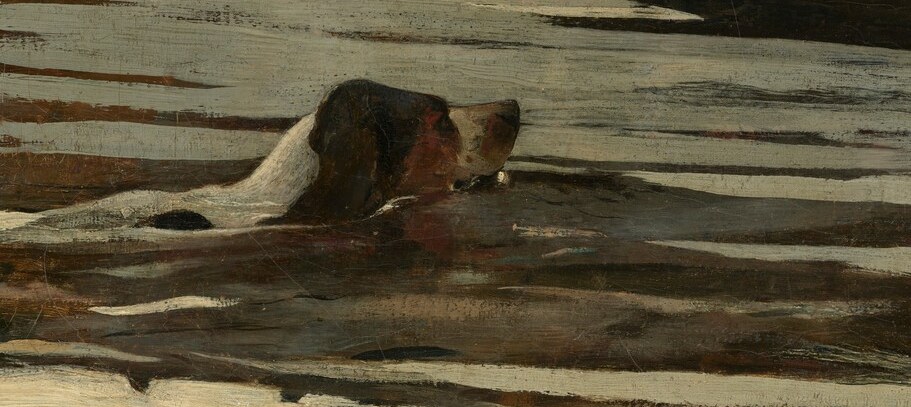
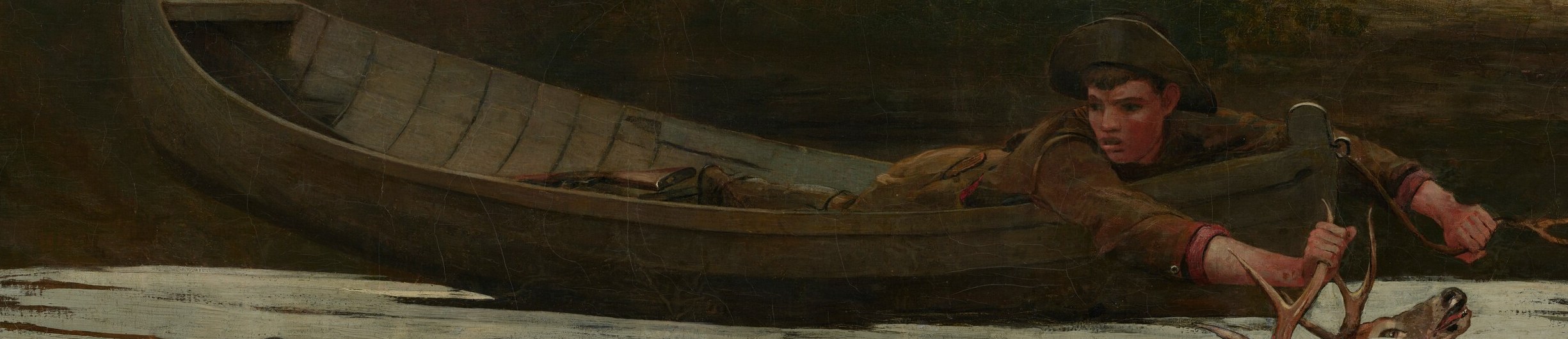
Notice the stark moonlight illuminating the hunter, poised in his boat, aiming at a fleeing deer. His hands on the rifle convey intense focus, while his dog leaps energetically through the water, creating white splashes. The deer's head, emerging from the dark water, reveals its struggle.
Homer, known for his raw and unfiltered portrayal of American life, wasn't interested in pretty studio tricks. He wanted to show people and nature as they truly were, with all their complexities. This painting reflects his evolving style, which often explored the more rugged and profound aspects of the natural world.
What do you find most striking about Homer's portrayal of this encounter?
Details
Transcript
Winslow Homer often painted the raw American wilderness. This hunter is illuminated by stark, dramatic moonlight. His grip on the rifle shows intense focus and readiness. The painting captures a critical moment of pursuit and survival. Homer explored the tension between human will and animal instinct. His later works often showed nature's power and darker moods.