Snow, Winter in Vitebsk by Marc Chagall
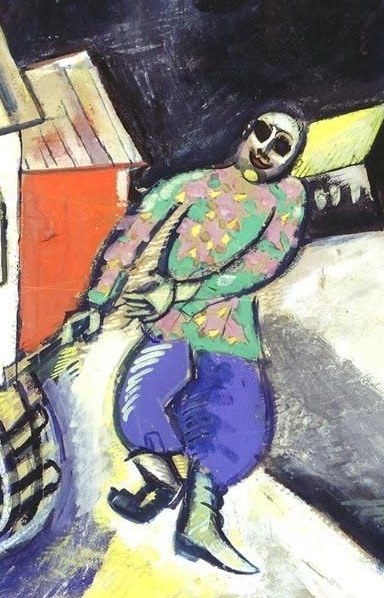
Marc Chagall's 'Snow, Winter in Vitebsk' (1911) is not a record of a real street but a love letter to a lost world. It hangs today at The Metropolitan Museum of Art, a priceless visual diary of the hometown he would never see again.
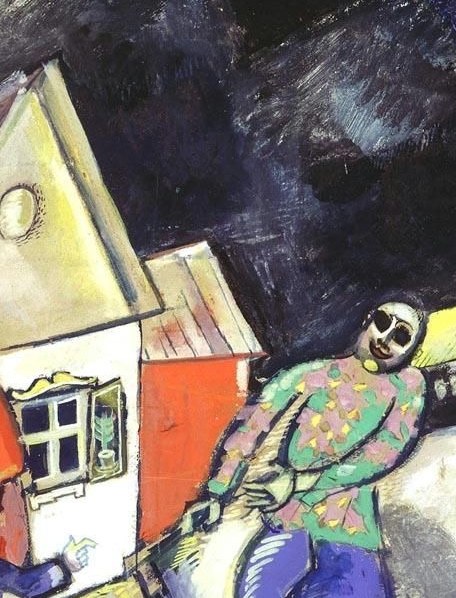
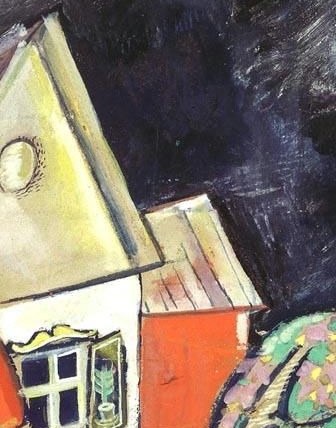
Look past the dreamlike yellow house to the embracing couple in the doorway. Chagall places them on the threshold between the warm interior and the frozen street, a recurring metaphor for love as shelter against the world. The bold, unmodulated snow flattens the ground so the figures seem to float, their memories untethered from strict physics.
Chagall painted this just before World War I shattered his world. He would leave Russia for good in 1923, exiling himself to Paris, and later to America, as revolutions and wars consumed the Vitebsk of his youth. This canvas became a portable homeland.
To own an early Chagall today is to hold a piece of the 20th century's fragile, luminous prelude. What corner of your memory would you paint from, if you had to leave it behind?
Details
Transcript
In 1911, a young Chagall painted his hometown from memory. A yellow house glows like a beacon in the night. A couple holds each other in the doorway. This was a love letter to a world he would soon lose forever. He left Russia in 1923 and never saw Vitebsk again. Today it hangs in the Met, insured for a sum that anchors a masterwork.