Judith with the Head of Holofernes by http://www.wikidata.org/.well-known/genid/624928d3b43c7a694169575714a3494b
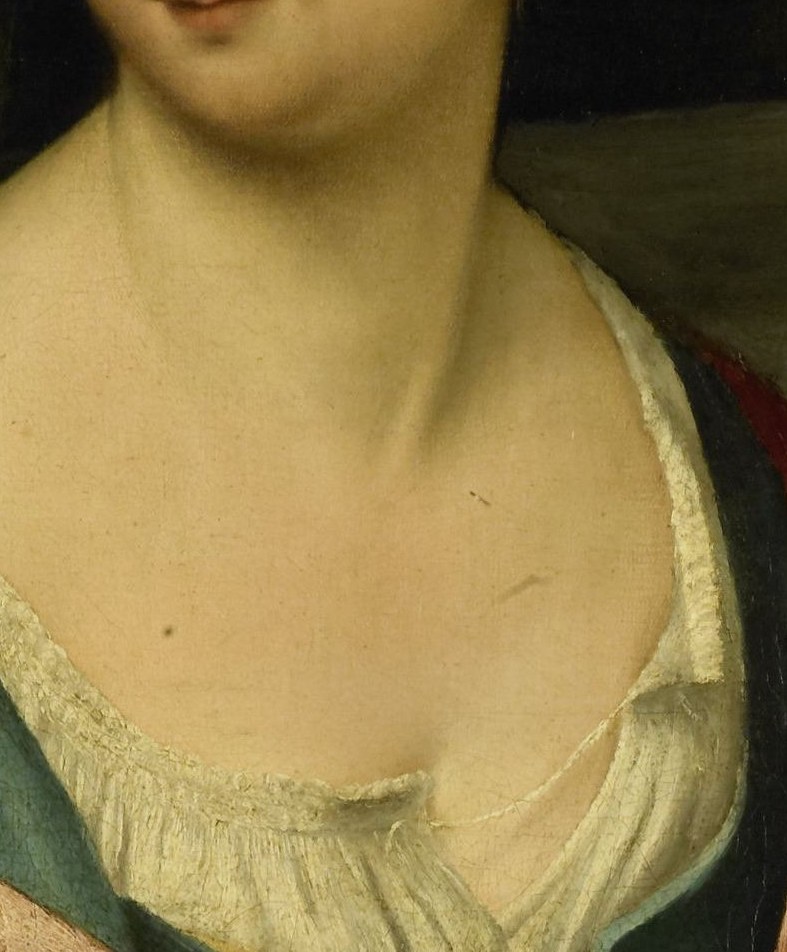
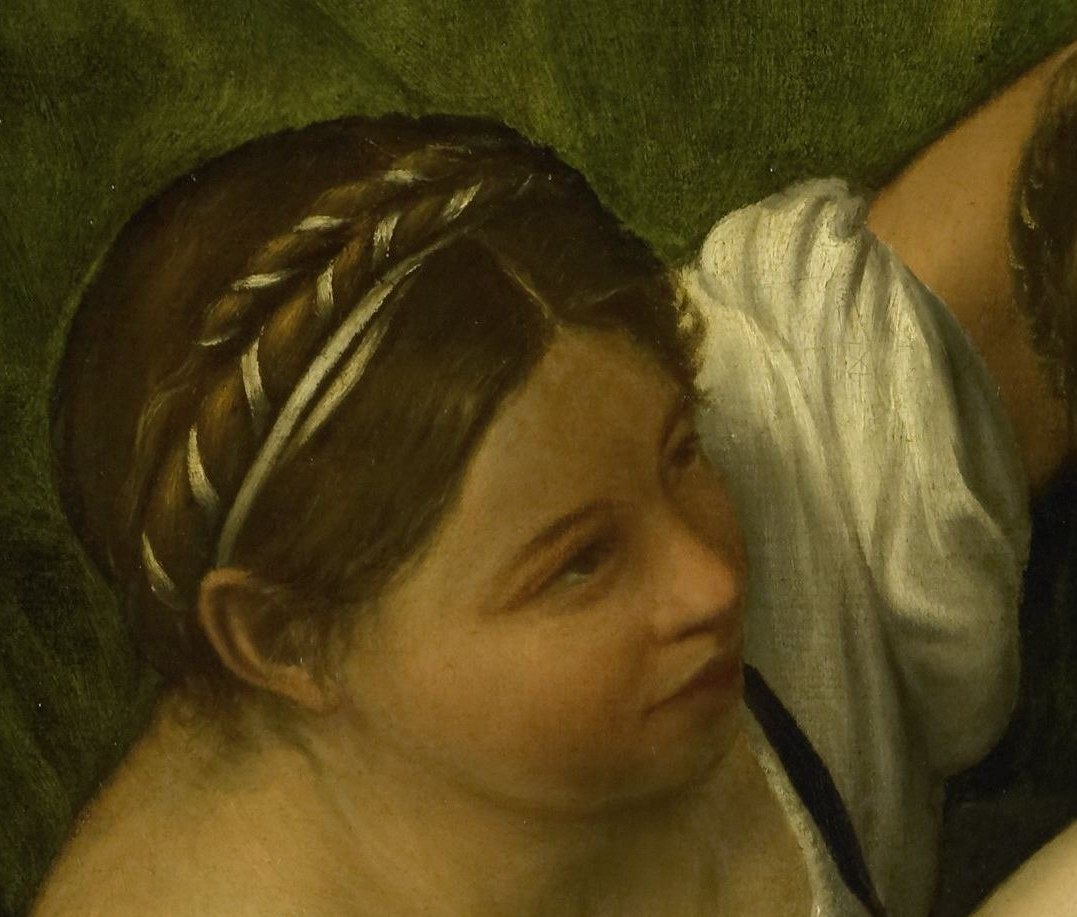
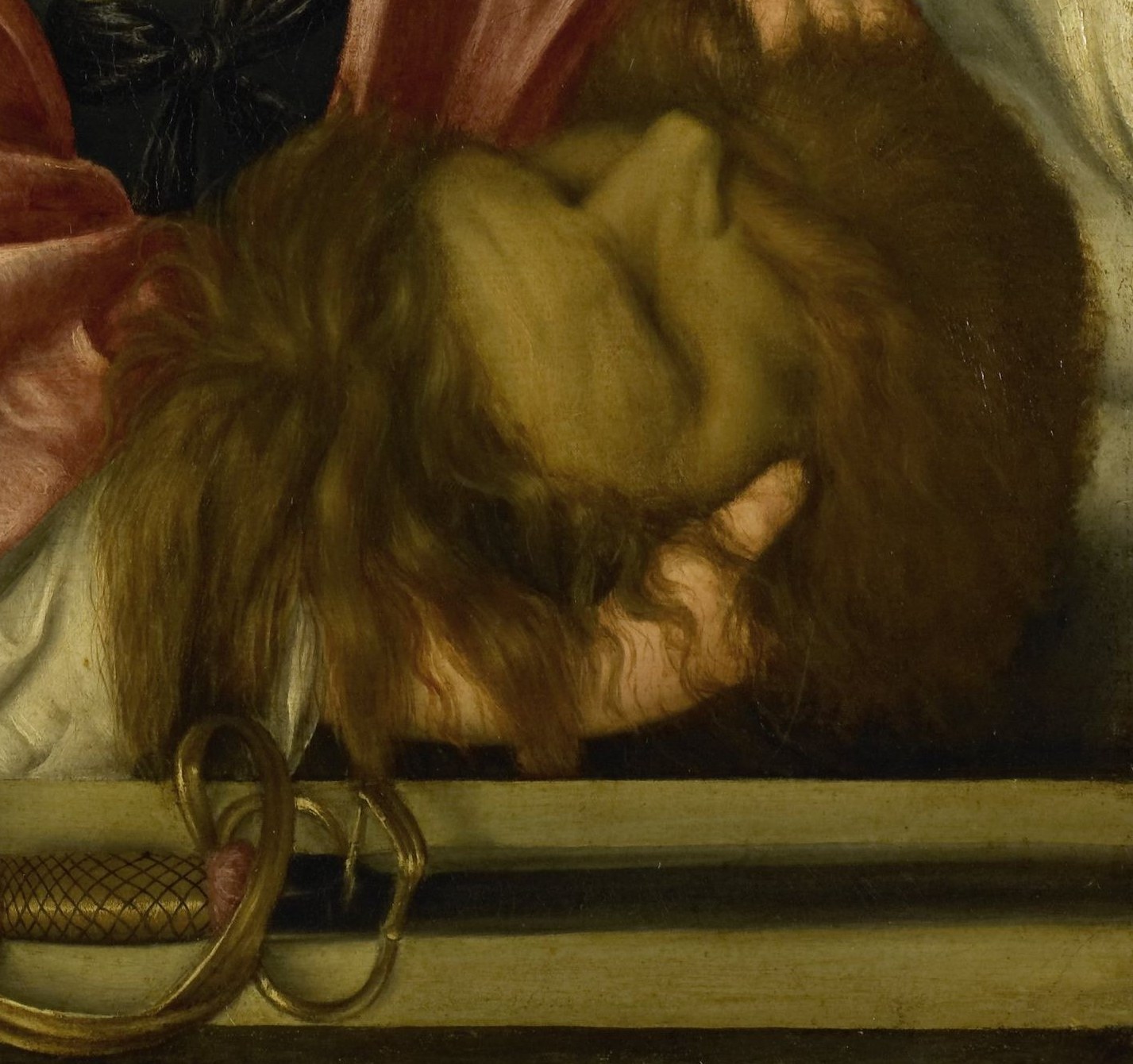
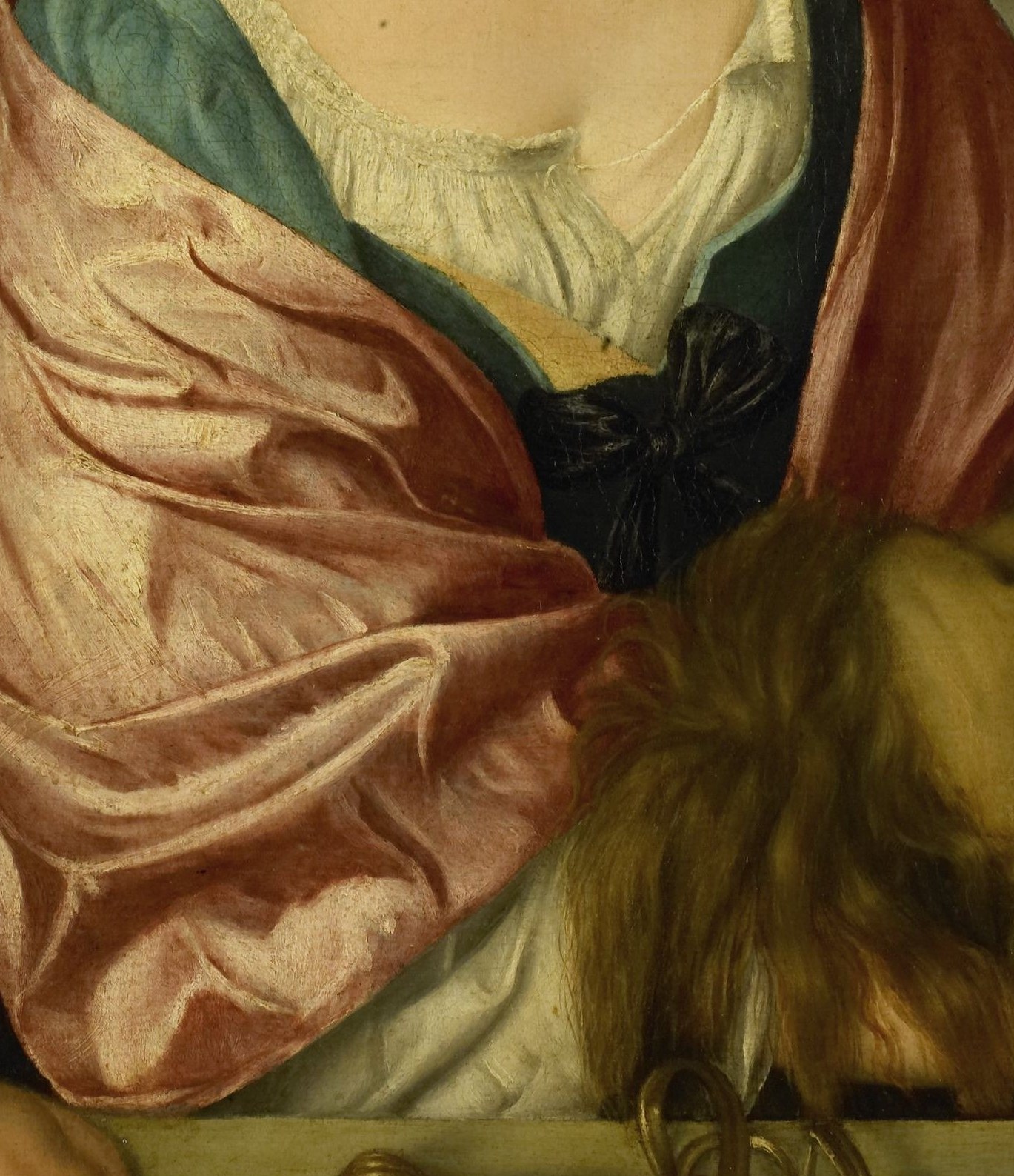
Giorgione's "Judith with the Head of Holofernes," painted around 1504 and housed in the State Hermitage Museum, masterfully portrays the biblical heroine after her decisive act. While Judith's calm demeanor and her maidservant's supportive gesture are central, the painting rewards a closer look at its subtle background elements.
Observe the distinctive green fabric swirling behind the figures. It's not merely abstract decoration; art historians interpret this element in various ways. Some see it as the interior of Holofernes' tent, providing context for the narrative's climax, while others suggest it symbolizes divine intervention, hinting at the unseen forces that aided Judith.
This painting is a testament to Giorgione's innovative use of color and chiaroscuro, creating a sense of dramatic quietude. His ability to imbue small details with profound meaning invites viewers to engage deeply with the story and its spiritual implications.
What do you see in the green swirl?
Details

Transcript
This painter shows Judith after she beheaded Holofernes. She looks away, while her maidservant steadies her. The maidservant carries Holofernes' head, wrapped in cloth. But look closely at the swirl of green fabric behind them. Many scholars believe it represents a tent, or even divine intervention. It's a small detail that suggests larger forces at play.