The Pearl of Brabant by Dieric Bouts
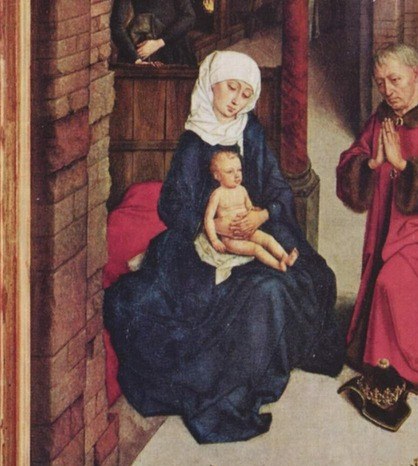
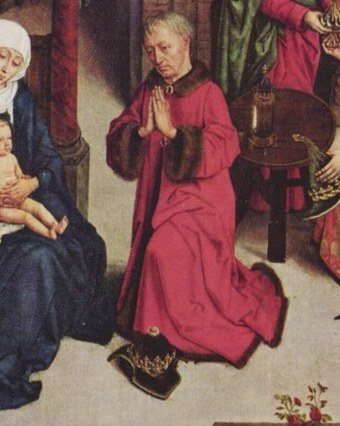
The Pearl of Brabant by Dieric Bouts is an altarpiece in Munich's Alte Pinakothek, and it was never meant for a church. Painted around 1465, it was a private devotional work commissioned by a single worshipper for his own prayers. The man who paid for it kneels inside the painting itself, forever before the Virgin and Child.
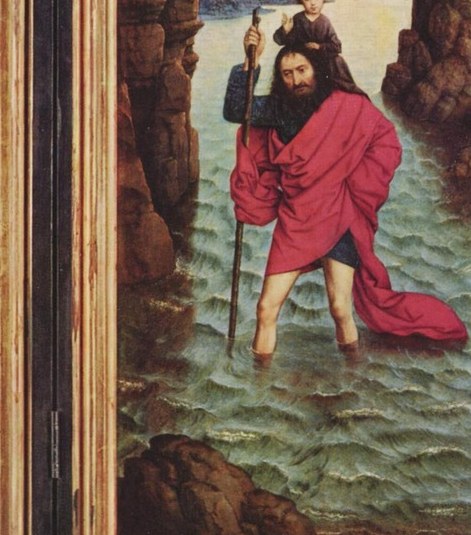
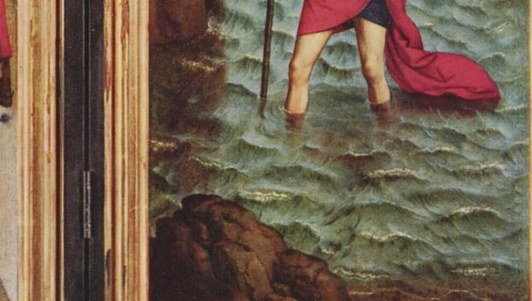
Beside him, the Magi bring their gifts. On the right panel, Saint Christopher wades through rough water with the Christ Child on his shoulder. Look at the rippling water near his feet, then at the light across Mary's face. Both were built the same way: layer after layer of translucent oil glaze.
Bouts was an Early Netherlandish painter in Leuven, influenced by van der Weyden and van Eyck. Among the first northern artists to use single-point perspective, his oil glazing technique was still young when he painted this. The altarpiece stayed in local collections for centuries, then entered the Bavarian royal holdings, where it remains.
Next time you see a Renaissance altarpiece, look for the donor. He is probably in there somewhere.
Details
Transcript
1465. A painter in Leuven built this altarpiece for one man's prayers. Saint Christopher wades through rough water, a child on his shoulder. Oil painting was still young. These ripples were built with translucent glazes. Mary holds the Child at the center. The Magi kneel around them. The man who paid for it kneels here, forever at prayer. He built the light on her face with translucent oil glazes.