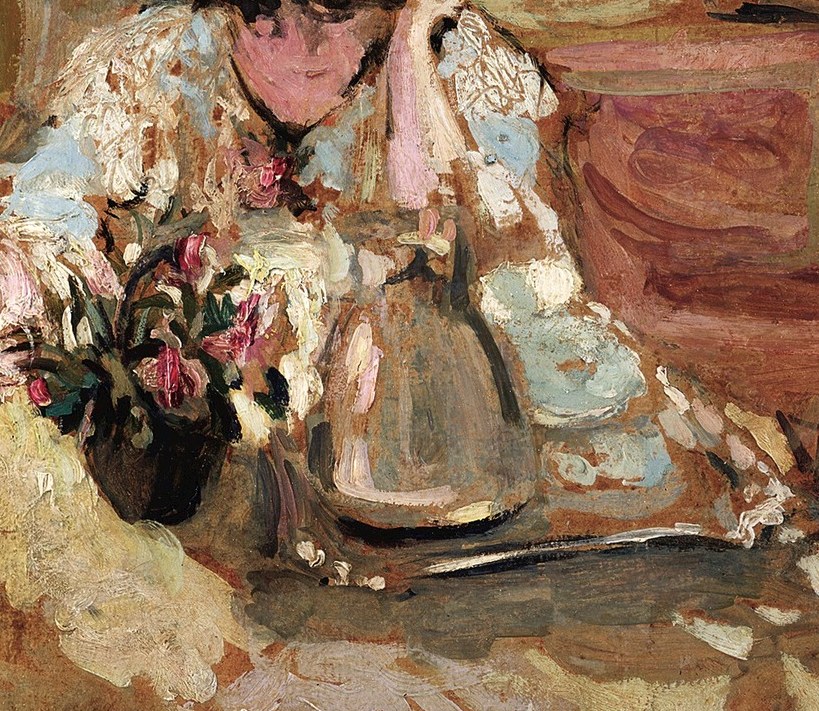
Jos and Lucie Hessel in the Small Salon, Rue de Rivoli by Édouard Vuillard
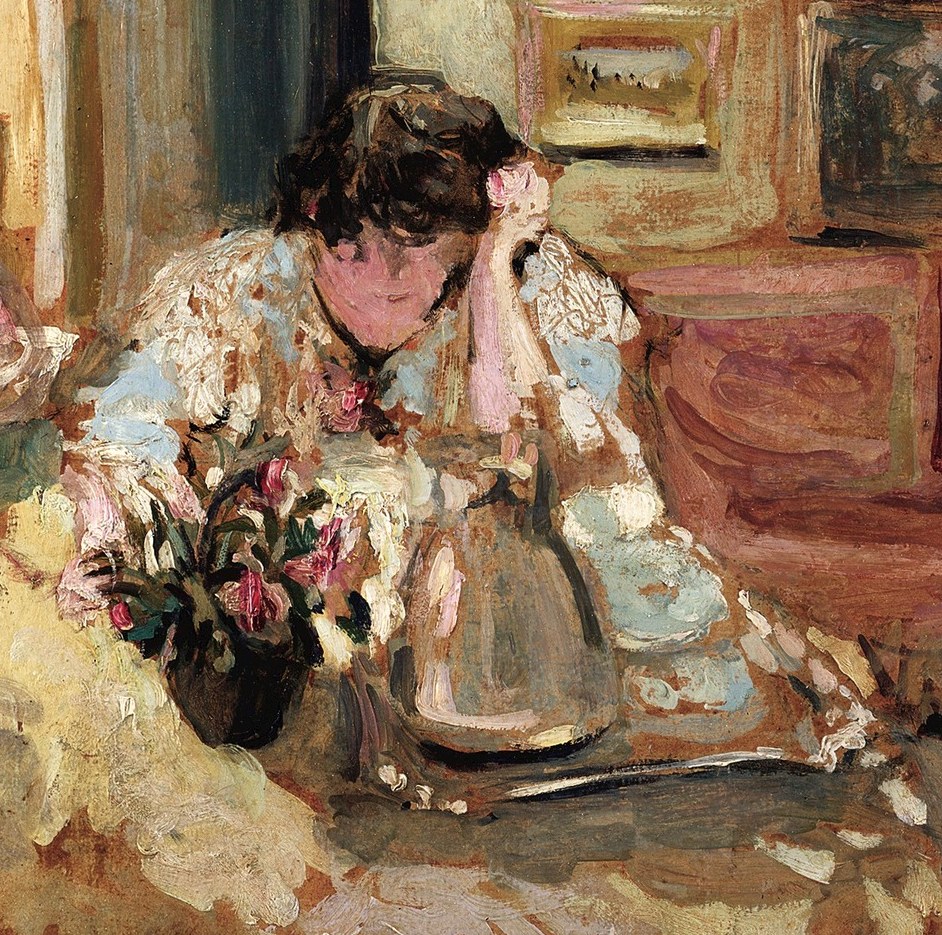
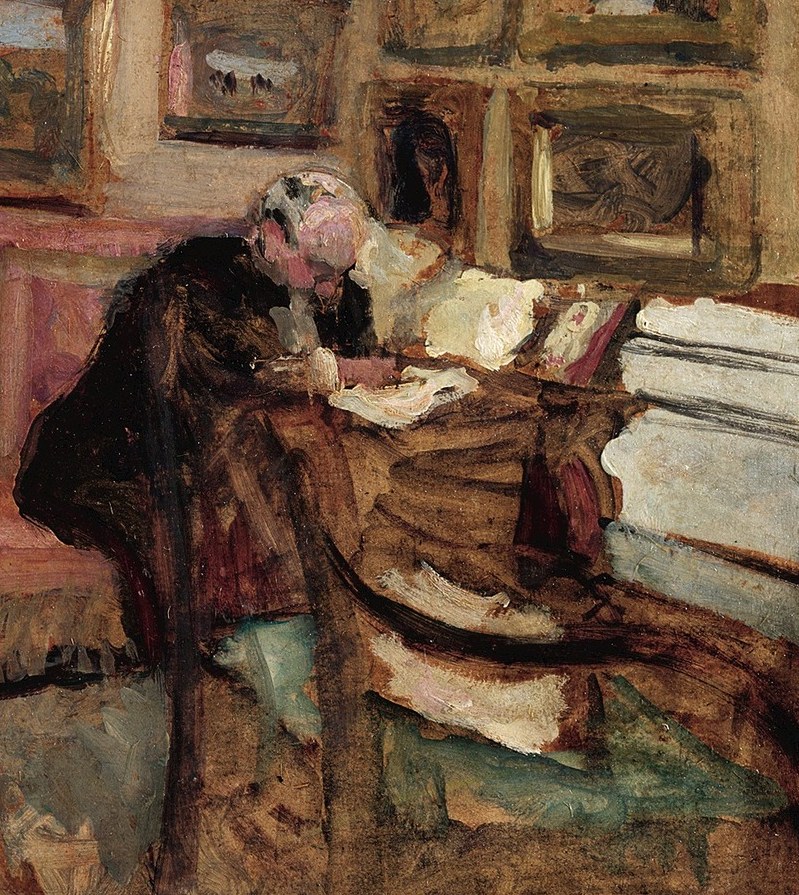
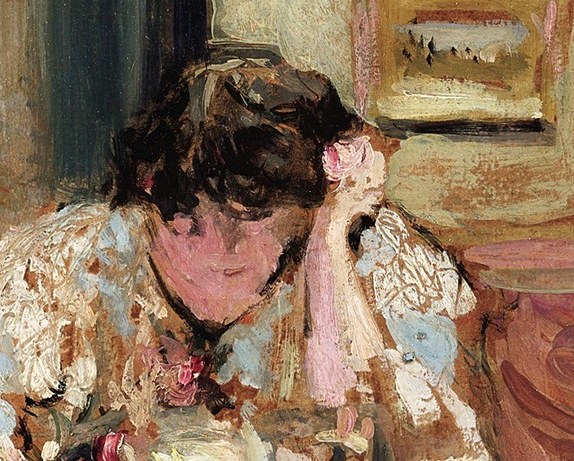
Édouard Vuillard painted 'Jos and Lucie Hessel in the Small Salon, Rue de Rivoli' in 1900, and it hangs today at The Metropolitan Museum of Art. The painting is a portrait of a marriage, but it is also a confession. Lucie Hessel reclines in the center, drenched in light and pink velvet. Her husband Jos, an immensely successful art dealer, sits in near-darkness on the right edge, his form dissolving into the patterned wallpaper.
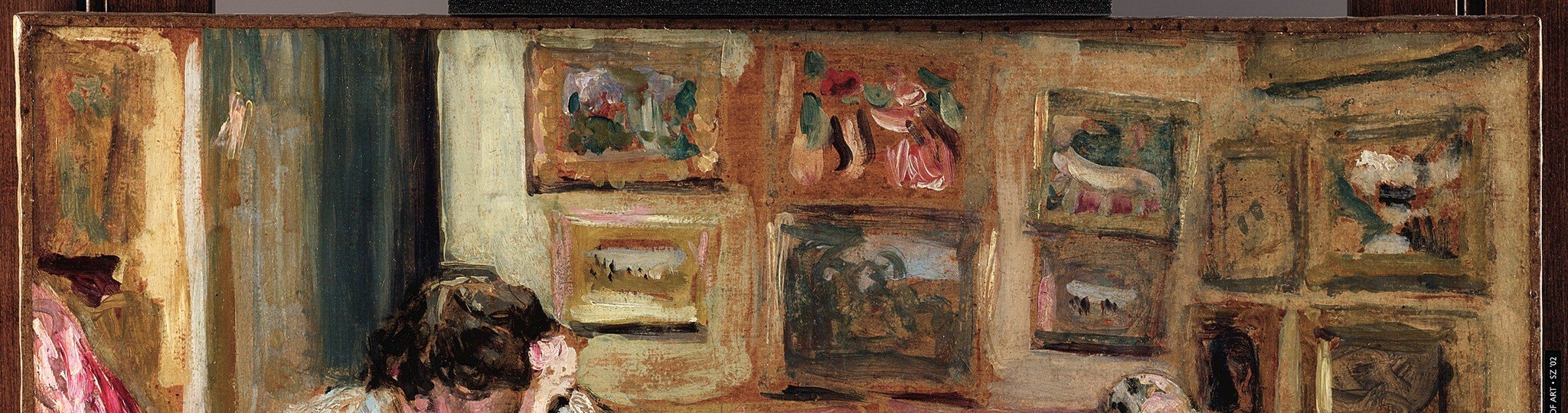
Look at the two figures: Lucie is given weight, space, and color. Jos is a ghost in his own salon. The room is packed with framed paintings from floor to ceiling, the dealer's private collection. Vuillard was one of the artists Jos Hessel represented, and his work is among these canvases, implicating the painter in the scene itself.
Jos Hessel sold Vuillard's paintings. But Vuillard and Lucie Hessel shared a bond that far outlasted any professional contract. For more than thirty years, she was his primary model and his closest companion, appearing in hundreds of works. When Vuillard died in 1940, it was Lucie Hessel who held him. The art world has always known about the dealer. It is the woman on the pink sofa who holds the true story.
Some silences in a painting are louder than words. What do you think Lucie is thinking about?
Details
Transcript
Paris, 1900. A quiet room above the rue de Rivoli. The woman, Lucie Hessel, floats on a sea of pink velvet. Her husband Jos sits in the shadows on the right. The painter made him vanish into the wallpaper. Jos was Vuillard's art dealer. He sold these very canvases. But Vuillard painted Lucie over thirty years, hundreds of times. Her dress dissolves into the sofa. She is the room itself. He painted her until the day he died, in her arms.