Roses in a Bowl by Henri Fantin-Latour (French, 1836–1904)
Henri Fantin-Latour's *Roses in a Bowl* from 1883, now at The Metropolitan Museum of Art, represents a significant, yet often overshadowed, aspect of his career. While he is celebrated for his ambitious group portraits of Parisian artists and intellectuals, it was his exquisite floral still lifes that truly funded his artistic endeavors.
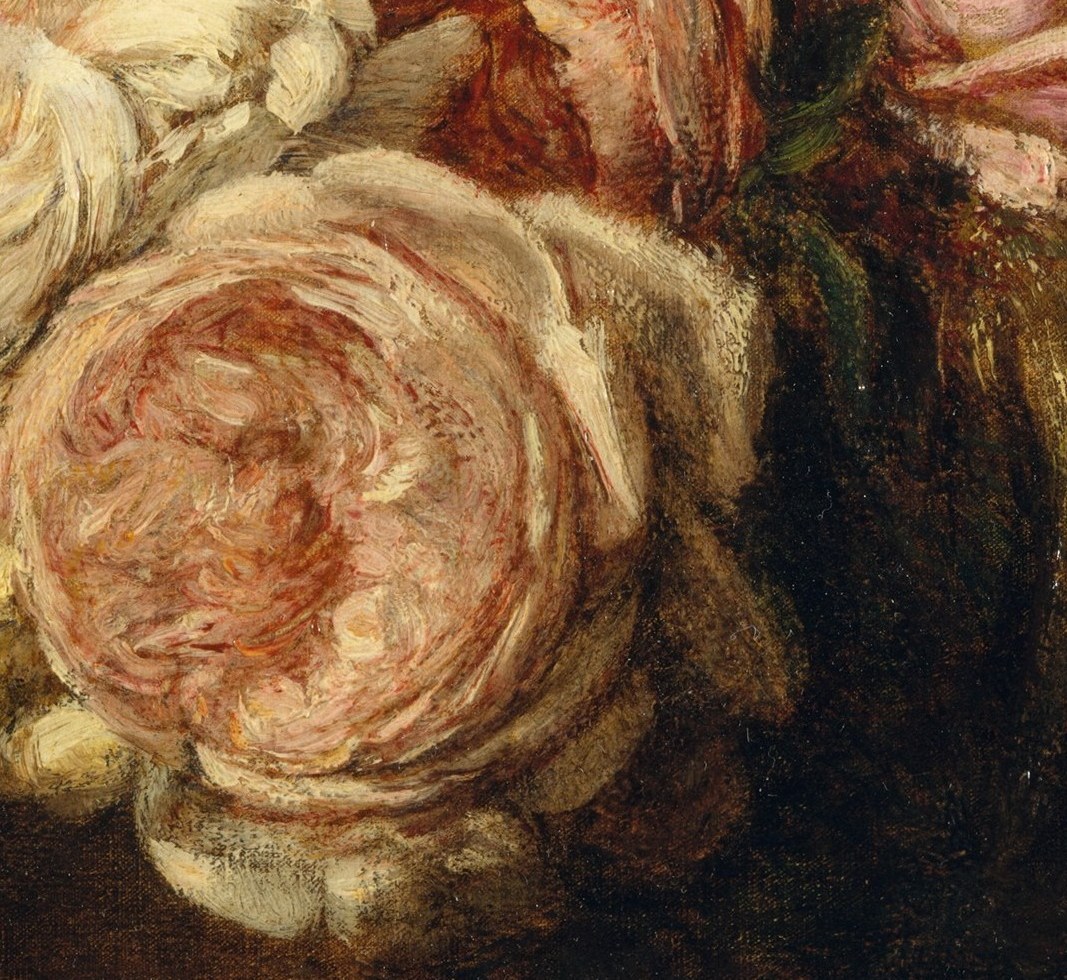
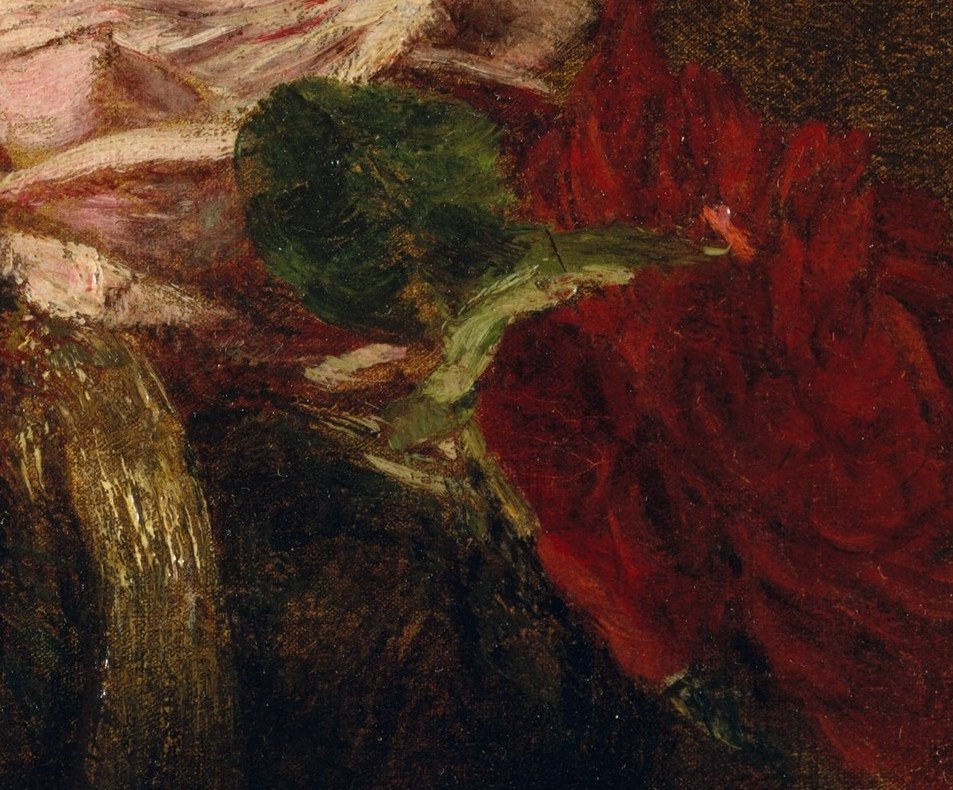
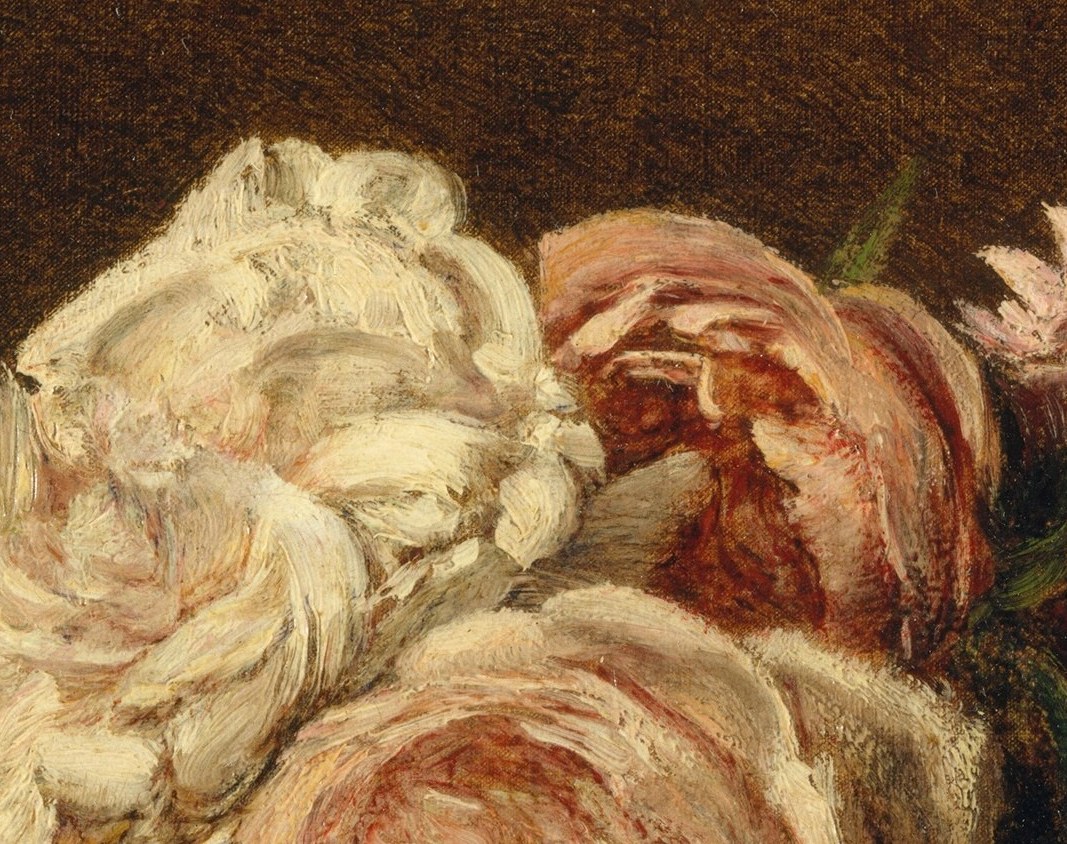
Notice the delicate textures and subtle color variations in each petal, from the velvety central white rose to the rich dark red bloom. Fantin-Latour's mastery of light and shadow brings these simple arrangements to life against the deep, atmospheric background.
These beautiful and commercially successful flower paintings were in high demand, selling consistently and for good prices. This financial stability provided Fantin-Latour the freedom and means to pursue his passion for larger, less profitable, but historically significant, group portraits, which documented the vibrant artistic circles of his time.
It's a wonderful example of how artists often balance commercial success with personal artistic vision. What do you find most striking about these roses?
Details
Transcript
Henri Fantin-Latour was famous for his portraits of artists. But he painted hundreds of flower still lifes like this one. The market loved them. They sold quickly and for good prices. The income allowed him to pursue his true passion. His group portraits of friends, like Manet and Renoir.