George Harley Drummond (1783–1855) by Henry Raeburn
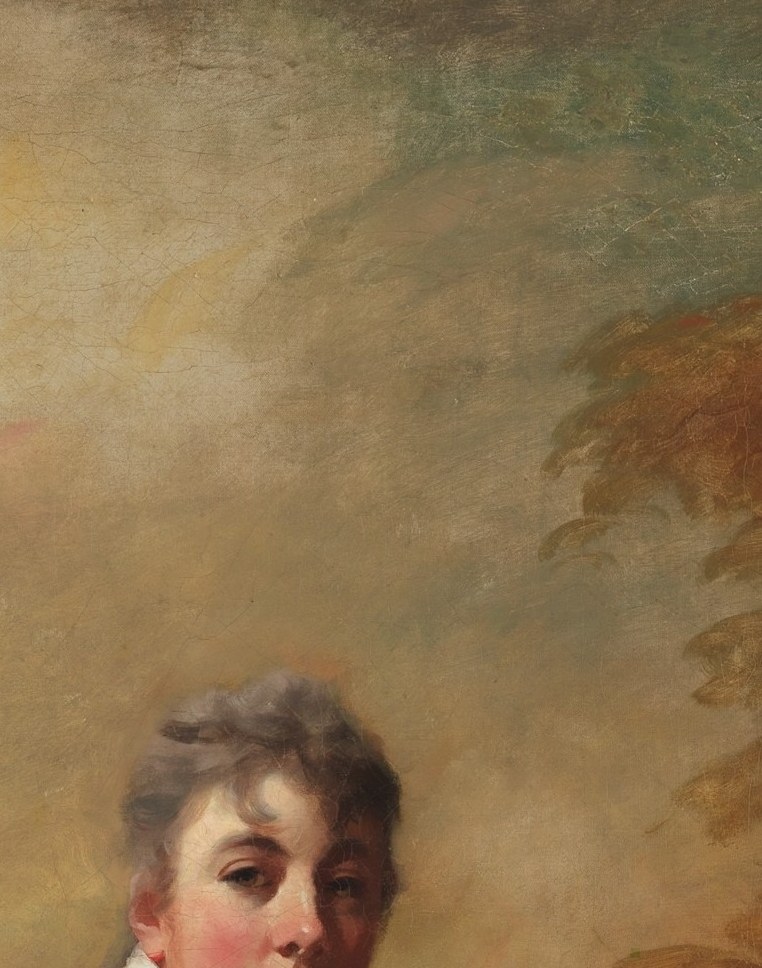
Sir Henry Raeburn painted George Harley Drummond in 1808, when the sitter was 25 years old. The portrait hangs in The Metropolitan Museum of Art. It is a masterclass in quiet aristocratic signaling: a young man uses clothing, a single prop, and an expression of total composure to declare his place in the world.
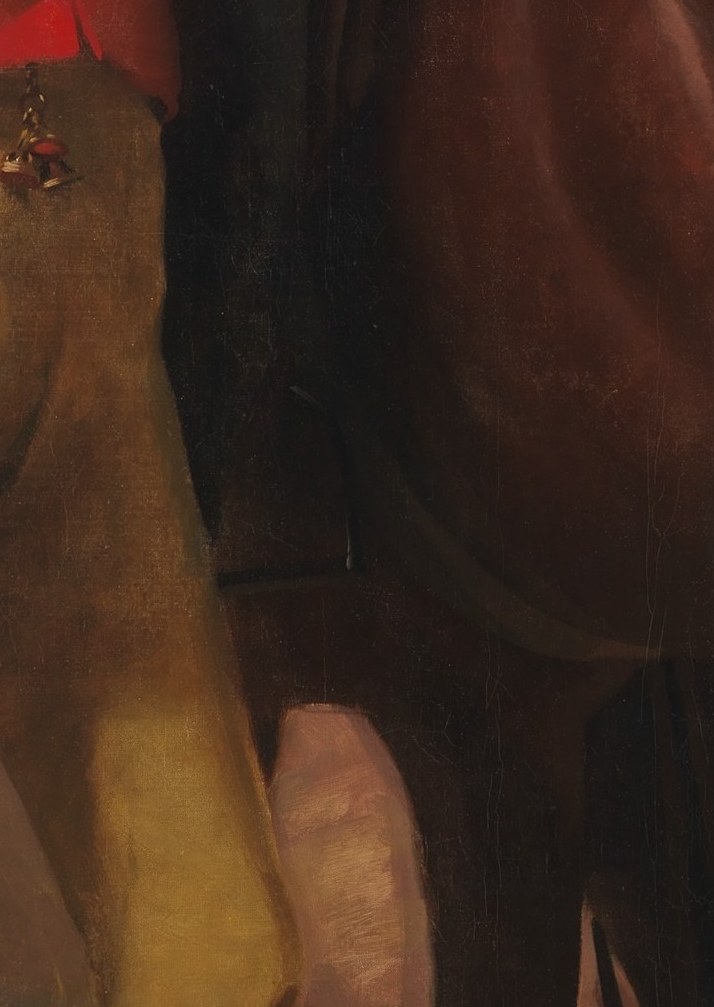
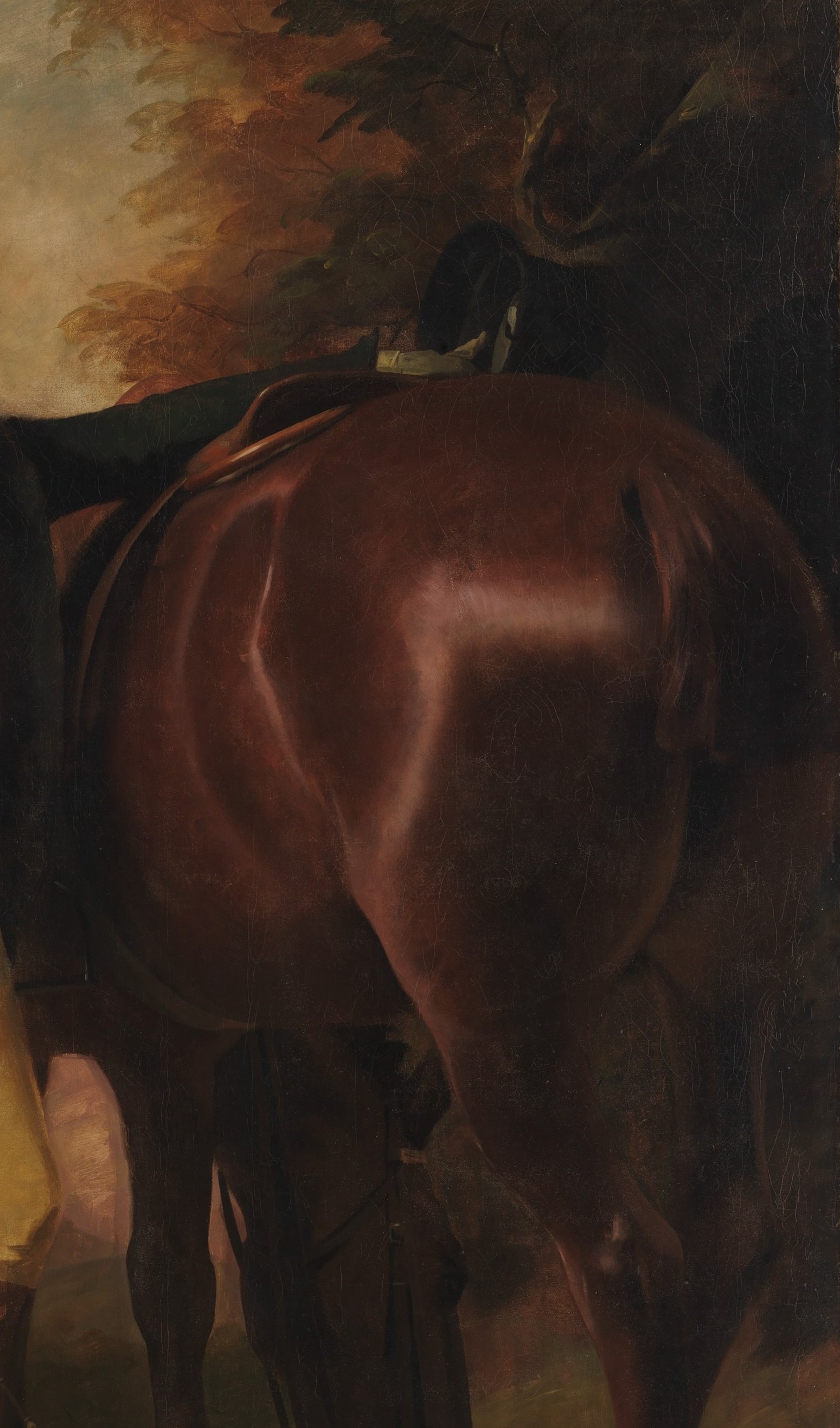
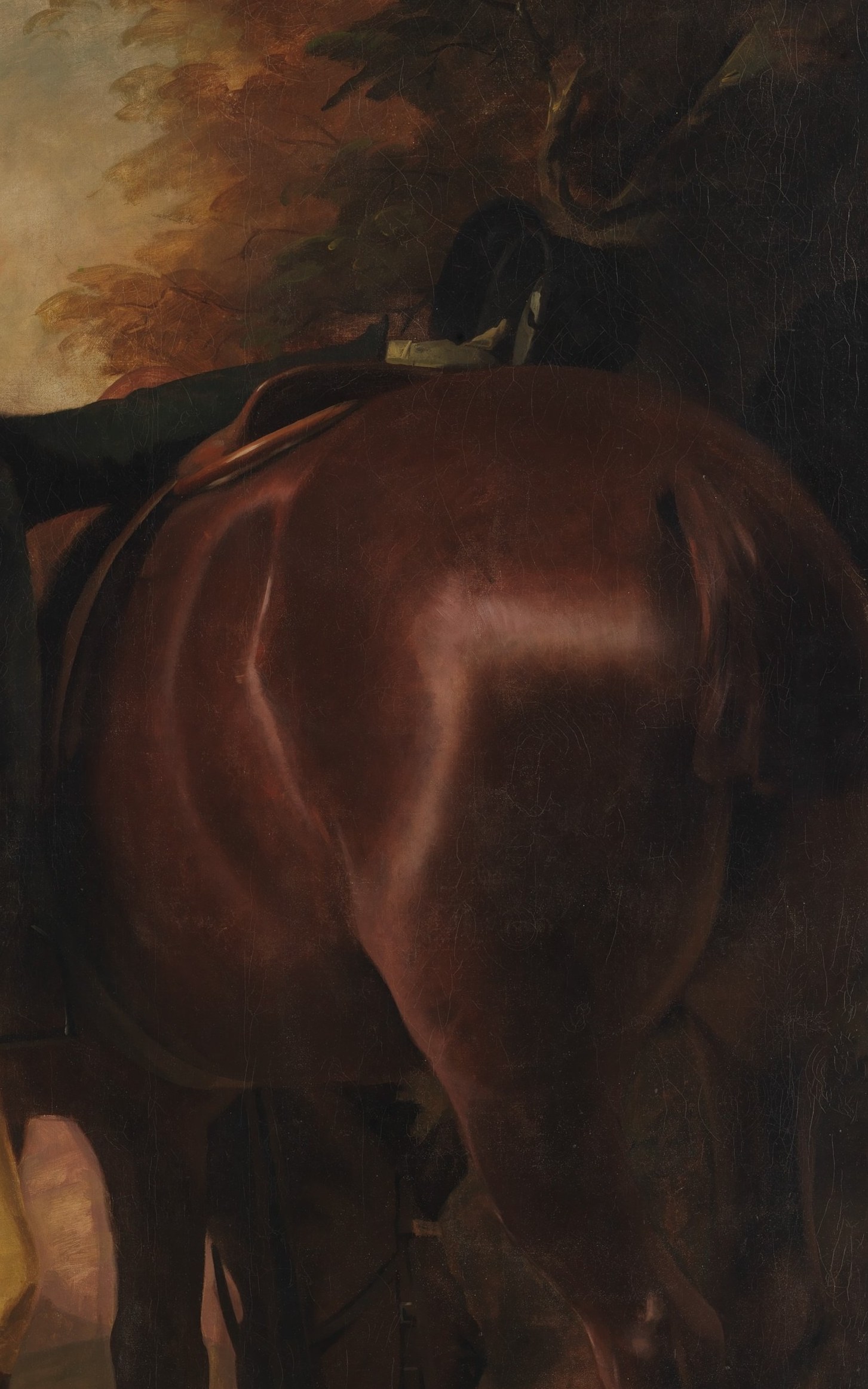
Look at the whip in his right hand. It is the only object he holds. He is not a soldier, not a scholar, not a civic officer. He is a country gentleman, and that identity was worth advertising. The crimson waistcoat beneath his black riding jacket is the most saturated note of color in the painting, a direct announcement of wealth and fashion. Raeburn builds the horse with loose, confident strokes; the chestnut haunches show how he described volume with almost casual economy.
Raeburn was the leading portraitist in Edinburgh and would become Portrait Painter to King George IV in Scotland. His loose, direct brushwork influenced generations of Scottish painters. This portrait shows his characteristic handling: the shadow under Drummond's brow is barely blended, the landscape at left is a shorthand of dark strokes. Nothing is overworked. Everything serves the sitter's presence.
What object would you choose if a portrait painter asked you to hold one thing that says who you are?
Details

Transcript
1808. A young Scottish heir commissions his portrait. His name is George Harley Drummond. He is 25. No sword, no medals. A riding whip is his only prop. He chose it. It says country gentleman, not soldier. The crimson waistcoat was a clear signal of wealth. And the painter gave him the sky of a Romantic hero. This is the performance of an identity. Quiet, assured, complete.